


After months of police harassing the country's celebrity community for minor drug infractions, Chinese Nationalist Party (KMT) Legislator Joanna Lei (
Such publicity stunts are nothing new for Taiwan's politicians. But set against the backdrop of recent events, it highlights just how ludicrous the authorities' efforts to fight illegal drug use have become.
Local celebrities are model citizens compared with their counterparts in many other countries. References to drugs and violence are practically unheard of in popular music. They tend to stay out of rehab, and keep themselves on the front pages of gossip sections with endless breakups and makeups rather than wrecking their cars while high on ecstasy. Like anyone, they have their indiscretions, but by and large they maintain clean images and tend to be decent role models.
Strange then that the police would choose to make such an innocuous portion of the population the target of a witch hunt. Presumably, they are trying to make examples of them. But warning youths not to do drugs lest they end up like the otherwise healthy, functioning and successful adults that they watch on TV is counterproductive.
But of course, none of this is about fighting drugs. It's about publicity -- publicity for the police, and now for politicians. The nation's drug issues are trivialized, with sheepish celebrities pretending to repent, and kids getting the impression that drug addiction is nothing that a tearful TV apology won't fix.
In fact, the problems with drug addiction run much deeper than that. Just two days after last weekend's amnesty, eight released inmates had already died of overdoses. Yet celebrities' reputations are apparently more pressing for legislators than the scores of heroin addicts that were unceremoniously dumped back out on the street without supervision or support.
While artists Jason Tang (
Prison officials and politicians made grand speeches about giving people who had made past mistakes a chance to start anew. But they're not going to help with the medical realities of addiction. They seem to think that months or years locked inside a prison cell must surely have been just what users needed to cure them of this affliction.
But people who are released after being imprisoned for drug use need more long-term support and guidance than people who steal or commit fraud. When thousands are released all at once, government agencies lack the resources to help them adjust. Having police set up extra checkpoints on the road and raid karaoke bars with M-16s is not a substitute.
Amnesties are nice, but they need to be done carefully rather than just throwing the gates open and wishing everyone good luck. People with drug problems should be let out gradually so that authorities have the resources to provide the support and monitoring services that they require.
However, our lawmakers and police are more interested in obsessing over a handful of marijuana-smoking celebrities -- and naive enough to think that long-term heroin users can overcome their demons as easily as celebrity "addicts."
If Lei wants to fight for "human rights," she could start with those eight ex-cons who are now dead. But of course, that wouldn't grab many headlines.
KMT Chairwoman Cheng Li-wun’s (鄭麗文) recent visit to Beijing and her upcoming visit to Washington will serve as a high-level test of her diplomatic mettle. In Beijing, Cheng was received with symbolic gestures, a warm reception, and high-level access. In Washington, she will receive far less pomp and far sharper questions about the KMT’s vision for the future of Taiwan. Her challenge will be to persuade Washington that the KMT’s engagement with China can coexist with strong deterrence. Cheng’s April 7-12 visit to mainland China coincided with an intense period of conflict in Iran. Despite the strategic significance of Cheng’s trip,
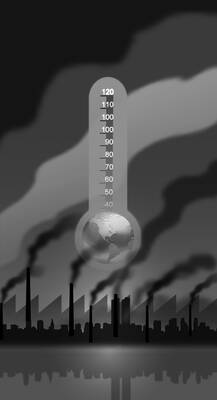
The closure of the Strait of Hormuz has sent the vast Asian chemicals industry into a tailspin. Deprived of the likes of Qatari natural gas and Saudi Arabian oil, the region’s fertilizer and plastics plants are slowing production or even shutting down. Everywhere except China, that is. In petrochemicals, China is unique. As well as a traditional industry that uses oil and gas as feedstock, it has parallel output that relies on its abundant domestic coal. Unsurprisingly, India and other regional powers want to copy and paste the Chinese method. This would not be easy — or climate friendly. The
Indonesian President Prabowo Subianto says he knows how to fix the problems facing Indonesia. Yet his economic mismanagement and authoritarian tendencies are steering the nation toward a familiar mix of currency instability and political chaos. The world’s fourth-most populous nation risks reversing the hard-won democratic and business reforms that came after the Asian Financial Crisis in 1997. At that time, the rupiah collapsed and the political upheaval that followed forced former president Haji Mohamed Suharto from power. Prabowo’s administration is ignoring similar warning signs. That disconnect was apparent in a national address on Wednesday, when Prabowo projected the swagger that has
“Of course you can choose not to be Taiwanese, just do not stay here,” chairwoman of Taipei 101 operator Taipei Financial Center Corp Janet Chia (賈永婕) said in an online interview with local entertainer Tai Chih-yuan (邰智源), triggering intense discussion on social media, with politicians across party lines weighing in. In the interview, which was aired on May 14, Chia and Tai’s discussion over a meal in Taipei 101 covered Chia’s career change from entertainer to chairwoman and US climber Alex Honnold’s free solo climb up the Taipei 101 building. During the interview, Chia said, “Being on this land, we


 RSS
RSS