


Although it has already taken nearly four decades to get this far in building the Internet, some university researchers want to scrap all that and start over.
The idea may seem unthinkable, even absurd, but many believe a "clean slate" approach is the only way to truly address security, mobility and other challenges that have cropped up since UCLA professor Leonard Kleinrock helped supervise the first exchange of meaningless test data between two machines on Sept. 2, 1969.
The Internet "works well in many situations but was designed for completely different assumptions," said Dipankar Raychaudhuri, a Rutgers University professor overseeing three clean-slate projects. "It's sort of a miracle that it continues to work well today."
No longer constrained by slow connections and computer processors and high costs for storage, researchers say the time has come to rethink the Internet's underlying architecture, a move that could mean replacing networking equipment and rewriting software on computers to better channel future traffic over the existing pipes.
Even Vinton Cerf, one of the Internet's founding fathers as co-developer of the key communications techniques, said the exercise was "generally healthy" because the current technology "does not satisfy all needs."
One challenge in any reconstruction, though, will be balancing the interests of various constituencies. The first time around, researchers were able to toil away in their labs quietly. Industry is playing a bigger role this time, and law enforcement is bound to make its needs for wiretapping known.
There's no evidence they are meddling yet, but once any research looks promising, "a number of people [will] want to be in the drawing room," said Jonathan Zittrain, a law professor affiliated with Oxford and Harvard universities. "They'll be wearing coats and ties and spilling out of the venue."
experimental network
The National Science Foundation wants to build an experimental research network known as the Global Environment for Network Innovations, or GENI, and is funding several projects at universities and elsewhere through Future Internet Network Design, or FIND.
Rutgers, Stanford, Princeton, Carnegie Mellon and the Massachusetts Institute of Technology are among the universities pursuing individual projects. Other US government agencies, including the Defense Department, have also been exploring the concept.
The EU has also backed research on such initiatives, through a program known as Future Internet Research and Experimentation, or FIRE. Government officials and researchers met last month in Zurich to discuss early findings and goals.
A new network could run parallel with the current Internet and eventually replace it, or perhaps aspects of the research could go into a major overhaul of the existing architecture.
These clean-slate efforts are still in their early stages, though, and are not expected to bear fruit for another 10 or 15 years -- assuming the US Congress comes through with funding.
Guru Parulkar, who will become executive director of Stanford's initiative after heading NSF's clean-slate programs, estimated that GENI alone could cost US$350 million, while government, university and industry spending on the individual projects could collectively reach US$300 million. Spending so far has been in the tens of millions of dollars.
And it could take billions of dollars to replace all the software and hardware deep in the legacy systems.
Clean-slate advocates say the cozy world of researchers in the 1970s and 1980s doesn't necessarily mesh with the realities and needs of the commercial Internet.
"The network is now mission critical for too many people, when in the [early days] it was just experimental," Zittrain said.
The Internet's early architects built the system on the principle of trust. Researchers largely knew one another, so they kept the shared network open and flexible -- qualities that proved key to its rapid growth.
spammers and hackers
But spammers and hackers arrived as the network expanded and could roam freely because the Internet doesn't have built-in mechanisms for knowing with certainty who sent what.
The network's designers also assumed that computers are in fixed locations and always connected. That is no longer the case with the proliferation of laptops, personal digital assistants and other mobile devices, all hopping from one wireless access point to another, losing their signals here and there.
Engineers tacked on improvements to support mobility and improved security, but researchers say all that adds complexity, reduces performance and, in the case of security, amounts at most to bandages in a high-stakes game of cat and mouse.
Workarounds for mobile devices "can work quite well if a small fraction of the traffic is of that type," but could overwhelm computer processors and create security holes when 90 percent or more of the traffic is mobile, said Nick McKeown, co-director of Stanford's clean-slate program.
The Internet will continue to face new challenges as applications require guaranteed transmissions -- not the "best effort" approach that works better for e-mail and other tasks with less time sensitivity.
Think of a doctor using teleconferencing to perform a surgery remotely, or a customer of an Internet-based phone service needing to make an emergency call. In such cases, even small delays in relaying data can be deadly.
And one day, sensors of all sorts will likely be Internet capable.
Rather than create workarounds each time, clean-slate researchers want to redesign the system to easily accommodate any future technologies, said Larry Peterson, chairman of computer science at Princeton and head of the planning group for the NSF's GENI.
Even if the original designers had the benefit of hindsight, they might not have been able to incorporate these features from the get-go. Computers, for instance, were much slower then, possibly too weak for the computations needed for robust authentication.
"We made decisions based on a very different technical landscape," said Bruce Davie, a fellow with network-equipment maker Cisco Systems Inc, which stands to gain from selling new products and incorporating research findings into its existing line.
"Now, we have the ability to do all sorts of things at very high speeds," he said. "Why don't we start thinking about how we take advantage of those things and not be constrained by the current legacy we have?"
Of course, a key question is how to make any transition -- and researchers are largely punting for now.
"Let's try to define where we think we should end up, what we think the Internet should look like in 15 years' time, and only then would we decide the path," McKeown said. "We acknowledge it's going to be really hard, but I think it will be a mistake to be deterred by that."
internet pioneer
Kleinrock, the Internet pioneer at UCLA, questioned the need for a transition at all, but said such efforts are useful for their out-of-the-box thinking.
"A thing called GENI will almost surely not become the Internet, but pieces of it might fold into the Internet as it advances," he said.
Think evolution, not revolution.
Princeton already runs a smaller experimental network called PlanetLab, while Carnegie Mellon has a clean-slate project called 100 x 100.
These days, Carnegie Mellon professor Hui Zhang said he no longer feels like "the outcast of the community" as a champion of clean-slate designs.
Construction on GENI could start by 2010 and take about five years to complete. Once operational, it should have a decade-long lifespan.
FIND, meanwhile, funded about two dozen projects last year and is evaluating a second round of grants for research that could ultimately be tested on GENI.
These go beyond projects like Internet2 and National LambdaRail, both of which focus on next-generation needs for speed.
Any redesign may incorporate mechanisms, known as virtualization, for multiple networks to operate over the same pipes, making further transitions much easier. Also possible are new structures for data packets and a replacement of Cerf's TCP/IP communications protocols.
"Almost every assumption going into the current design of the Internet is open to reconsideration and challenge," said Parulkar, the NSF official heading to Stanford. "Researchers may come up with wild ideas and very innovative ideas that may not have a lot to do with the current Internet."
KMT Chairwoman Cheng Li-wun’s (鄭麗文) recent visit to Beijing and her upcoming visit to Washington will serve as a high-level test of her diplomatic mettle. In Beijing, Cheng was received with symbolic gestures, a warm reception, and high-level access. In Washington, she will receive far less pomp and far sharper questions about the KMT’s vision for the future of Taiwan. Her challenge will be to persuade Washington that the KMT’s engagement with China can coexist with strong deterrence. Cheng’s April 7-12 visit to mainland China coincided with an intense period of conflict in Iran. Despite the strategic significance of Cheng’s trip,
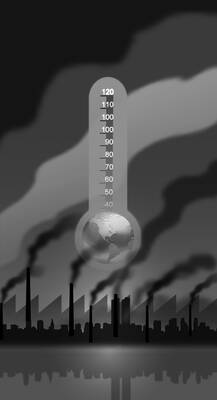
The closure of the Strait of Hormuz has sent the vast Asian chemicals industry into a tailspin. Deprived of the likes of Qatari natural gas and Saudi Arabian oil, the region’s fertilizer and plastics plants are slowing production or even shutting down. Everywhere except China, that is. In petrochemicals, China is unique. As well as a traditional industry that uses oil and gas as feedstock, it has parallel output that relies on its abundant domestic coal. Unsurprisingly, India and other regional powers want to copy and paste the Chinese method. This would not be easy — or climate friendly. The
Indonesian President Prabowo Subianto says he knows how to fix the problems facing Indonesia. Yet his economic mismanagement and authoritarian tendencies are steering the nation toward a familiar mix of currency instability and political chaos. The world’s fourth-most populous nation risks reversing the hard-won democratic and business reforms that came after the Asian Financial Crisis in 1997. At that time, the rupiah collapsed and the political upheaval that followed forced former president Haji Mohamed Suharto from power. Prabowo’s administration is ignoring similar warning signs. That disconnect was apparent in a national address on Wednesday, when Prabowo projected the swagger that has
“Of course you can choose not to be Taiwanese, just do not stay here,” chairwoman of Taipei 101 operator Taipei Financial Center Corp Janet Chia (賈永婕) said in an online interview with local entertainer Tai Chih-yuan (邰智源), triggering intense discussion on social media, with politicians across party lines weighing in. In the interview, which was aired on May 14, Chia and Tai’s discussion over a meal in Taipei 101 covered Chia’s career change from entertainer to chairwoman and US climber Alex Honnold’s free solo climb up the Taipei 101 building. During the interview, Chia said, “Being on this land, we


 RSS
RSS