


The problems facing Taiwan's economy are many.
First, the economy has lost its dynamism and is caught in a bottleneck. Following Taiwan's rapid economic growth during the 1970s and 1980s, the per capita GDP exceeded US$12,000 at the turn of the century. With the democratization that followed on the political reforms of the 1990s, Taiwan has made clear progress in the global competitiveness ratings in the World Economic Forum's Global Competitiveness Report and the International Institute for Management Development's World Competitiveness Yearbook.
The nation has left the ranks of developing countries behind to become a developed nation. Unfortunately, economic development has clearly been problematic in recent years. The failure of industrial transformation and the tendency toward a hollowing out of the economy are slowing economic development, which is Taiwan's biggest problem.
Second, there has been a failure to spread the results of Taiwan's economic development to the general public as a whole.
Overall, economic development has not been entirely satisfactory. Over the past five or six years, Taiwan has failed to significantly boost its per capita GDP which has remained at US$13,000 and US$15,500. According to statistics published by the Directorate General of Budget, Accounting, and Statistics in February, "real regular income" saw 1.28 percent negative growth last year, for a second consecutive year. It was the greatest reduction ever, and it is clear that the real purchasing power of the people is declining.
Taiwan's per capita GDP has not increased much because economic growth has only occurred in one part of society, while the economy remains slow or even stagnant for the rest of society. This imbalance will have serious consequences for our society, and it must be faced head on.
The causes of Taiwan's economic problems are varied.
The first, is our inability to break away from old thinking when designing new economic strategy.
Taiwan's development has entered a whole new phase. The global economic situation has undergone a structural change due to the development of countries with large supplies of cheap labor, such as China and India. If we continue to follow the old strategies of a developing country valuing low labor costs, mass production and oriented toward exports, we will have to relocate the core of Taiwan's industry to China and duplicate the old industrial model of dumping cheap products with low profit margins on global markets.
This will lead to the Sinicization of the economy, or making it dependent on China's global expansion strategies -- a suicidal strategy for an independent Taiwanese economy.
Second, people are mistaking Sinicization for globalization. Why don't local companies pay more attention to research and industrial transformation? This is a result of the government's policy to let companies go west in search of reduced labor costs. Before the government removed restrictions on moving to China from more than 8,000 industrial items in 2001, many Taiwanese firms were looking to take over companies in the US and other advanced countries in order to obtain core technologies and initiate an industrial upgrade process.
China fever has arisen in many countries, but after Taiwan's government opened the door to investment in China, China fever took on epidemic proportions here. Does the massive industrial investment in China mean that our economy has grown faster than other countries? Has Taiwan's international competitiveness improved significantly? Has the general public benefitted from the flow of companies to China?
Not only is the answer "no" to each of those questions, but Taiwan's industrial sector has been hollowed out, resulting in rising unemployment and other problems.
While China's population accounts for 20.25 percent of the world's population, its GDP only accounts for 4.35 percent of global GDP. Nevertheless, Taiwanese have abandoned the markets of the high-GDP European countries, the US and Japan in their obsession with the Chinese market, while ignoring political, economic and social risks posed by China. This is the biggest crisis facing Taiwan today.
Taiwan, not China, should be the strategic focus of the nation's sustainable development. We should build a new strategy centered on Taiwan that opens up the nation to the rest of the world and attracts global resources, capital, technology and manpower. We should enhance the inventiveness and competitive advantages of our industry, in order to improve the nation's technology, culture, education, society, environment and quality of life.
In the past, Taiwan was but a manufacturing plant participating in the global economy by providing international markets with cheap products of good quality. It moved toward globalization by dividing its eggs between the baskets of many other nations. Today, Taiwan should make the countries of the world come to Taiwan and put all their eggs in the Taiwanese basket. This can be done in several steps.
First, the attempts to recreate Taiwan's past in China should be abandoned in favor of building a Taiwan for the present and the future.
The government should create a national development plan for the 21st century so that the Taiwanese people can live in cities and rural areas of the highest international caliber.
The Taiwanese people are well educated and the nation is economically and technologically strong. There is great potential for urban and rural construction, and it is entirely possible to build a beautiful and comfortable living environment in our cities and countryside. In the past, Taiwan had a lot of unsightly construction projects as the result of an obsession with making a quick buck, combined with a lack of a sustainable development concept designed to create a high quality of living and a beautiful environment.
The quest for money meant people used their gardens and the government used parks as factories, turning Taiwan into one huge, filthy factory. Today, China has become the world's factory, giving Taiwan a great opportunity to restore its clear skies, beautiful environment, lush forests and crystal clear rivers.
Second, we must maintain and continue to develop a high value-added agricultural industry of the highest international standard.
Taiwan is exceptionally rich in agricultural resources. Agricultural development should seek to protect the environment and make use of technological advantages. We should develop biotechnology and nanotechnology as part of a high value-added agricultural industry and develop modern, digitalized research and development (R&D), production and sales channels.
Third, we must develop our cultural, educational and service industries.
Taiwan has laid a great foundation for its cultural and educational undertakings, but radical reform is needed. We should train people with liberal minds, independent spirits and creativity and bring the nation's humanitarian and technological education to the most advanced level.
Fourth, we must maintain and continue to develop a first-class technology industry.
Global competition means that products from developed nations must be inventive and difficult to match. If we ignore the importance of product innovation and only seek to reduce labor and land costs by moving industry to China, we may profit in the short term but lose out in the long term.
The development strategy for Taiwan's high-tech industry should be to move toward the higher-end by continuing to develop world-class brands and retaining global competitiveness.
Keeping R&D in Taiwan and transferring design and production to China is wrong. Taiwan's high-tech industrial advantage lies in creating a cluster effect by vertical division of labor in the areas of R&D, design, manufacturing, testing, packaging and marketing. This approach is the key to the successful development of our high-tech industry, and it must not be easily discarded.
Fifth, we must protect and promote traditional industries.
The food, clothing, housing and travel industries can never break away from traditional industries. It is a mistake to believe that traditional industries are sunset industries. Developing traditional industries should be aimed at preserving tradition. The wisdom of our ancestors must not be lost.
Promoting traditional industries can help integrate traditional and modern industries. Industrial automation, the building of high-tech industries, improving quality and product diversification will improve the quality of traditional industries, and lead to product invention and new services -- thereby turning traditional industries into high value-added industries.
Sixth, we must bring small and medium-sized enterprises (SME) into full play.
SMEs made significant contributions in the past process of moving toward globalization and creating the economic miracle. We still must rely on SMEs. The government should reorient its tax exemption policy for export-driven major corporations and instead focus on helping SMEs develop domestic demand.
Taiwan's current economic and social crisis is the result of the government's biased policies, which do not consider the well-being of all citizens.
On industrial development, the government's main responsibility is target management. It must lay down the direction of economic and industrial development and set correct national development goals, based on overall considerations for public interests and national development. This is the government's main responsibility.
Taiwan has the basic economic ability to join the top rank of developed nations. However, the rumors, attacks and defamation of pro-China forces often ignore facts and this is confusing the general public regarding the status of the economy. Such acts demoralize the people and create confusion about the direction that sustainable economic development for Taiwan should take.
The Conference on Sustaining Taiwan's Economic Development should draw lessons from our experience, draw a true overall picture of the economy, recognize the strategic importance of the country's position in the global economy and lay down the strategic direction and concrete plans meeting the needs of our development in the new era. It should rebuild confidence and draft a new course for the nation.
Lee Teng-hui is a former president of Taiwan.
Translated by Eddy Chang, Daniel Cheng and Lin Ya-ti
A gap appears to be emerging between Washington’s foreign policy elites and the broader American public on how the United States should respond to China’s rise. From my vantage working at a think tank in Washington, DC, and through regular travel around the United States, I increasingly experience two distinct discussions. This divergence — between America’s elite hawkishness and public caution — may become one of the least appreciated and most consequential external factors influencing Taiwan’s security environment in the years ahead. Within the American policy community, the dominant view of China has grown unmistakably tough. Many members of Congress, as
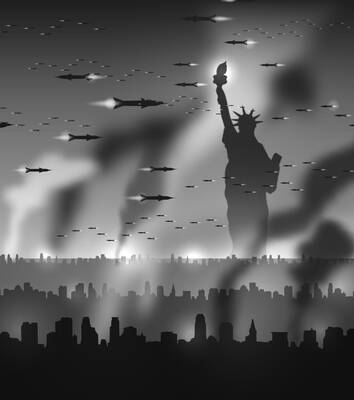
After declaring Iran’s military “gone,” US President Donald Trump appealed to the UK, France, Japan and South Korea — as well as China, Iran’s strategic partner — to send minesweepers and naval forces to reopen the Strait of Hormuz. When allies balked, the request turned into a warning: NATO would face “a very bad” future if it refused. The prevailing wisdom is that Trump faces a credibility problem: having spent years insulting allies, he finds they would not rally when he needs them. That is true, but superficial, as though a structural collapse could be caused by wounded feelings. Something
Former Taipei mayor and Taiwan People’s Party (TPP) founding chairman Ko Wen-je (柯文哲) was sentenced to 17 years in prison on Thursday, making headlines across major media. However, another case linked to the TPP — the indictment of Chinese immigrant Xu Chunying (徐春鶯) for alleged violations of the Anti-Infiltration Act (反滲透法) on Tuesday — has also stirred up heated discussions. Born in Shanghai, Xu became a resident of Taiwan through marriage in 1993. Currently the director of the Taiwan New Immigrant Development Association, she was elected to serve as legislator-at-large for the TPP in 2023, but was later charged with involvement
Out of 64 participating universities in this year’s Stars Program — through which schools directly recommend their top students to universities for admission — only 19 filled their admissions quotas. There were 922 vacancies, down more than 200 from last year; top universities had 37 unfilled places, 40 fewer than last year. The original purpose of the Stars Program was to expand admissions to a wider range of students. However, certain departments at elite universities that failed to meet their admissions quotas are not improving. Vacancies at top universities are linked to students’ program preferences on their applications, but inappropriate admission


 RSS
RSS