


The sleeper to Delhi had just left Calcutta when a mouse raced across the floor of our second-class compartment. We frantically lifted our feet and peered into the darkness under the seats to spot its next foray. Our Indian fellow passengers, who were already lying down or sitting cross-legged on their couchettes, roared with delight.
When the conductor came past, we asked if there were any places in an air-conditioned carriage. It was not pure cowardice. We had always intended to try. On his return, with news that he had two vacancies, the man opposite gave a mischievous grin: "Moving up in the world, I see. You'll get a bigger mouse."
That was the early 1990s. Today, no doubt, the more affluent passengers we went on to meet in our air-conditioned carriage would be traveling by air. The Indian government recently announced plans to modernize the vast railway system, but the amount allocated is a fraction of what is being invested in the country's airports and private airlines.
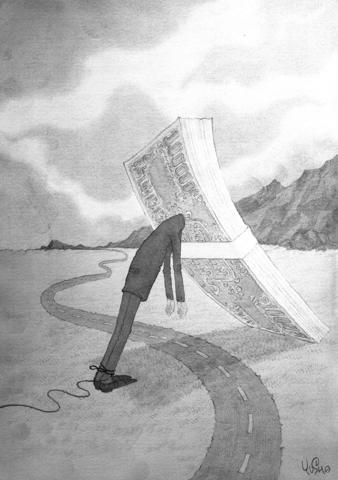
With its surging economy and a new middle class of some 300 million, the preference gap between air and train travel is matched by a growing divide between urban and rural people. India is still a predominantly agricultural country and a decade of growth has left half a billion people behind.
The issue is rousing political tensions, as it is in China, where the Chinese Communist Party has just launched a new policy to redirect budget resources to the countryside. It is no accident that the governments of Asia's two most populous countries are beginning to take note of the downside of their economic boom. Donor governments and the international financial institutions are also alive to the problem, steering much of their new money towards agricultural projects. Asia 2015, a conference in London last week, brought ministers from several countries to discuss the urban-rural divide, among other issues.
RURAL ANGER
In China, where urban dwellers earn three times as much as people in the countryside, millions of peasants vote with their feet by moving to the cities to seek work. Those who stay behind often vote with their fists. Anger at corrupt or land-grabbing officials in China's villages is becoming increasingly violent.
India has also seen clashes, though many farmers turn the violence on themselves.
The Hindu newspaper recently reported a wave of suicides by debt-ridden farmers in Maharashtra -- not the first state where this has happened. The home minister responded with a crackdown on village moneylenders, but the Hindu said that the main fault lay with a new kind of city-based dealer who supplies farmers at exorbitant interest rates.
The paper's findings highlighted the issue of class -- a point that the big donors need to take on board. In The Argumentative Indian, his latest collection of essays, India's Nobel-winning economist Amartya Sen points out that despite recurring famines, "Africa still manages to ensure a higher level of regular nourishment than does India." And a larger proportion of India's children are undernourished than in Africa.
In suggesting possible solutions, Sen borrows the metaphor "friendly fire": efforts to alleviate rural poverty, if not well aimed, may benefit rich farmers and leave the poorest worse, or at least no better, off.
SHARP CONTRASTS
The American columnist Tom Friedman has argued, in his book The World is Flat, that the globalization of technological progress has had a leveling effect, particularly in Asia. But in India the peaks of the Himalayas are a better symbol of recent development -- uneven, slippery and dangerous.
Tamil Nadu, which I visited last month, is the first Indian state where more people live in towns than in the countryside. On its spanking new roads tollbooths keep traffic comfortably light, but the verges are full of rural women trudging along with massive loads on their heads. In India as a whole, two-thirds of people are still involved in agriculture, whereas in China the number is down to 44 percent.
Asia 2015 heard much about these contrasts and the different mix of policies that governments have used to tackle them -- from Vietnam, which Hilary Benn, the British international development secretary, praised for producing "the fastest fall in poverty ever recorded by any country in history," to Pakistan, which has had steady economic growth but little poverty reduction.
After a decade of concentrating on "governance" as well as health and education, the latest policy fashion among the big development agencies is "back to agriculture." It is still assumed that economies that want to grow have to move out of agriculture, as do people. The jobs of the future will be in industry and services.
BACK TO AGRICULTURE
But the paradox that is becoming the new consensus is that increasing investment in the countryside may be the best way to generate a surplus that can then be invested in other areas and allow people to move off the land, not in misery but with cash in their hands. In other words, spend more on agriculture now in order to ease the way to spending less on it in the future.
Many of the new World Bank and Asian Development Bank projects are in rural infrastructure, building roads, storage facilities, and irrigation projects. China's newly announced scheme to narrow the urban-rural divide is a classic program of putting money into rural education and healthcare.
India, by contrast, is focusing on job creation. While also geared to improving infrastructure, India's new national rural employment guarantee program aims to cut poverty and temporarily slow the drift to city slums by raising incomes: one member of every rural household will be given a hundred days of unskilled work at a minimum wage. The jobs to be created in the countryside will be handed out by local officials, and there are fears this could lead to corruption. Critics also doubt whether India's treasury will produce enough funds for rural development to reach the target of halving the number of Indians in poverty.
The current Congress Party government was returned to power last year mainly because rural voters felt its predecessor had done little for them -- in spite of the country's fast overall growth. So ministers have an incentive to ensure the new scheme works.
The big difference between China and India is that Indians, even in the countryside, have a voice.

Because much of what former US president Donald Trump says is unhinged and histrionic, it is tempting to dismiss all of it as bunk. Yet the potential future president has a populist knack for sounding alarums that resonate with the zeitgeist — for example, with growing anxiety about World War III and nuclear Armageddon. “We’re a failing nation,” Trump ranted during his US presidential debate against US Vice President Kamala Harris in one particularly meandering answer (the one that also recycled urban myths about immigrants eating cats). “And what, what’s going on here, you’re going to end up in World War
Earlier this month in Newsweek, President William Lai (賴清德) challenged the People’s Republic of China (PRC) to retake the territories lost to Russia in the 19th century rather than invade Taiwan. He stated: “If it is for the sake of territorial integrity, why doesn’t [the PRC] take back the lands occupied by Russia that were signed over in the treaty of Aigun?” This was a brilliant political move to finally state openly what many Chinese in both China and Taiwan have long been thinking about the lost territories in the Russian far east: The Russian far east should be “theirs.” Granted, Lai issued
On Tuesday, President William Lai (賴清德) met with a delegation from the Hoover Institution, a think tank based at Stanford University in California, to discuss strengthening US-Taiwan relations and enhancing peace and stability in the region. The delegation was led by James Ellis Jr, co-chair of the institution’s Taiwan in the Indo-Pacific Region project and former commander of the US Strategic Command. It also included former Australian minister for foreign affairs Marise Payne, influential US academics and other former policymakers. Think tank diplomacy is an important component of Taiwan’s efforts to maintain high-level dialogue with other nations with which it does

On Sept. 2, Elbridge Colby, former deputy assistant secretary of defense for strategy and force development, wrote an article for the Wall Street Journal called “The US and Taiwan Must Change Course” that defends his position that the US and Taiwan are not doing enough to deter the People’s Republic of China (PRC) from taking Taiwan. Colby is correct, of course: the US and Taiwan need to do a lot more or the PRC will invade Taiwan like Russia did against Ukraine. The US and Taiwan have failed to prepare properly to deter war. The blame must fall on politicians and policymakers


 RSS
RSS