


After reading the letter ("Same-sex marriage troubling," Sept. 20, page 8) I was quite disappointed that the Taipei Times would print such bigoted vitriol, especially in light of the fact that the it is such a strong supporter of what are supposedly the more "progressive" elements in Taiwanese politics, and with Taiwan's 2005 Pride Parade coming up in less than two weeks, when Taiwan's GLBT community is working hard to raise awareness on important issues facing the community, such as equal protection and rights under the law in Taiwan, and to change the negative views and stereotypes that many Taiwanese still hold toward homosexuals.
Not only are the author's views completely baseless, but the assertion of a link between homosexuality and pedophiles reaks of bigotry and will do nothing but further stereotypes against homosexuals. Something much more worthy of discussion would be the Basic Human Rights Law that was introduced in 2003 that would have given same-sex couples in Taiwan the right to marry and adopt children. It received quite a bit of hype at first, but nothing has been mentioned of it since. That kind of legislation would not only be a milestone for gays in Taiwan, but in all of Asia, and would show that Taiwan is truly becoming a progressive society that respects the rights of everyone. Needless to say, the aforementioned letter was not only extremely tasteless, but quite untimely as well.
David Evseeff
Taipei
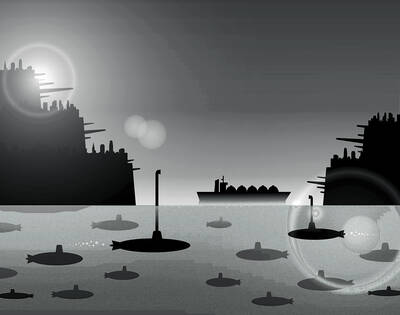
In the event of a war with China, Taiwan has some surprisingly tough defenses that could make it as difficult to tackle as a porcupine: A shoreline dotted with swamps, rocks and concrete barriers; conscription for all adult men; highways and airports that are built to double as hardened combat facilities. This porcupine has a soft underbelly, though, and the war in Iran is exposing it: energy. About 39,000 ships dock at Taiwan’s ports each year, more than the 30,000 that transit the Strait of Hormuz. About one-fifth of their inbound tonnage is coal, oil, refined fuels and liquefied natural gas (LNG),
On Monday, the day before Chinese Nationalist Party (KMT) Chairwoman Cheng Li-wun (鄭麗文) departed on her visit to China, the party released a promotional video titled “Only with peace can we ‘lie flat’” to highlight its desire to have peace across the Taiwan Strait. However, its use of the expression “lie flat” (tang ping, 躺平) drew sarcastic comments, with critics saying it sounded as if the party was “bowing down” to the Chinese Communist Party (CCP). Amid the controversy over the opposition parties blocking proposed defense budgets, Cheng departed for China after receiving an invitation from the CCP, with a meeting with
To counter the CCP’s escalating threats, Taiwan must build a national consensus and demonstrate the capability and the will to fight. The Chinese Communist Party (CCP) often leans on a seductive mantra to soften its threats, such as “Chinese do not kill Chinese.” The slogan is designed to frame territorial conquest (annexation) as a domestic family matter. A look at the historical ledger reveals a different truth. For the CCP, being labeled “family” has never been a guarantee of safety; it has been the primary prerequisite for state-sanctioned slaughter. From the forced starvation of 150,000 civilians at the Siege of Changchun
The two major opposition parties, the Chinese Nationalist Party (KMT) and the Taiwan People’s Party (TPP), jointly announced on Tuesday last week that former TPP lawmaker Chang Chi-kai (張啟楷) would be their joint candidate for Chiayi mayor, following polling conducted earlier this month. It is the first case of blue-white (KMT-TPP) cooperation in selecting a joint candidate under an agreement signed by their chairpersons last month. KMT and TPP supporters have blamed their 2024 presidential election loss on failing to decide on a joint candidate, which ended in a dramatic breakdown with participants pointing fingers, calling polls unfair, sobbing and walking


 RSS
RSS