


China is a hot topic in Washington. Its currency, exports to the US, oil interests and military capabilities have all been significant issues in Congress. While these concerns are important and real, none should stand alone. Each is part of a larger and more complex US-China -relationship. In that light, today's overheated US rhetoric over China needs to be tempered with sound judgment and wise long-term considerations.
Both competition and co-operation will feature in US-China bilateral ties in the 21st century. That does not mean relations are destined to be hostile although they could be if mishandled. The US has an opportunity to shape a co-operative relationship that would allow us to influence China's overall strategic choices. It would be a colossal mistake if misguided assumptions, rhetoric and actions led to a dangerous and conflicted relationship. This is not a time to let paranoia chart the course for US policy toward China.
The rise of China is a reality. No amount of Congressional legislation or US bludgeoning will change that. This is a country with a permanent seat on the United Nations Security Council, the world's largest population and, by some measures, the world's second largest economy. At the same time, the majority of China's 1.3 billion people are very poor and many problems put limits on its future.
A US-China partnership based on mutual self-interest is important to both countries. Each has a clear stake in the other's success. China has become America s third largest trading partner. The US and China have worked together to strengthen regional security, fight terrorism and international crime, help stabilize Afghanistan and address the North Korean nuclear problem.
There are also difficulties in this relationship and economic friction is a focal point. The withdrawal of CNOOC's bid for Unocal removes what was becoming a source of serious bilateral tension. But the rancor of the debate fuels an unproductive atmosphere and hinders efforts to address some more fundamental concerns.
In 2004, China's exports to the US were nearly six times its imports of US goods and services. Trying to close that gap through artificial tariffs that violate WTO rules and public threats will not resolve the differences. Most likely, such actions would further divide us, complicating the issues we should be working on and magnifying Chinese recalcitrance.
China has enacted some basic economic reforms in recent years, in large measure to comply with WTO standards. But China has many more reforms to make not least, opening its markets to US companies. This will require continued economic reform, a more transparent and consistent regulatory and licensing system, enforcement of distribution rights for foreign companies and strong enforcement of intellectual property laws.
While China's recent decision to abandon a fixed exchange rate to the dollar is an important step forward, the country needs eventually to achieve full convertibility of the yuan. The US and international community must help ensure that the Chinese financial system can absorb a transition to market-based exchange rates.
Beyond economic policy, the US must keep working with the Chinese on other key issues such as rule of law, human rights and religious freedoms. China's aggressive global diplomatic and economic strategy and its military build-up also bear close scrutiny. The US and its allies must encourage responsible Chinese actions, appropriate for a rising global power. This means, for example, not allowing a dangerous, historical Sino-Japanese confrontation to re-emerge.
An important US response to the rise of China is to strengthen alliances and friendships in the region, especially with ASEAN, and to work with its partners to sustain America's stabilizing role in Asia and the Pacific.
The US must also take positive steps to maintain its competitive position in the world. It also must get its own house in order. Raising trade barriers or compromising its core, free trade values will undermine America's overall long-term interests. We must rein in US deficit spending, promote greater domestic savings, address the growing entitlement challenge, rehabilitate infrastructure, invest in education and establish immigration reform. That is how America can maintain pre-eminence in the 21st century, regardless of the rise of China or any other nation.
Chuck Hagel, is the No.2 Republican on the Senate Foreign Relations Committee and chairman of the US Congressional-Executive Commission on China
Minister of Labor Hung Sun-han (洪申翰) on April 9 said that the first group of Indian workers could arrive as early as this year as part of a memorandum of understanding (MOU) between the Taipei Economic and Cultural Center in India and the India Taipei Association. Signed in February 2024, the MOU stipulates that Taipei would decide the number of migrant workers and which industries would employ them, while New Delhi would manage recruitment and training. Employment would be governed by the laws of both countries. Months after its signing, the two sides agreed that 1,000 migrant workers from India would
On March 31, the South Korean Ministry of Foreign Affairs released declassified diplomatic records from 1995 that drew wide domestic media attention. One revelation stood out: North Korea had once raised the possibility of diplomatic relations with Taiwan. In a meeting with visiting Chinese officials in May 1995, as then-Chinese president Jiang Zemin (江澤民) prepared for a visit to South Korea, North Korean officials objected to Beijing’s growing ties with Seoul and raised Taiwan directly. According to the newly released records, North Korean officials asked why Pyongyang should refrain from developing relations with Taiwan while China and South Korea were expanding high-level
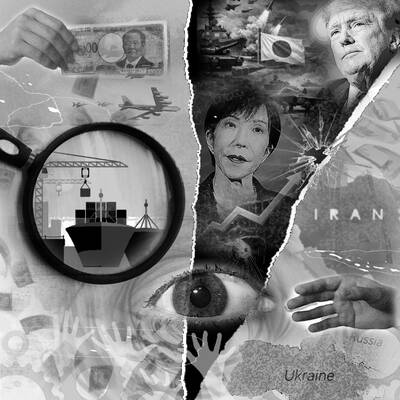
Japan’s imminent easing of arms export rules has sparked strong interest from Warsaw to Manila, Reuters reporting found, as US President Donald Trump wavers on security commitments to allies, and the wars in Iran and Ukraine strain US weapons supplies. Japanese Prime Minister Sanae Takaichi’s ruling party approved the changes this week as she tries to invigorate the pacifist country’s military industrial base. Her government would formally adopt the new rules as soon as this month, three Japanese government officials told Reuters. Despite largely isolating itself from global arms markets since World War II, Japan spends enough on its own
When 17,000 troops from the US, the Philippines, Australia, Japan, Canada, France and New Zealand spread across the Philippine archipelago for the Balikatan military exercise, running from tomorrow through May 8, the official language would be about interoperability, readiness and regional peace. However, the strategic subtext is becoming harder to ignore: The exercises are increasingly about the military geography around Taiwan. Balikatan has always carried political weight. This year, however, the exercise looks different in ways that matter not only to Manila and Washington, but also to Taipei. What began in 2023 as a shift toward a more serious deterrence posture


 RSS
RSS