


By the age of two, children have spent 13 months of their lives asleep. Sleep, as every parent knows, is central to child wellbeing.
But as parents know equally well, bedtime can be the biggest battleground of family life.
There are three main sleep difficulties in children: falling asleep, staying asleep and being too sleepy in the daytime. Every parent experiences at least one of them at some point or other.
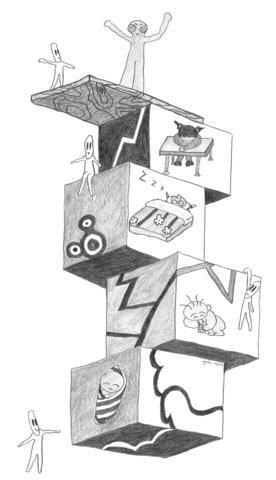
Perhaps because of this, and because disturbed nights have become regarded as almost normal, we fail to appreciate just how important sleep is for our children's health. In fact, sleep has a major impact on their physical development and growth: when your mom told you you wouldn't grow up big and strong if you didn't go to bed, she was spot on. Research has shown that children who do not sleep as much as they should are smaller than they ought to be.
But the impact of sleep is not just physical. Sleep also has a profound influence on children's behavior, emotions and ability to learn. Remember how grandma told us to "sleep on it"? Children (and adults) need sleep to consolidate new learning, be it French vocabulary or bike riding. In one study, cutting children's sleep from 10 to nine hours a night had a marked effect on working memory and verbal task ability, in addition to making children irritable and "oppositional" -- a medical turn of phrase that encompasses everything we dread as parents, from truculent defiance to constant picking of fights with siblings. And that's with just one hour less sleep a night, a time period that many of us would consider insignificant.
"The problem with children and sleep is that while we all know what a sleep-deprived adult looks like, we can't say the same of a sleep-deprived child," said Paul Gringras, a specialist in pediatric neurodisability at Guy's and St Thomas's Hospital in London and director of the hospital's pediatric sleep-disorder clinic. Such kids, he said, may not even appear sleepy: in fact, they may appear the reverse.
What all this means is that children's sleep disorders are not often recognized as such, although they may well be referred to hospitals for treatment of the behavioral or learning problems that occur because of their sleep deprivation. For instance, children with narcolepsy, a classic sleep disorder, may initially be referred for specialist assessment because of concern about "underachievement."
The situation is compounded by a lack of pediatric sleep disorder clinics. While Chicago alone has three, Britain has fewer than 10 for the whole country; most are adjuncts to adult sleep clinics.
Gringras sees plenty of children who have neurodisabilities such as autism and attention deficit hyperactivity disorder (ADHD) -- and, he said, about 50 per cent of them also have sleep problems. For children with ADHD, popularly perceived to be on the go all the time, this is not a surprise. Yet what is counterintuitive is that many of those with ADHD also experience daytime sleepiness, revealed by something called a multiple sleep latency test. It involves repeatedly bringing a child into a dull room and asking them to lie down and go to sleep.
"No normal child ever falls asleep in these circumstances," Gringras said, "whereas children with narcolepsy reliably fall asleep every time. The real surprise is that children with ADHD often fall asleep, too."
Some pediatric sleep specialists, such as Stephen Sheldon, director of the Sleep Medicine Center at Chicago's Children's Memorial Hospital, go so far as to say that as many as 30 percent of children with ADHD have been wrongly diagnosed.
"There's a proportion of youngsters that have sleep pathology causing their daytime symptoms that appear virtually identical to ADHD," he said.
Gringras does not go this far, but does say that sorting out underlying sleep problems can make a real difference to behavior in those diagnosed with ADHD, so much so that, in many cases, drug treatments such as Ritalin are no longer necessary.
There is an increasing body of evidence pointing to a link between sleep problems and attention deficit disorders. For instance, work from the University of Michigan in 2002 by Ronald Chervin showed that children who snored faced double the risk of being inattentive and hyperactive.
"If there is indeed a cause-and-effect link, sleep problems could represent a major public health issue," Chervin said.
But many pediatricians feel that disordered sleep is a consequence of ADHD, not a cause of it.
No one sleep disorder is linked to ADHD. Just as in adults, there are many different types of sleep problem, some of which can be revealed simply by careful history-taking. Nor are overnight stays in a sleep lab always required as for adults. Children may be given an "Actiwatch" to wear at home, which records movement detection to a computer chip over a two-week period before the information is downloaded onto a PC for analysis.
"Basically, it tells us how much napping is going on," Gringras said.
He points out that when parents think their darling is asleep, he may actually be reading under the bedclothes with a torch or even texting his equally wide-awake mates.
Even for those children reaching a tertiary referral center such as the one at St Thomas's, the Little Angel-style behavioral approach is still of value, especially if the parents are supported by professionals. So-called "sleep hygiene" measures such as a bedroom that is dark and only for sleeping, consistent bedtimes and daytime exercise can make a big difference on their own.
A forgotten aspect is that sleep needs the right prompts, such as darkness. Light-emitting computer screens wake the brain up, not put it to sleep, so it makes sense to ban the PC from the bedroom.
Treatments for pediatric sleep disorders vary depending on the type identified. Sleep-phase disturbances, for instance, are treated with light. Adult body rhythms, which naturally run to near 25-hour cycles, are reset every day by time cues, such as morning light, ensuring that we adhere to a 24-hour cycle. Circadian rhythm disorders are common in babies and toddlers, who may be wide awake when everyone else in the house is fast asleep, and vice versa.
Somewhere between 18 months and four years old, children develop adult rhythms. But about one in 15 children between the ages of five and 13 continues to march to the beat of his or her own personal me drum. Essentially, what these children have is jet lag without having moved through any time zones. And like us after a red-eye overnight flight from New York, they are irritable, "oppositional" and sleepy, and can't concentrate or learn properly.
The answer for these children is not a fixed bedtime, but a firmly anchored morning wake-up time.
Although letting them sleep an hour later is OK, a three-hour lie-in at weekends is disastrous because their bodies will reset their clocks every day to this rhythm. The most effective treatment is a simulated dawn at a fixed time each morning using light therapy.
Needless to say, most kids can't or won't sit still for long enough, so sleep physiologists have to be endlessly inventive. Visors that look like something out of NASA are one option. These have a light source under the brim, which does not have to be too bright. Also effective in some cases are doses of melatonin, the hormone that is slave to the body clock and which carries its messages.
Another common problem is obstructive sleep apnea. In adults, this is accompanied by heavy snoring. Children with this respiratory condition may not snore, but still wake up as much as 12 times an hour, making them severely sleep deprived. Because their breathing seems normal during the day and even for much of the night, the real cause of poor daytime performance often goes unrecognized.
Here it is data obtained in a sleep lab that are the clincher for diagnosis. These rely on healthcare scientists whose job it is to wire up, cajole and comfort children, and then stay up all night to take the necessary measurements. These children's respiratory difficulties are very often bound up with enlarged adenoids and tonsils. Shrinking them with steroid sprays or removing them surgically may provide a complete cure.
In adults, the link between sleep disorders and health disorders such as coronary heart disease has long been recognized. Poor sleep in children is already linked with obesity, and it is known that children with sleep disorders are more likely to become adults with sleep disorders; but there may be a lot more to unravel about the dangers of doing without sleep when you're a kid.

KMT Chairwoman Cheng Li-wun’s (鄭麗文) recent visit to Beijing and her upcoming visit to Washington will serve as a high-level test of her diplomatic mettle. In Beijing, Cheng was received with symbolic gestures, a warm reception, and high-level access. In Washington, she will receive far less pomp and far sharper questions about the KMT’s vision for the future of Taiwan. Her challenge will be to persuade Washington that the KMT’s engagement with China can coexist with strong deterrence. Cheng’s April 7-12 visit to mainland China coincided with an intense period of conflict in Iran. Despite the strategic significance of Cheng’s trip,

The closure of the Strait of Hormuz has sent the vast Asian chemicals industry into a tailspin. Deprived of the likes of Qatari natural gas and Saudi Arabian oil, the region’s fertilizer and plastics plants are slowing production or even shutting down. Everywhere except China, that is. In petrochemicals, China is unique. As well as a traditional industry that uses oil and gas as feedstock, it has parallel output that relies on its abundant domestic coal. Unsurprisingly, India and other regional powers want to copy and paste the Chinese method. This would not be easy — or climate friendly. The
Indonesian President Prabowo Subianto says he knows how to fix the problems facing Indonesia. Yet his economic mismanagement and authoritarian tendencies are steering the nation toward a familiar mix of currency instability and political chaos. The world’s fourth-most populous nation risks reversing the hard-won democratic and business reforms that came after the Asian Financial Crisis in 1997. At that time, the rupiah collapsed and the political upheaval that followed forced former president Haji Mohamed Suharto from power. Prabowo’s administration is ignoring similar warning signs. That disconnect was apparent in a national address on Wednesday, when Prabowo projected the swagger that has
“Of course you can choose not to be Taiwanese, just do not stay here,” chairwoman of Taipei 101 operator Taipei Financial Center Corp Janet Chia (賈永婕) said in an online interview with local entertainer Tai Chih-yuan (邰智源), triggering intense discussion on social media, with politicians across party lines weighing in. In the interview, which was aired on May 14, Chia and Tai’s discussion over a meal in Taipei 101 covered Chia’s career change from entertainer to chairwoman and US climber Alex Honnold’s free solo climb up the Taipei 101 building. During the interview, Chia said, “Being on this land, we


 RSS
RSS