


Taiwan's democratic transformation has evoked so many feelings in the public, including expectation, discouragement, despair and powerlessness. The underlying reason for such emotional complexity is mainly the absence of appropriate government action addressing historical injustices. As a result, the truth remains concealed and the victims of the White Terror have been almost completely forgotten with time.
Let us consider the examples of the murders between the Kaohsiung Incident up until the beginning of the social movements. One of these is the killing of family members of former Democratic Progressive Party (DPP) chairman Lin I-hsiung (
Before the memorial ceremony for the 20th anniversary of Chen's martyr-like death, sponsored by the Chen Wen-chen Memorial Foundation, an appeal was entered by Chen's relatives for a new trial, but it continues to be rejected because of a lack of new evidence.
According to international human-rights treaties, there is no time limit for prosecutions if a killing results from government violence, including torture. Our foundation has been striving to find out the truth for a long time. But even though more and more leads are emerging, the judiciary still will not impose justice on the former regime's persecutors.
This has given rise to concerns that delaying the truth will only allow the perpetrators to escape punishment. A complete political mess has ensued and is perpetrating the distortion of justice in this society.
As part of its democratic transition, the South African experience of restoring justice by establishing a Truth and Reconciliation Commission (TRC) following the fall of apartheid in 1994 came as a surprise to the world. Anybody who felt he or she had been a victim of violence could come forward and be heard at the TRC, while perpetrators of violence could also give testimony and request amnesty from prosecution. The hearings were a way of exploring both evil and kindness deep inside the human heart.
The three-year process of truth-finding was the first step for South Africa to effect reconciliation. The Center for the Study of Violence and Reconciliation, a non-governmental organization in South Africa, continues to advocate relief for victims -- because it takes several generations before collective social trauma can be eased.
In another example, since the 1970s a third wave of global democratization has taken place, and each country involved has had its own unique reconciliation process. For example, after our diplomatic allies in South America -- such as Guatemala and El Salvador -- democratized, they continued to investigate the truth of wartime political persecution, publishing each investigative report as soon as it was concluded. Only in this way could the new governments enjoy the trust of their citizens and bring justice to the victims.
As for our neighbor South Korea, it passed a law last year establishing a Truth Investigation Committee, which began its work earlier this year. During the nation's Independence Day speech, South Korean President Roh Moo-hyun called on all South Koreans to support the passage of the bill forming the committee in the legislature.
Looking back over the DPP's more than five years in government, "reconciliation and coexistence" have been the preferred slogans in domestic politics, giving Taiwan's perpetrators of human-rights violations protection from their misdeeds. As a result, these people are able to continue with verbal violence against the public and blur Taiwanese consciousness, causing victims and their families to wonder whether justice exists at all.
It is hoped that the selection of July 2 as Chen Wen-chen Memorial Day -- a day for holding a symposium on "transitional justice" and to screen related documentaries -- will bring the experience of other countries to Taiwan and let the public collectively see the importance of facing up to justice. Although we know this process may give rise to denial and opposition at first, it is only in doing so that we can establish a society based on respect for human rights.
Tso Chin-jun is a trustee of the Chen Wen-chen Memorial Foundation.
TRANSLATED BY LIN YA-TI
A gap appears to be emerging between Washington’s foreign policy elites and the broader American public on how the United States should respond to China’s rise. From my vantage working at a think tank in Washington, DC, and through regular travel around the United States, I increasingly experience two distinct discussions. This divergence — between America’s elite hawkishness and public caution — may become one of the least appreciated and most consequential external factors influencing Taiwan’s security environment in the years ahead. Within the American policy community, the dominant view of China has grown unmistakably tough. Many members of Congress, as
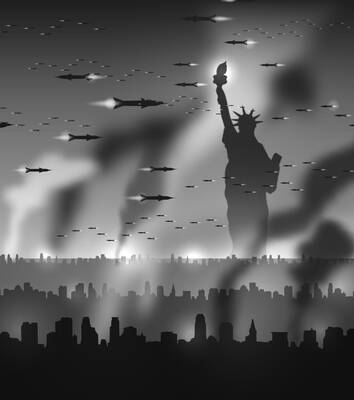
After declaring Iran’s military “gone,” US President Donald Trump appealed to the UK, France, Japan and South Korea — as well as China, Iran’s strategic partner — to send minesweepers and naval forces to reopen the Strait of Hormuz. When allies balked, the request turned into a warning: NATO would face “a very bad” future if it refused. The prevailing wisdom is that Trump faces a credibility problem: having spent years insulting allies, he finds they would not rally when he needs them. That is true, but superficial, as though a structural collapse could be caused by wounded feelings. Something
Former Taipei mayor and Taiwan People’s Party (TPP) founding chairman Ko Wen-je (柯文哲) was sentenced to 17 years in prison on Thursday, making headlines across major media. However, another case linked to the TPP — the indictment of Chinese immigrant Xu Chunying (徐春鶯) for alleged violations of the Anti-Infiltration Act (反滲透法) on Tuesday — has also stirred up heated discussions. Born in Shanghai, Xu became a resident of Taiwan through marriage in 1993. Currently the director of the Taiwan New Immigrant Development Association, she was elected to serve as legislator-at-large for the TPP in 2023, but was later charged with involvement
Out of 64 participating universities in this year’s Stars Program — through which schools directly recommend their top students to universities for admission — only 19 filled their admissions quotas. There were 922 vacancies, down more than 200 from last year; top universities had 37 unfilled places, 40 fewer than last year. The original purpose of the Stars Program was to expand admissions to a wider range of students. However, certain departments at elite universities that failed to meet their admissions quotas are not improving. Vacancies at top universities are linked to students’ program preferences on their applications, but inappropriate admission


 RSS
RSS