


It is so stupid to see the letter from Tzung Han Lu follow right after mine (Letters, May 29, page 8).
If "US weapons are not good enough," whose arms does Tzung suppose Taiwan should buy? Russia's? Does he even know the arms package took years for the US to approve, so it didn't upset China too much?
The legislature is a forum for discussion and debate between people of opposing opinions. Is preventing bills from reaching the floor of the legislature the kind of "oversight" that Tzung has in mind? Or does he still possess the stupid Chinese mentality of "I know best?"
The most stupid thing is Tzung knows that even if the bill was passed today, these weapons would take years to deliver. Four years have already been wasted, how about if the arms bill is not passed for another three years? Ever think about that, Tzung?
Chen Ming-chung
Chicago, Illinois
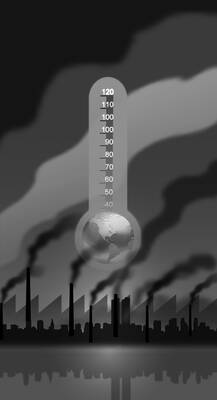
The closure of the Strait of Hormuz has sent the vast Asian chemicals industry into a tailspin. Deprived of the likes of Qatari natural gas and Saudi Arabian oil, the region’s fertilizer and plastics plants are slowing production or even shutting down. Everywhere except China, that is. In petrochemicals, China is unique. As well as a traditional industry that uses oil and gas as feedstock, it has parallel output that relies on its abundant domestic coal. Unsurprisingly, India and other regional powers want to copy and paste the Chinese method. This would not be easy — or climate friendly. The
KMT Chairwoman Cheng Li-wun’s (鄭麗文) recent visit to Beijing and her upcoming visit to Washington will serve as a high-level test of her diplomatic mettle. In Beijing, Cheng was received with symbolic gestures, a warm reception, and high-level access. In Washington, she will receive far less pomp and far sharper questions about the KMT’s vision for the future of Taiwan. Her challenge will be to persuade Washington that the KMT’s engagement with China can coexist with strong deterrence. Cheng’s April 7-12 visit to mainland China coincided with an intense period of conflict in Iran. Despite the strategic significance of Cheng’s trip,
History might remember 2026, not 2022, as the year artificial intelligence (AI) truly changed everything. ChatGPT’s launch was a product moment. What is happening now is an anthropological moment: AI is no longer merely answering questions. It is now taking initiative and learning from others to get things done, behaving less like software and more like a colleague. The economic consequence is the rise of the one-person company — a structure anticipated in the 2024 book The Choices Amid Great Changes, which I coauthored. The real target of AI is not labor. It is hierarchy. When AI sharply reduces the cost
US President Donald Trump recently repeated his claim that “Taiwan stole America’s chip industry,” reigniting public debate on the issue. As a former Taiwanese minister of economic affairs and an entrepreneur deeply involved in semiconductor supply chain development, I feel a responsibility to clarify this misunderstanding. From the perspective of global industrial evolution and the economic principle of comparative advantage, such a statement appears overly simplistic and risks obscuring the essence of the issue. The rise of Taiwan’s semiconductor industry was not built on “replacing America,” but rather emerged as a result of countries pursuing different development paths within the


 RSS
RSS