


Branding forces companies to ask the question: "What's the purpose of our business?" The answer used to be simple: To make money.
We used to accept that as the natural response. Now, however, we expect a bit more, and branding is integral to the way businesses give their answers. So, as well as the commercial purpose -- making money keeps you in business -- companies now say they have wider social and ethical roles.
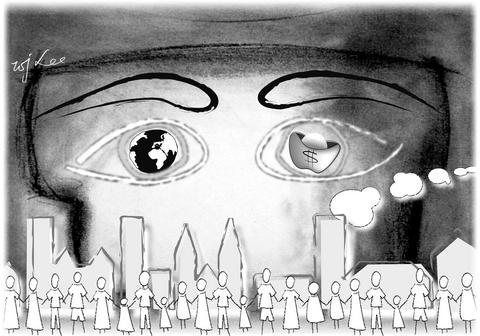
Wj Lee
The way they make these roles as distinctive as possible gives definition to a brand, because branding is all about making a company seem special and different. There is an increasing acceptance, inside and outside business circles, that companies can have more than just a commercial reason for being. This means accepting that some brands can also have a conscience.
Starbucks is certainly a brand with a conscience. This has made it particularly sensitive to attack because, coming from liberal roots in Seattle and admiring the European tradition of coffee houses, it is as far as it is possible for a brand to be from the myopic idea "we're just here to make money."
Starbucks has always had a commitment to exist for the well-being of all the communities it relies on, particularly its own people in retail outlets, the farmers in developing countries and the communities around its shops.
The Real Product
The cynical will say it does this for a reason. And indeed it does, because Starbucks believes in its brand. In many ways it is the quintessential brand of the modern age, creating and fulfilling a demand for a product that we could all do without -- except that the real product is not a drink made from roast beans but a place to go, meet friends, talk, daydream, have meetings, relax, hang out.
Where Starbucks has been less than quintessentially modern is in that it has been hopeless at spin. It has always had a good story to tell but has rarely managed to tell it. Despite this, Starbucks has continued to grow because people continue to enjoy the the product and the brand experience, and to tell others about it.
Starbucks began in Seattle in the early 1970s. Three college friends formed a business because they loved coffee and wanted to educate other people about it. If Howard Schultz had not come across them at the end of that decade, Starbucks might never have spread beyond the US Pacific coast. Within a few years, the New Yorker had taken control of Starbucks and started to develop it outside the Seattle area.
But he based his ideas on what he had seen and loved in Italian coffee bars.
In particular he saw Starbucks as "the third place" -- not work, not home, but containing elements of both, and a refuge at times from both. Starbucks was about "rewarding everyday moments," a place to go for a small treat on a regular basis. This model succeeded and Starbucks grew at a phenomenal rate across the US from 1987. Now it operates in 32 countries, although it was only in 1996 that Starbucks opened its first shop outside North America.
A Braoder Purpose
The speed of this development took everyone by surprise. In the UK the first Starbucks opened in 1998 and suddenly it seemed they were everywhere, an impression given by the swift acquisition and rebranding of the Seattle Coffee Company. This enabled Starbucks to enter a market just finding a new taste for coffee, with Costa, Coffee Republic and Caffe Nero as competitors.
The UK has become a coffee nation at breathtaking speed. Ten years ago you would struggle to find real coffee served in British towns. Starbucks and others have created an entirely new market for coffee-drinking. There are now 400 UK outlets, but also independent cafes. Research by Allegra Strategies shows that the independent coffee bar market has been growing by 3 percent a year since 1999.
In this market Starbucks is the major brand. And it has become that by having a purpose that is much broader than the single-mindedly commercial.
Its staff are known as partners, not a cosmetic term but a reflection of the unusual degree of employee involvement in the growth of the company through stock options and other benefits. But responsibility comes with that, and partners are encouraged to take active roles in local communities and good causes.
Fair Trade
This year, for example, Starbucks is supporting the Coffee House Challenge, a scheme to celebrate the 250th anniversary of the UK's Royal Society of Arts, which was originally founded in a London coffee house. The Coffee House Challenge has seen people all around the UK coming together to hold debates about fostering local communities and improving the environment.
Starbucks also has outstripped other coffee companies in its support for farming communities where its coffee is grown. The four big coffee companies (Nestle, Procter & Gamble, Kraft and Sara Lee) control the price of commodity coffee, generally to the detriment of farmers in the developing world. Starbucks buys only 1 percent of the world's coffee but, as Oxfam acknowledges, its record on fair trade is good and improving, and Starbucks buys its coffee at around double the open-market price.
Self-interest and altruism are not necessarily incompatible. Good deeds help a brand because they build commitment with its stakeholders. And that makes money, as well as stronger communities.
John Simmons wrote My Sister's a Barista: How They Made Starbucks a Home from Home.

KMT Chairwoman Cheng Li-wun’s (鄭麗文) recent visit to Beijing and her upcoming visit to Washington will serve as a high-level test of her diplomatic mettle. In Beijing, Cheng was received with symbolic gestures, a warm reception, and high-level access. In Washington, she will receive far less pomp and far sharper questions about the KMT’s vision for the future of Taiwan. Her challenge will be to persuade Washington that the KMT’s engagement with China can coexist with strong deterrence. Cheng’s April 7-12 visit to mainland China coincided with an intense period of conflict in Iran. Despite the strategic significance of Cheng’s trip,

The closure of the Strait of Hormuz has sent the vast Asian chemicals industry into a tailspin. Deprived of the likes of Qatari natural gas and Saudi Arabian oil, the region’s fertilizer and plastics plants are slowing production or even shutting down. Everywhere except China, that is. In petrochemicals, China is unique. As well as a traditional industry that uses oil and gas as feedstock, it has parallel output that relies on its abundant domestic coal. Unsurprisingly, India and other regional powers want to copy and paste the Chinese method. This would not be easy — or climate friendly. The
Indonesian President Prabowo Subianto says he knows how to fix the problems facing Indonesia. Yet his economic mismanagement and authoritarian tendencies are steering the nation toward a familiar mix of currency instability and political chaos. The world’s fourth-most populous nation risks reversing the hard-won democratic and business reforms that came after the Asian Financial Crisis in 1997. At that time, the rupiah collapsed and the political upheaval that followed forced former president Haji Mohamed Suharto from power. Prabowo’s administration is ignoring similar warning signs. That disconnect was apparent in a national address on Wednesday, when Prabowo projected the swagger that has
“Of course you can choose not to be Taiwanese, just do not stay here,” chairwoman of Taipei 101 operator Taipei Financial Center Corp Janet Chia (賈永婕) said in an online interview with local entertainer Tai Chih-yuan (邰智源), triggering intense discussion on social media, with politicians across party lines weighing in. In the interview, which was aired on May 14, Chia and Tai’s discussion over a meal in Taipei 101 covered Chia’s career change from entertainer to chairwoman and US climber Alex Honnold’s free solo climb up the Taipei 101 building. During the interview, Chia said, “Being on this land, we


 RSS
RSS