


Even though corruption in Taiwan may not be as serious as it is in other places -- Transparency International's latest annual report ranks Taiwan in third place, behind Russia and China -- there is no cause for complacency. In fact the report should serve as a wake-up call for the government, which has made cleaning up political corruption one of its primary goals. Two years of determined effort and the nation is still ranked as high as third?
The Ministry of Justice has received high public approval ratings since Chen Ding-nan (
However, all that hard work has been marred by the fact that many of the key suspects in such cases remain free, thanks to their status as legislators. Others have fled abroad and show no signs of planning to return. Such cases make the average person doubt the ministry's claim that everyone is equal before the law.
The Constitution only exempts legislators from legal responsibility for what they say on the legislative floor, not from criminal liability. The Legislative Yuan should not obstruct the judiciary by repeatedly citing what is clearly an unconstitutional rule that prohibits law enforcement authorities from searching its premises or detaining legislators when the legislature is in session. This rule has only led to legislators implicated in criminal cases fleeing the country before the legislature recesses -- and returning only after the next legislative session has begun. As long as they remain legislators they cannot be summoned for questioning or called into court. If they lose their seat, they can leave the country before the end of their terms and continue to evade investigation.
Legislators should lead by example. They are, and unfortunately, it is in the worst way possible. County and city council members are following suit -- declaring that they must remain above the law while their councils are in session, even if they are facing criminal charges. Two years ago the then speaker of the Chiayi County Council, Hsiao Teng-piao (
Most people don't understand the legal rational for allowing the legislators to break the law with impunity. What they do know is that the average person can't get away with such shenanigans. And they know that such regulations let elected officials get away with murder -- both figuratively and literally. Elected representatives have been linked to crimes such as illegally altering land-use zones, bid-rigging, illegal gravel mining and running gambling dens and brothels. The lesson appears to be that crime does pay, especially if you can get elected to public office.
So why hasn't the government tried to close this loophole? Simple -- some of the very legislators who would have to vote on such a change, are themselves implicated in criminal cases. Those whose hands are clean lack the moral courage to take the initiative and propose an amendment that is guaranteed to make enemies among their colleagues.
This is one of the stark realities of Taiwan's fledgling democracy. As long as such elected officials can get evade the law, the international community will view Taiwan as an "island of greed." This is one stain that will take even more than the much-needed rains to wash away.
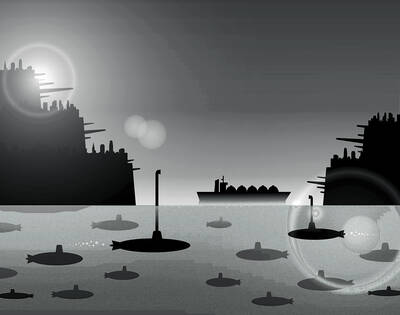
In the event of a war with China, Taiwan has some surprisingly tough defenses that could make it as difficult to tackle as a porcupine: A shoreline dotted with swamps, rocks and concrete barriers; conscription for all adult men; highways and airports that are built to double as hardened combat facilities. This porcupine has a soft underbelly, though, and the war in Iran is exposing it: energy. About 39,000 ships dock at Taiwan’s ports each year, more than the 30,000 that transit the Strait of Hormuz. About one-fifth of their inbound tonnage is coal, oil, refined fuels and liquefied natural gas (LNG),
On Monday, the day before Chinese Nationalist Party (KMT) Chairwoman Cheng Li-wun (鄭麗文) departed on her visit to China, the party released a promotional video titled “Only with peace can we ‘lie flat’” to highlight its desire to have peace across the Taiwan Strait. However, its use of the expression “lie flat” (tang ping, 躺平) drew sarcastic comments, with critics saying it sounded as if the party was “bowing down” to the Chinese Communist Party (CCP). Amid the controversy over the opposition parties blocking proposed defense budgets, Cheng departed for China after receiving an invitation from the CCP, with a meeting with
To counter the CCP’s escalating threats, Taiwan must build a national consensus and demonstrate the capability and the will to fight. The Chinese Communist Party (CCP) often leans on a seductive mantra to soften its threats, such as “Chinese do not kill Chinese.” The slogan is designed to frame territorial conquest (annexation) as a domestic family matter. A look at the historical ledger reveals a different truth. For the CCP, being labeled “family” has never been a guarantee of safety; it has been the primary prerequisite for state-sanctioned slaughter. From the forced starvation of 150,000 civilians at the Siege of Changchun
The two major opposition parties, the Chinese Nationalist Party (KMT) and the Taiwan People’s Party (TPP), jointly announced on Tuesday last week that former TPP lawmaker Chang Chi-kai (張啟楷) would be their joint candidate for Chiayi mayor, following polling conducted earlier this month. It is the first case of blue-white (KMT-TPP) cooperation in selecting a joint candidate under an agreement signed by their chairpersons last month. KMT and TPP supporters have blamed their 2024 presidential election loss on failing to decide on a joint candidate, which ended in a dramatic breakdown with participants pointing fingers, calling polls unfair, sobbing and walking


 RSS
RSS