


Now that the question of United Microelectronics Corp's (UMC) involvement with China-based He Jian Technology Co (Suzhou) has entered judicial proceedings, the furor over the case has gradually died down.
But surprisingly, certain major newspapers on March 21 ran an advertisement placed by UMC chairman Robert Tsao (
Reading carefully through the content of the advertisement, it is not difficult to see the anxiety with which the principals in the case are trying to defend themselves and escape from their current predicament.
Their contorted reasoning, contempt of the law and attempt to shirk responsibility for their actions have only served to substantiate public accusations and suspicions.
While we can respect both the dignity and interests of UMC, there are some matters of right and wrong regarding the way the UMC management has responded to this case that still deserve our attention.
First, regarding the issue of "breach of trust" and violating the "Security Exchange Law" (
Or should it be left unresolved? Since the case involves judicial credibility and the rights and interests of the public, we believe that the judicial authority will need to pass judgement.
Second, UMC admitted that it brushed over its investment in and technical assistance to He Jian as part of its operational strategy, so it has clearly violated the Statue Governing Relations between the People of the Taiwan Area and the Mainland Area (
If this action was taken as a result of an individual's decision, that person should compensate UMC for any financial loss. If it was a corporate decision by UMC, the firm should now be considered a "deviant corporation."
Third, if UMC violated the government's statutes as a result of management negligence or lack of supervision, harming the public and national interests as a result, and if there has been negligence on the part of the Mainland Affairs Council, the Investment Commission of the Ministry of Economic Affairs, the Securities and Futures Bureau under the Financial Supervisory Commission, or other governmental agencies which contributed to the situation, then UMC and these agencies should all be investigated.
Fourth, as to the lifting of the order forbidding He Jian's Taiwanese management personnel from leaving Taiwan, since the order may encroach on He Jian's interests and the human rights of the individuals concerned, the judicial authority is required to investigate the matter to obtain a legal basis to restrict their freedom of movement.
Fifth, UMC wants to be admired by the public. But UMC has not made clear which technologies and patents it has transferred to China, nor their value or the process by which they will be transferred. UMC must clearly explain all of this in detail.
Otherwise, how is the public supposed to understand whether UMC has violated the laws that control international technology transfers?
We hope that UMC's announcements in the media were made to explain the truth, admit its wrongdoings and express its intention to improve. If UMC's announcements were intended to mislead the public by using the media to conceal illegal and unreasonable acquisitions, or even shape public opinion to influence the courts, it would not be acting wisely.
Karl J.C. Chang is the secretary-general of the Taiwan Association of University Professors.
TRANSLATED BY LIN YA-TI
KMT Chairwoman Cheng Li-wun’s (鄭麗文) recent visit to Beijing and her upcoming visit to Washington will serve as a high-level test of her diplomatic mettle. In Beijing, Cheng was received with symbolic gestures, a warm reception, and high-level access. In Washington, she will receive far less pomp and far sharper questions about the KMT’s vision for the future of Taiwan. Her challenge will be to persuade Washington that the KMT’s engagement with China can coexist with strong deterrence. Cheng’s April 7-12 visit to mainland China coincided with an intense period of conflict in Iran. Despite the strategic significance of Cheng’s trip,
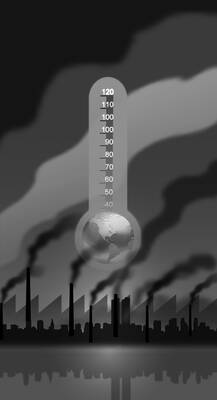
The closure of the Strait of Hormuz has sent the vast Asian chemicals industry into a tailspin. Deprived of the likes of Qatari natural gas and Saudi Arabian oil, the region’s fertilizer and plastics plants are slowing production or even shutting down. Everywhere except China, that is. In petrochemicals, China is unique. As well as a traditional industry that uses oil and gas as feedstock, it has parallel output that relies on its abundant domestic coal. Unsurprisingly, India and other regional powers want to copy and paste the Chinese method. This would not be easy — or climate friendly. The
History might remember 2026, not 2022, as the year artificial intelligence (AI) truly changed everything. ChatGPT’s launch was a product moment. What is happening now is an anthropological moment: AI is no longer merely answering questions. It is now taking initiative and learning from others to get things done, behaving less like software and more like a colleague. The economic consequence is the rise of the one-person company — a structure anticipated in the 2024 book The Choices Amid Great Changes, which I coauthored. The real target of AI is not labor. It is hierarchy. When AI sharply reduces the cost
US President Donald Trump recently repeated his claim that “Taiwan stole America’s chip industry,” reigniting public debate on the issue. As a former Taiwanese minister of economic affairs and an entrepreneur deeply involved in semiconductor supply chain development, I feel a responsibility to clarify this misunderstanding. From the perspective of global industrial evolution and the economic principle of comparative advantage, such a statement appears overly simplistic and risks obscuring the essence of the issue. The rise of Taiwan’s semiconductor industry was not built on “replacing America,” but rather emerged as a result of countries pursuing different development paths within the


 RSS
RSS