


It is rare for a foreign doctor to get to China's rural areas, where its AIDS epidemic was born and takes a horrible toll. But recently, two nurses and I ventured into a poor farming area, Nizui in Hubei Province, as part of a Medecins Sans Frontieres (MSF) team to visit the Liu family and evaluate their 7-month-old baby. The child was the size of a two month old, but his eyes held the gaze of an 80-year-old man long acquainted with extreme suffering. The baby was dying of AIDS. His parents, aunts, and uncles were also HIV-positive.
The Liu family is one of thousands of poor farming families in China's interior who contracted HIV through contaminated blood donations during the 1990s, when under-regulated for-profit blood banking companies reused needles and transferred blood from infected donors to clean donors after extracting the plasma.
The Chinese Health Ministry recently put the total number of HIV/AIDS cases at 840,000, although most experts believe that the true number is much higher. Some believe that by 2010, the number of infected Chinese may reach 10 million.
After years of taking a passive, low-profile approach to the epidemic, health officials have stepped up their anti-HIV campaign. Since 80 percent of HIV/AIDS patients reside in the countryside, greater access to health care in these areas has become a priority. This past July, during the highly publicized 15th International AIDS Conference in Bangkok, Premier Wen Jiabao (
This new anti-HIV/AIDS campaign, which the international community has lauded, is more open and proactive than before. But it must still operate in the context of a closed society, where government control over the media limits the flow of information necessary to deal with any public health epidemic. Moreover, it is unclear how care will be delivered to the rural front lines, where the old system of clinics based in Peoples' Communes collapsed with the de-collectivization of agriculture.
To be effective, clinics in areas where HIV/AIDS is prevalent must provide patients with the same standard of care that is offered for other health conditions. Unfortunately, the door to such access remains largely closed, partly because China was initially reluctant to allow overseas groups into their hinterlands to assist. Nonetheless, local and foreign NGOs are now starting to play a role in filling the gap between government policies and front-line healthcare delivery. In May last year, MSF was authorized to set up an HIV/AIDS clinic in Xiangfan, Hubei Province.
On my recent visit, I met Du, a thin-framed, HIV-positive farmer who lost his wife to AIDS last year and was desperate to prevent his infected seven-year-old son from meeting the same fate. He had been taking the boy all over China by train, bus, and truck in search of help. Last month alone, they visited five large cities without success. The chance that Du, and those like him, will find help in China is slim; at present, most clinics and hospitals are not adequately prepared to treat HIV-infected patients.
Treatment is extremely limited where it is available. For example, Xiangfan's Infectious Diseases Hospital is the prefecture's only health facility where HIV/AIDS patients can be admitted. On paper, the hospital appears well staffed and adequately equipped, but on my rounds there, I found the halls and wards deserted and barren. Few therapeutic and diagnostic options were available. Even a basic test like a CAT scan would require transport to another regional hospital.
But under-equipped hospitals may not be the greatest obstacle to controlling China's AIDS crisis. Equally harmful are the government's sensitivity to its own policy failures and the stigma attached to a disease that is often sexually transmitted. Indeed, information is so limited and the stigma so strong that ordinary people -- and sometimes medical personnel -- often ostracize AIDS patients.
Patients who do receive care are often treated with substandard, even harmful, medicine. According to the International Federation of Pharmaceutical Manufacturers Associations, patients in China can have a 40 percent to 50 percent chance of being sold fake over-the-counter remedies and an even higher chance of being sold fake prescription drugs. Some of these counterfeit products contain toxic ingredients.
Foreign NGOs such as MSF insist on using medications that are up to WHO standards, but the Chinese government insists that such restrictive measures are excessive. Although MSF uses its own drug supply, Chinese patients still often buy medicine with unknown ingredients and efficacy on the street.
Safety regulations must, at a minimum, be applied to the prescription of the anti-retroviral medications that fight HIV, because such drugs are extremely sensitive to dosage changes and interactions with other medicines. Improper use of these medicines fosters HIV resistance and provides little therapeutic value for patients.
There is no quick-fix solution to ending China's AIDS crisis. Officials there must focus not only on developing a pragmatic, realistic healthcare infrastructure in rural areas, but also on bringing about greater openness in China's media in order to spread life-saving public information.
Like all epidemics, HIV/AIDS in China is a public health crisis that can only be solved with the mass dissemination of accurate information. Transforming promises and policies into patient rights, awareness, and effective health care will undoubtedly take time, especially for a country as massive and lacking in transparency as China. For the hundreds of thousands of HIV sufferers, this is likely to be more time than they have left.
Cynthia Li, a physician previously with Kaiser Permanente's HIV group in San Francisco, California, worked as a volunteer doctor with Medecins Sans Frontieres in China.
Copyright: Project Syndicate
KMT Chairwoman Cheng Li-wun’s (鄭麗文) recent visit to Beijing and her upcoming visit to Washington will serve as a high-level test of her diplomatic mettle. In Beijing, Cheng was received with symbolic gestures, a warm reception, and high-level access. In Washington, she will receive far less pomp and far sharper questions about the KMT’s vision for the future of Taiwan. Her challenge will be to persuade Washington that the KMT’s engagement with China can coexist with strong deterrence. Cheng’s April 7-12 visit to mainland China coincided with an intense period of conflict in Iran. Despite the strategic significance of Cheng’s trip,
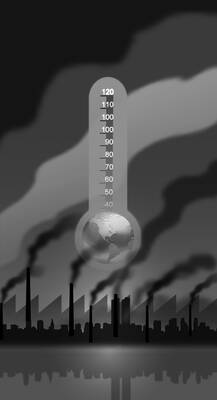
The closure of the Strait of Hormuz has sent the vast Asian chemicals industry into a tailspin. Deprived of the likes of Qatari natural gas and Saudi Arabian oil, the region’s fertilizer and plastics plants are slowing production or even shutting down. Everywhere except China, that is. In petrochemicals, China is unique. As well as a traditional industry that uses oil and gas as feedstock, it has parallel output that relies on its abundant domestic coal. Unsurprisingly, India and other regional powers want to copy and paste the Chinese method. This would not be easy — or climate friendly. The
Indonesian President Prabowo Subianto says he knows how to fix the problems facing Indonesia. Yet his economic mismanagement and authoritarian tendencies are steering the nation toward a familiar mix of currency instability and political chaos. The world’s fourth-most populous nation risks reversing the hard-won democratic and business reforms that came after the Asian Financial Crisis in 1997. At that time, the rupiah collapsed and the political upheaval that followed forced former president Haji Mohamed Suharto from power. Prabowo’s administration is ignoring similar warning signs. That disconnect was apparent in a national address on Wednesday, when Prabowo projected the swagger that has
“Of course you can choose not to be Taiwanese, just do not stay here,” chairwoman of Taipei 101 operator Taipei Financial Center Corp Janet Chia (賈永婕) said in an online interview with local entertainer Tai Chih-yuan (邰智源), triggering intense discussion on social media, with politicians across party lines weighing in. In the interview, which was aired on May 14, Chia and Tai’s discussion over a meal in Taipei 101 covered Chia’s career change from entertainer to chairwoman and US climber Alex Honnold’s free solo climb up the Taipei 101 building. During the interview, Chia said, “Being on this land, we


 RSS
RSS