


Last July, the US Presbyterian Church moved to boycott Israel and firms that do business with the Jewish state, ostensibly in sympathy with the Palestinian people for the harsh treatment they receive under the occupation. Now, the Anglican and Episcopalian Churches are preparing to join in the boycott as well, with a final vote to be held next June ("Anglican group promotes boycott of Israel, firms," Sept. 26, page 6).
Representatives of these two denominations have recently returned from a "fact-finding" mission to the occupied territories. They were shocked at the deplorable conditions there, and incensed at the construction of the wall separating the two peoples. They deplore the checkpoints, curfews and restrictions, without ever pointing to the causes.
These church representatives, although claiming their decision was one of "moral responsibility," are incredibly naive. They are being used as dupes by the Palestinian leadership, which has been incapable of halting acts of violence and terrorism against Israelis.
These foolish Christians, in their simplistic analysis, compare the situation in Israel to that of South Africa during the period of apartheid. They conveniently forget that the white South Africans were Christians who were supported for many years by Christian churches.
The itinerary of the representatives was a highly selective one, carefully prepared by the Palestinians. Gullible to an extent that defies logic, they accepted this view as gospel.
They never questioned the degree of Palestinian responsibility for their predicament. They never questioned the lack of democratic process among these "victims," their leadership tainted by terrorism or any other relevant factors. They were so ready and willing to blame the Jews.
Did these good Christians bother to visit Israeli hospitals to view the real victims of Palestinian terrorism? Sadly, the answer is "No!"
Unfortunately, the Christian churches have a long history of anti-Semitism, which led to the Inquisition (and the forcible conversion, torture or death of countless Jews) and to the hatred of Jews that culminated in the Holocaust. With such a bloodstained record, these Christian churches should be ashamed to be seen as attacking their perennial victims.
While they may have antipathy toward the "People of the Book" for never having accepted the Christian faith, they might look into the New Testament and consider the words of Jesus Christ: "Render unto Caesar that which is Caesar's," and avoid political gambits which will tarnish the reputation of the churches.
Perhaps it's time these Christians reread the Bible. They seem to have forgotten that God told Abraham: "And I will make thee a great nation, and I will bless thee, and make thy name great; and thou shalt be a blessing: And I will bless them that bless thee, and curse him that curseth thee" (Genesis 12:2-3).
It does not bother them that peaceful democratic nations like Taiwan are threatened by dictatorships like China, or that countries like Tibet have been swallowed, and their native cultures decimated. They are, however, disturbed by Jews who refuse to lie down and die.
One can only hope that good sense will prevail, and that the churches' congregations will reject the unwarranted "Christian call" to boycott the state of Israel, which will merely exacerbate the current situation and punish the victims rather than the perpetrators.
Chaim Melamed
Pingtung City
A gap appears to be emerging between Washington’s foreign policy elites and the broader American public on how the United States should respond to China’s rise. From my vantage working at a think tank in Washington, DC, and through regular travel around the United States, I increasingly experience two distinct discussions. This divergence — between America’s elite hawkishness and public caution — may become one of the least appreciated and most consequential external factors influencing Taiwan’s security environment in the years ahead. Within the American policy community, the dominant view of China has grown unmistakably tough. Many members of Congress, as
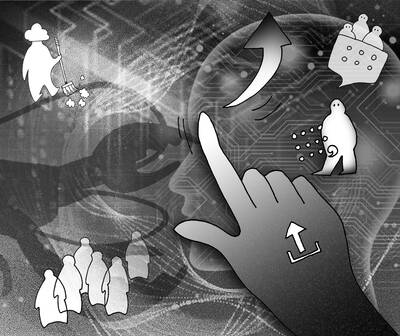
Weeks into the craze, nobody quite knows what to make of the OpenClaw mania sweeping China, marked by viral photos of retirees lining up for installation events and users gathering in red claw hats. The queues and cosplay inspired by the “raising a lobster” trend make for irresistible China clickbait. However, the West is fixating on the least important part of the story. As a consumer craze, OpenClaw — the AI agent designed to do tasks on a user’s behalf — would likely burn out. Without some developer background, it is too glitchy and technically awkward for true mainstream adoption,
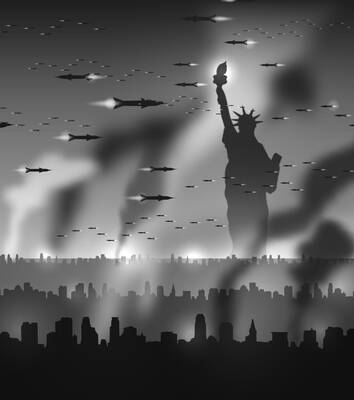
After declaring Iran’s military “gone,” US President Donald Trump appealed to the UK, France, Japan and South Korea — as well as China, Iran’s strategic partner — to send minesweepers and naval forces to reopen the Strait of Hormuz. When allies balked, the request turned into a warning: NATO would face “a very bad” future if it refused. The prevailing wisdom is that Trump faces a credibility problem: having spent years insulting allies, he finds they would not rally when he needs them. That is true, but superficial, as though a structural collapse could be caused by wounded feelings. Something
Former Taipei mayor and Taiwan People’s Party (TPP) founding chairman Ko Wen-je (柯文哲) was sentenced to 17 years in prison on Thursday, making headlines across major media. However, another case linked to the TPP — the indictment of Chinese immigrant Xu Chunying (徐春鶯) for alleged violations of the Anti-Infiltration Act (反滲透法) on Tuesday — has also stirred up heated discussions. Born in Shanghai, Xu became a resident of Taiwan through marriage in 1993. Currently the director of the Taiwan New Immigrant Development Association, she was elected to serve as legislator-at-large for the TPP in 2023, but was later charged with involvement


 RSS
RSS