


Two separate events on Monday afternoon reflect the linguistic changes in this country brought about by democratization. The first event was a press conference called by Council for Cultural Affairs Vice Chairman Wu Mi-cha (
The intent behind this legislation is to protect and preserve disadvantaged languages which are in danger of extinction after being marginalized by the forced usage of Mandarin for so many decades. Under the proposed law, all languages used in Taiwan would become national languages and be given equal status.
The bill would authorize the different levels of government -- central, county, etc -- to designate common languages in the areas under their jurisdiction. This would mean the country would have more than one common language. What is extraordinary about this bill is the separation of spoken languages from written ones. Under the bill, once the various governments designate common languages, the language users themselves would decide which language to use on official occasions.
About the same time that Wu was holding his press conference, Council for Hakka Affairs Chairwoman Yeh Chu-lan (
The council's language bill is based on the concept of plurality, respect for all ethnic groups and concern for their interests. It is aimed at reversing past language policies dominated by Mandarin and enriching the country's linguistic assets.
Since the Democratic Progressive Party's Chen Shui-bian (
The KMT's national language policy created a single common language, but the deliberate suppression of other languages caused those languages to wither. For example, even though Hoklo-speaking people are the biggest group in the country, not many people under the age of 30 in northern Taiwan can speak fluent Hoklo, even though it is still a common language in the south. Such language loss is even more serious among the Hakka and Aborigines.
The Council for Cultural Affairs is working to transcend the unification versus independence political dispute and allow all ethnic groups to liberate their linguistic energies. Under its proposed bill, administrative procedures will become more complex. For example, because test-takers will be able to decide which common language to use in government tests, multi-language test format and facilities will have to be available. Moreover, when a head of state delivers a speech in a language other than Mandarin, the speech will have to be translated into several languages.
The development of languages is fluid, especially in dynamic Taiwan, where the interaction between different languages may create a richer language environment. The proposed policy will create many problems -- as well as opportunities -- but it is vastly preferable to the previous KMT administra-tion's policy of linguistic favoritism.
KMT Chairwoman Cheng Li-wun’s (鄭麗文) recent visit to Beijing and her upcoming visit to Washington will serve as a high-level test of her diplomatic mettle. In Beijing, Cheng was received with symbolic gestures, a warm reception, and high-level access. In Washington, she will receive far less pomp and far sharper questions about the KMT’s vision for the future of Taiwan. Her challenge will be to persuade Washington that the KMT’s engagement with China can coexist with strong deterrence. Cheng’s April 7-12 visit to mainland China coincided with an intense period of conflict in Iran. Despite the strategic significance of Cheng’s trip,
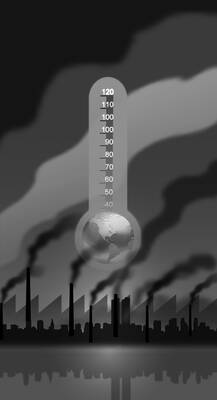
The closure of the Strait of Hormuz has sent the vast Asian chemicals industry into a tailspin. Deprived of the likes of Qatari natural gas and Saudi Arabian oil, the region’s fertilizer and plastics plants are slowing production or even shutting down. Everywhere except China, that is. In petrochemicals, China is unique. As well as a traditional industry that uses oil and gas as feedstock, it has parallel output that relies on its abundant domestic coal. Unsurprisingly, India and other regional powers want to copy and paste the Chinese method. This would not be easy — or climate friendly. The
Indonesian President Prabowo Subianto says he knows how to fix the problems facing Indonesia. Yet his economic mismanagement and authoritarian tendencies are steering the nation toward a familiar mix of currency instability and political chaos. The world’s fourth-most populous nation risks reversing the hard-won democratic and business reforms that came after the Asian Financial Crisis in 1997. At that time, the rupiah collapsed and the political upheaval that followed forced former president Haji Mohamed Suharto from power. Prabowo’s administration is ignoring similar warning signs. That disconnect was apparent in a national address on Wednesday, when Prabowo projected the swagger that has
“Of course you can choose not to be Taiwanese, just do not stay here,” chairwoman of Taipei 101 operator Taipei Financial Center Corp Janet Chia (賈永婕) said in an online interview with local entertainer Tai Chih-yuan (邰智源), triggering intense discussion on social media, with politicians across party lines weighing in. In the interview, which was aired on May 14, Chia and Tai’s discussion over a meal in Taipei 101 covered Chia’s career change from entertainer to chairwoman and US climber Alex Honnold’s free solo climb up the Taipei 101 building. During the interview, Chia said, “Being on this land, we


 RSS
RSS