


The UN is in the midst of a serious, long-term crisis. That crisis will not go away unless its sources are understood and the organization reformed. But a new form of political correctness is making reform difficult.
One major cause of the UN crisis is the change in the international situation after the demise of the Soviet Union and the proliferation of what I call "incompetent states." Many countries that achieved independence as a result of the national liberation movements between the 1940s and 1990s have proved themselves incapable of creating the conditions of normal life within their territories. In the age of globalization, they are also hopelessly and increasingly lagging behind developed states.
Moreover, many of these regimes are simply ineffectual and will collapse or dramatically change in the foreseeable future. This will inevitably prove to be the source of long-term political and military instability in large parts of Africa, the Middle East, Central and South Asia, as well as a number of former Soviet republics.
The rise of incompetent states brings about huge challenges: proliferation of weapons of mass destruction, terrorism, religious and ethnic strife, rivalry for natural resources, waves of migration, drug trafficking and deterioration of the environment.
Such states call into question our traditional attitude towards national sovereignty. Tolerating them, as was done until recently, is increasingly dangerous. The politically correct policy of affirming each nation's right to self-determination, including the establishment of an independent state, leads to the emergence of more incompetent regimes.
Indeed, incompetent states now comprise almost a majority in the UN, which undermines that body's moral legitimacy in the eyes of many in the developed world. It also impairs the UN's ability to deal with the most important problems of today's international environment.
The second cause at the root of the UN crisis is the fact that the US is no longer interested in observing the old rules of international relations. Indeed, America's superpower status makes it increasingly disadvantageous for its leaders to play by rules that, while repeatedly violated in the past, are now viewed as preventing the US from assuming a new role in international affairs.
The new role the US envisages is closely tied to the profound destabilization brought about by the proliferation of incompetent states. In fact, America has been eager for some time to "establish order" in the world and modernize particularly troublesome regimes in highly strategic regions of the world. In the Middle East and Central Asia, this policy seems at times to have assumed predominance comparable to that of the former doctrine of deterrence deployed against the Soviet Union and its Communist allies.
It was the desire to counter this destabilization and to consolidate its superpower status that was the primary reason for America's actions in Iraq. The world might not support the US in its unilateral attempts to become the world's policeman, especially because they may well bring more instability. Nevertheless, it is important to realize why the US is undertaking them and that they respond to a core problem of today's international order.
If Russia and the other countries that opposed America's Iraq policy in the Security Council really wanted to convince the US not to attack Iraq and to defend international law, it was a naive policy doomed to failure. If we sought to preserve the UN Security Council and the position of the present permanent members, then those actions were more likely to produce the opposite effect.
Similarly, rearguard efforts to prove that those who opposed war in Iraq were right and that the Americans and the Britons wrong, together with demands for "proof" that Iraq possessed weapons of mass destruction, are unconstructive and only cause mutual irritation. The UN cannot be preserved and reformed without cooperation from the US, however distressful this may be to some.
By making the UN an instrument of struggle against America, the UN will only be weakened or written off altogether. What is needed is a reform that responds to today's international order and updates the increasingly obsolete and ignored body of international law to today's new economic and political realities.
Restructuring must start with the UN Security Council, whose 1945 mandate is no longer viable. The most obvious solution is to increase the number of permanent members from five to eight or nine (including Germany, Japan, India and possibly Brazil) and to change the voting rules.
But the UN is not likely to reform itself from within. If, as is likely, increasing the number of permanent Security Council members lacks sufficient support, developed countries should revert to the idea, circulating in foreign policy circles for several years, of establishing a new G8-based organization (but including China and India) to counter new threats to global security.
Such proposals might spur further reform of the UN itself. In any case, one thing seems certain: in the absence of a sweeping overhaul, the UN may quickly follow in the footsteps of other institutional relics of the Cold War, such as the Organization for Security and Cooperation in Europe and NATO.
Sergei Karaganov is chairman of Russia's Council on Foreign and Defense Policy.
Copyright: Project Syndicate, September 2003.
Minister of Labor Hung Sun-han (洪申翰) on April 9 said that the first group of Indian workers could arrive as early as this year as part of a memorandum of understanding (MOU) between the Taipei Economic and Cultural Center in India and the India Taipei Association. Signed in February 2024, the MOU stipulates that Taipei would decide the number of migrant workers and which industries would employ them, while New Delhi would manage recruitment and training. Employment would be governed by the laws of both countries. Months after its signing, the two sides agreed that 1,000 migrant workers from India would
In recent weeks, Taiwan has witnessed a surge of public anxiety over the possible introduction of Indian migrant workers. What began as a policy signal from the Ministry of Labor quickly escalated into a broader controversy. Petitions gathered thousands of signatures within days, political figures issued strong warnings, and social media became saturated with concerns about public safety and social stability. At first glance, this appears to be a straightforward policy question: Should Taiwan introduce Indian migrant workers or not? However, this framing is misleading. The current debate is not fundamentally about India. It is about Taiwan’s labor system, its
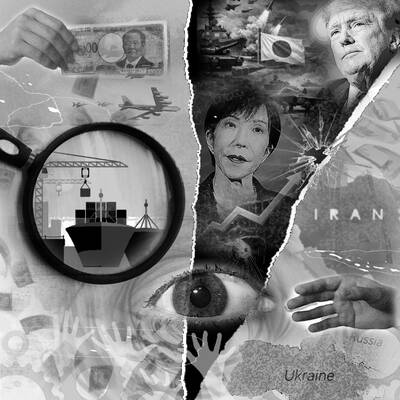
Japan’s imminent easing of arms export rules has sparked strong interest from Warsaw to Manila, Reuters reporting found, as US President Donald Trump wavers on security commitments to allies, and the wars in Iran and Ukraine strain US weapons supplies. Japanese Prime Minister Sanae Takaichi’s ruling party approved the changes this week as she tries to invigorate the pacifist country’s military industrial base. Her government would formally adopt the new rules as soon as this month, three Japanese government officials told Reuters. Despite largely isolating itself from global arms markets since World War II, Japan spends enough on its own
On March 31, the South Korean Ministry of Foreign Affairs released declassified diplomatic records from 1995 that drew wide domestic media attention. One revelation stood out: North Korea had once raised the possibility of diplomatic relations with Taiwan. In a meeting with visiting Chinese officials in May 1995, as then-Chinese president Jiang Zemin (江澤民) prepared for a visit to South Korea, North Korean officials objected to Beijing’s growing ties with Seoul and raised Taiwan directly. According to the newly released records, North Korean officials asked why Pyongyang should refrain from developing relations with Taiwan while China and South Korea were expanding high-level


 RSS
RSS