


"Free Palestine" said the placards held up by some marchers on the anti-war demonstrations. Well, here's a surprise for them: this bloody mess of a war may result in a free Palestine.
Let me explain, through this extract from the 2020 edition of the Oxford History of the Contemporary World: "Curiously, the Iraq war can now be seen as the turning-point in progress towards an independent Palestinian state. Of course American forces, with their overwhelming technological superiority, succeeded militarily in defeating Iraqi President Saddam Hussein, but, as one American general ruefully observed, the enemy was `a bit different from the one we wargamed against.' The military campaign therefore resulted in civilian casualties and damage to Islamic holy places that inflamed resentment across the whole Arab world. One young Egyptian sarcastically remarked to a western television interviewer: `thank you very much British and Americans, because you're waking us up,'
"British troops were soon comparing their street-by-street struggle against paramilitary groups to Northern Ireland. This proved prescient. For the subsequent occupation of Iraq was like Northern Ireland, only worse. A large majority of Iraqis were delighted to be rid of Saddam; this did not mean they welcomed a colonial administration imposed by Washington, headed by a retired American general and including a minister of finance who was a former head of the CIA. British forces prided themselves on being more subtle than the Americans in winning the `hearts and minds' of a restless population, but they underestimated the depth of historic resentment directed specifically against Britain, the former colonial power in both Iraq and Palestine."
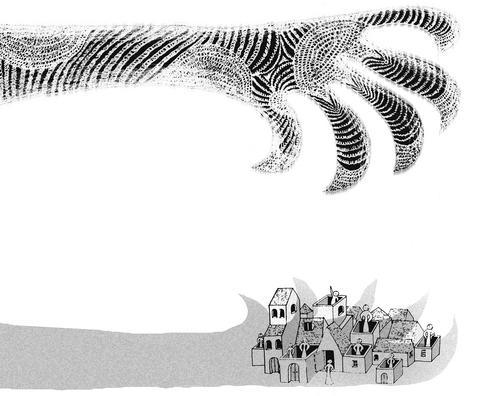
ILLUSTRATION: MOUNTAIN PEOPLE
"A relatively small number of Iraqi paramilitaries and suicide bombers compelled the Anglo-American occupying forces to use tactics that, seen throughout the Arab world on Al Jazeera television, reminded Arabs everywhere of Israeli soldiers' behavior in the West Bank and Gaza Strip. Nor did it help that the American viceroy of Iraq, General Jay Garner, conceded far-reaching autonomy to the Kurds in northern Iraq, who had been valuable American allies on the northern front of the military campaign against Saddam, and who were the only group in Iraq to remain unambiguously pro-American under the occupation."
"Critics of the war had predicted that, in the somber words of Egyptian President Hosni Mubarak, it would produce a hundred new Osama bin Ladens. These predictions did not entirely come true. But in the aftermath of the war, there were renewed Islamist terror attacks, especially in Europe, whose large muslim population provided excellent cover for Al Qaeda and other groups. The November 2003 bombing of a shopping center in central London, which killed 37 people, was a notably horrific incident. There was also growing discontent among Muslim Americans."
"As the human, political and financial costs of occupying Iraq mounted, while the American economy plunged further into recession, criticism of the Bush administration grew in the US. Moderate Republicans privately agreed with Democrats that the administration had led the country into a morass in the Middle East, while alienating many of the US' friends around the world. This applied particularly to Europe. Even Britain, America's most stalwart ally, was incensed by the lack of any serious progress along the `road map' to resolving the Israeli-Palestinian conflict."
"After George W. Bush narrowly lost the November 2004 election [ironically enough, following a recount in Florida], the new administration hastened to change course. In an attempt to mend fences with both the Arab world and the Europeans, it withdrew its troops from Iraq, handing control over to the Iraqis and Kurds, and started exerting serious pressure on the Sharon government in Israel to come back to the negotiating table with the Palestinians. President Smith was greatly helped in this endeavor by the death of Yasser Arafat, and the advent of a more reasonable Palestinian leadership. The European Union, which had been pressing for such negotiations, was also useful in exerting economic leverage on the Palestinians."
"As a result, in 2005 a deal was finally made which gave the Palestinians a viable state in boundaries only slightly more generous than those they had been offered by President Clinton in 2000. The Gaza strip was connected to the West Bank, as Clinton had already proposed, by a futuristic raised road and rail highway -- paid for by the Europeans, and jokingly known as the Eurostar. The deal was violently resisted by Hamas fighters, on the Palestinian side, and Israeli settlers on the other. There were several appalling incidents of violence, which finally resulted in most of the settlers in the areas assigned to Palestine fleeing to Israel. A permanent fence was then erected between Israel and Palestine; in parts of Jerusalem it looked like the Berlin Wall. The whole process was bloody, unjust and arbitrary -- but, as in former Yugoslavia, physical separation eventually turned out to be a lesser evil. In time, and with a lot of help from the international community, the two sides started to cooperate, as they both needed to for their own economic survival."
"From his hideaway, Osama bin Laden [or someone claiming to be Osama bin Laden] gloated that `the heroic jihad that began on Sept. 11, 2001 has triumphed with the establishment of an independent state for our brothers in Palestine and the withdrawal of infidel forces from Iraq.' On the face of it, this was a crushing defeat for the whole group of American policymakers, identified particularly with Deputy Defense Secretary Paul Wolfowitz, who had seen the invasion of Iraq as the beginning of a democratic reordering of the whole Middle East. No-one was more outspoken in criticizing President Smith than the former Defense Secretary, Donald Rumsfeld. `Neville Chamberlain' was his politest epithet."
"Yet history always has more than one surprise up its sleeve. After an initial period of pan-Arab triumphalism, a new generation of Arab leaders and voters realized that it was now up to them. They could remain in a state of historic backwardness, or they could set out to join the modern world which now beckoned so attractively from just across the Turkish border, in the European Union. Even while Anglo-American occupation had been fiercely resisted, its attempts to win `hearts and minds' -- the broadcasts of Radio Free Middle East, the Fulbright scholarships for young Arabs to study in the West, the imports of Western films, music and magazines -- had made a subcutaneous impact. With the Palestinians now living in a viable state, Arab states finally came to accept the permanent presence of the state of Israel. Within a decade, it was the Arabs themselves who were beginning to reorder the Middle East as a patchwork of consumer democracies. In the end, Wolfowitz's vision was realized, but by a route that he neither envisaged nor desired."
It's a measure of the mess we're in that this might now pass for an optimistic history of the future. Of course we never know what will really happen, until it does, but two things are clear. First, one of history's very few universal laws is the law of unintended consequences. By starting this war, US President George W. Bush and British Prime Minister Tony Blair have thrown large parts of the jigsaw puzzle of world politics into the air. They have as little idea as we do where the pieces will fall. Second, if Europe has any sense at all (which recent events also lead one to doubt) it will start now to develop its own ideas for a democratic reconstruction of the Middle East -- in readiness for 2005.
Timothy Garton Ash is a fellow of St Antony's College, Oxford, and the Hoover Institution, Stanford.
KMT Chairwoman Cheng Li-wun’s (鄭麗文) recent visit to Beijing and her upcoming visit to Washington will serve as a high-level test of her diplomatic mettle. In Beijing, Cheng was received with symbolic gestures, a warm reception, and high-level access. In Washington, she will receive far less pomp and far sharper questions about the KMT’s vision for the future of Taiwan. Her challenge will be to persuade Washington that the KMT’s engagement with China can coexist with strong deterrence. Cheng’s April 7-12 visit to mainland China coincided with an intense period of conflict in Iran. Despite the strategic significance of Cheng’s trip,
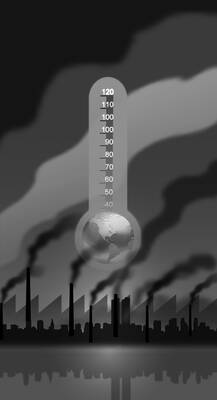
The closure of the Strait of Hormuz has sent the vast Asian chemicals industry into a tailspin. Deprived of the likes of Qatari natural gas and Saudi Arabian oil, the region’s fertilizer and plastics plants are slowing production or even shutting down. Everywhere except China, that is. In petrochemicals, China is unique. As well as a traditional industry that uses oil and gas as feedstock, it has parallel output that relies on its abundant domestic coal. Unsurprisingly, India and other regional powers want to copy and paste the Chinese method. This would not be easy — or climate friendly. The
Indonesian President Prabowo Subianto says he knows how to fix the problems facing Indonesia. Yet his economic mismanagement and authoritarian tendencies are steering the nation toward a familiar mix of currency instability and political chaos. The world’s fourth-most populous nation risks reversing the hard-won democratic and business reforms that came after the Asian Financial Crisis in 1997. At that time, the rupiah collapsed and the political upheaval that followed forced former president Haji Mohamed Suharto from power. Prabowo’s administration is ignoring similar warning signs. That disconnect was apparent in a national address on Wednesday, when Prabowo projected the swagger that has
“Of course you can choose not to be Taiwanese, just do not stay here,” chairwoman of Taipei 101 operator Taipei Financial Center Corp Janet Chia (賈永婕) said in an online interview with local entertainer Tai Chih-yuan (邰智源), triggering intense discussion on social media, with politicians across party lines weighing in. In the interview, which was aired on May 14, Chia and Tai’s discussion over a meal in Taipei 101 covered Chia’s career change from entertainer to chairwoman and US climber Alex Honnold’s free solo climb up the Taipei 101 building. During the interview, Chia said, “Being on this land, we


 RSS
RSS