


Amanda Sutton looks over a wheat field in northern Colorado and sees a potential “carbon offset project” that could help curb greenhouse gas emissions linked to global warming.
“This is a patch of highly cultivated land that could provide potential carbon offsets,” she said, standing by a field that is owned by the city of Fort Collins and the surrounding county.
“What we would do is take this wheat field and restore it to a native grassland which would sequester carbon from the atmosphere which we could potentially sell,” said Sutton, an environmental specialist with the city.
Potential projects in the emerging carbon market are sprouting like wheat after a good rain in anticipation of “cap and trade” provisions in a climate bill that has narrowly passed the US House of Representatives but could see significant revision in the Senate.
They could be part of a strategy to meet the bill’s current target to cut US greenhouse gas emissions by 17 percent of 2005 levels by 2020. A cap-and-trade inspired market in Europe has been in place since 2005 and is the biggest by far.
Carbon trading and projects are already underway in various versions in the US and contribute to a global voluntary market that last year saw turnover more than double to US$705 million, Ecosystem Marketplace and New Carbon Finance said.
CARBON SINK
Three regional US groups are trading or are in the process of creating regulated carbon trading markets. To trade on such markets, a project must reduce greenhouse gas emissions or, in the case of converting a cultivated field to its natural state or reforesting a patch of land, act as a “carbon sink” to absorb emissions spewed elsewhere.
Once a project is certified and its “carbon offset” is measured in tonnes, it can sell them as “credits” to polluters unable to meet their emission targets, or even to groups that want to say they have cut their “carbon footprints.”
Some experts say carbon sinks are increasingly important because the world is failing to curb greenhouse gases from power plants, planes and cars fast enough, and so needs to buy more time to avoid dangerous climate change.
But some environmentalists say trading in pollution is ultimately a ruse.
“By using offsets, industry will be able to sidestep emissions reductions. It is a get-out-of-jail-free card,” says Damon Moglen, the Global Warming Campaign director for Greenpeace.
Trees store carbon while they grow and release it back into the atmosphere when they rot. So in the vocabulary of carbon markets a healthy forest is a “carbon sink.” Tree growth in the US currently sucks up about 12 percent of the country’s greenhouse gas emissions — a huge total.
The US climate bill may provide an economic windfall to land owners including non-profit organizations, cities, farmers and forest owners who can turn farmland or cleared land back into forests. It may also reward “sustainable forestry” practices, though their carbon benefit will be tough to gauge.
“We see emerging carbon markets as a every exciting revenue source for small family forest owners,” said Bob Simpson, vice president for the Center for Family Forests.
But the cost to a small family landowner of having their offsets measured and certified remains unclear.
Groups like Woodlands Carbon in Oregon are forming around the country to reduce the costs of market entry by joining several forest owners into one portfolio.
Many investments being made are essentially “bets” on the bill that ultimately emerges from Congress, said Mary Grady, a director at the American Carbon Registry.
“The current legislation is very favorable ... It is a wonderful first step and it is sending the first signals to the market. But the general feeling is that the legislation is not going to pass in its current form,” she said.
Once the bill passes, 900 million tonnes of carbon could accumulate in the market by 2012 or 2013, when the regulations are supposed to take effect. The American Carbon Registry currently has 22 projects worth about 27 million tonnes.
Grady also said carbon traders worried that the legislation currently says that the “administrator,” which depending on the project could be the Environmental Protection Agency or the US Department of Agriculture, will approve programs — but it has not named the programs.
“If it was clear people would have lots of confidence in making their investments but people don’t know where to place their bets,” she said.
‘GREEN JOBS’
Getting a project verified has spawned a whole new industry that could create some of the “green jobs” US President Barack Obama has said will go with the new green economy.
These include independent, third party project verifiers who apply financial accounting techniques while also using gadgets like gas analyzers to measure carbon tonnage.
Back at the field in Colorado, Sutton says if this project were to become a reality — a big if — it would have to meet the stringent standards of the voluntary market and show it is removing more carbon from the atmosphere than would have happened naturally.
For now, the wheat will remain.

PROVOCATIVE: Chinese Deputy Ambassador to the UN Sun Lei accused Japan of sending military vessels to deliberately provoke tensions in the Taiwan Strait China denounced remarks by Japan and the EU about the South China Sea at a UN Security Council meeting on Monday, and accused Tokyo of provocative behavior in the Taiwan Strait and planning military expansion. Ayano Kunimitsu, a Japanese vice foreign minister, told the Council meeting on maritime security that Tokyo was seriously concerned about the situation in the East China and South China seas, and reiterated Japan’s opposition to any attempt to change the “status quo” by force, and obstruction of freedom of navigation and overflight. Stavros Lambrinidis, head of the EU delegation to the UN, also highlighted South China Sea
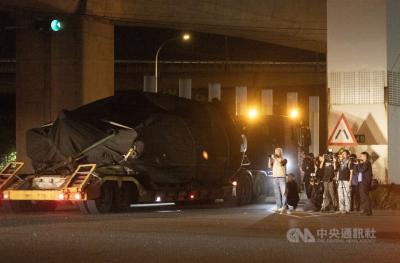
The final batch of 28 M1A2T Abrams tanks purchased from the US arrived at Taipei Port last night and were transported to the Armor Training Command in Hsinchu County’s Hukou Township (湖口), completing the military’s multi-year procurement of 108 of the tanks. Starting at 12:10am today, reporters observed more than a dozen civilian flatbed trailers departing from Taipei Port, each carrying an M1A2T tank covered with black waterproof tarps. Escorted by military vehicles, the convoy traveled via the West Coast Expressway to the Armor Training Command, with police implementing traffic control. The army operates about 1,000 tanks, including CM-11 Brave Tiger

China on Wednesday teased in a video an aircraft carrier that could be its fourth, and the first using nuclear power, while making an allusion to Taiwan and vowing to further build up its islands, as it looks to boost maritime power, secure resources and bolster territorial claims. The video, issued on the eve of the 77th founding anniversary of the Chinese People’s Liberation Army Navy, featured fictional officers with names that are homophones of three commissioned aircraft carriers, the Liaoning (遼寧), Shandong (山東) and Fujian (福建). Titled Into the Deep, it showed a 19-year-old named “Hejian” (何劍) joining the group, sparking
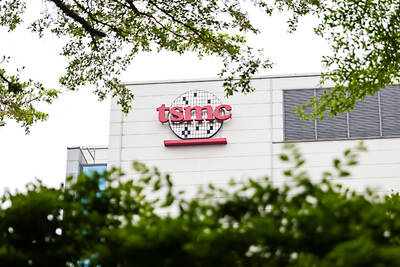
Taiwan Semiconductor Manufacturing Co (TSMC, 台積電), the world’s largest contract chipmaker, said it expects its 2-nanometer (2nm) chip capacity to grow at a compound annual rate of 70 percent from this year to 2028. The projection comes as five fabs begin volume production of 2-nanometer chips this year — two in Hsinchu and three in Kaohsiung — TSMC senior vice president and deputy cochief operating officer Cliff Hou (侯永清) said at the company’s annual technology symposium in Silicon Valley, California, last week. Output in the first year of 2-nanometer production, which began in the fourth quarter of last year, is expected to


 RSS
RSS