


s shoppers arm themselves for post-Thanksgiving bargain hunting later this week, they'll also indulge in another, newer annual tradition: surfing the Web for advance information about Black Friday retail sales.
By organizing sale prices from scattered newspaper circulars into a single database, the Internet has made it easy to search for particular items and compare prices -- too easy, at least in the eyes of many major retailers.
For the last several years, Wal-Mart Stores and other large chains have threatened legal action to intimidate Web sites that get hold of advertising circulars early and publish prices online ahead of company-set release dates. The retailers' threats rest upon some dubious legal arguments, however, which may be the reason they haven't shown a keen interest in actually going to court over the issue.

PHOTO: NY TIMES NEWS SERVICE
Wal-Mart has been among the most aggressive retailers in trying to cow consumer Web sites. Last month, it sent a cease-and-desist letter to BFAds.net, a site devoted to publishing Black Friday ads. Wal-Mart sent the letter even before BFAds had published Wal-Mart's sale prices, so the cease-and-desist letter would be more properly called a "don't even think about it" letter.
Wal-Mart asserts that its sales-price data are "protected by copyright and other laws." The "other laws" were never identified or explained in the letter and the claim of copyright protection for facts themselves, like sales prices, was rejected by the courts long ago. In a 1991 case, for example, the Supreme Court ruled that names and phone numbers in a telephone directory could not be copyrighted and thus could be freely copied.
BFAds operates two months a year, as a sideline for a 20-year-old college student, Michael Brim, and his business partner, Dan Silvers, also a college student. The Wal-Mart letter posed a quandary for Brim. Should he assert his rights as a publisher who believes he has broken no laws? Or should he acknowledge that Wal-Mart (with revenue last year of US$349 billion) and its law firm of Baker Hostetler (600 partner attorneys) had the resources to litigate him out of existence?
Brim chose the latter. He announced on his site that he had no other choice but to heed Wal-Mart's letter. When Macy's sent a similar letter, he gave ground again, under protest.
BFAds did not post sale prices early for Wal-Mart and Macy's this year.
Wendy Seltzer, a fellow at the Berkman Center for Internet and Society at Harvard Law School, said she believed that companies like Wal-Mart dispatched the letters without intending to pursue the matter in court, where their claims would be put to a test before a judge.
"It's cheap to send out lots of letters," she said. "If many sites take the material down, that's good bang for the buck."
Seltzer oversees the Chilling Effects Clearinghouse, a Web site that publicizes what it calls corporate misuse of cease-and-desist letters to curb legally protected speech on the Internet. The clearinghouse, sponsored by the Electronic Frontier Foundation and the clinics of seven law schools, posts copies of cease-and-desist letters that Wal-Mart, Macy's and others send to Web publishers. One aim of the project is to publicly shame companies that casually dash off the letters.
Wal-Mart defends its practice.
"All retailers are harmed in the same way when this information is leaked -- it tips off competitors," Wal-Mart spokesman John Simley said.
But he also said he was unaware of any time when Wal-Mart had taken a Web site to court for divulging Black Friday sale prices prematurely. I was curious to learn what criminal statutes Wal-Mart referred to when it alerted BFAds' principals in its letter about the possibility that they may have engaged in "criminal activity." Simley declined to be specific, other than to say that "there are laws to protect advertisers."
Baker Hostetler didn't respond to my requests for a similar tutorial.
If early disclosure was indeed a grave concern of everyone in retailing, why has Best Buy come around to the idea that Black Friday sales sites, above all else, offer an opportunity for free advertising, whetting appetites with a sneak preview of what will be officially announced?
At present, Best Buy's only concern is that inaccurate information may circulate on the sites, so it encourages customers to verify prices on its own site before going to the store.
Brian Lucas, a Best Buy spokesman, said: "We don't want people to wait in a line all night for a deal that doesn't exist."
Best Buy's stance has changed considerably since 2002, when, like other retailers, it sent threatening letters to Web publishers.
In 2003, it did the same -- and one site, FatWallet.com, struck back with a lawsuit asking a judge to declare that sale prices cannot be copyrighted.
The case was dismissed on a technicality, but Fat Wallet is now happy to dare retailers to give it a chance to go to court again.
Tim Storm, FatWallet's founder and chief executive, said his company tells any retailer who makes threats.
"Are you guys sure you really want to do this?" he said.
To date, he says, no company has answered yes.

The Chien Feng IV (勁蜂, Mighty Hornet) loitering munition is on track to enter flight tests next month in connection with potential adoption by Taiwanese and US armed forces, a government source said yesterday. The kamikaze drone, which boasts a range of 1,000km, debuted at the Taipei Aerospace and Defense Technology Exhibition in September, the official said on condition of anonymity. The Chungshan Institute of Science and Technology and US-based Kratos Defense jointly developed the platform by leveraging the engine and airframe of the latter’s MQM-178 Firejet target drone, they said. The uncrewed aerial vehicle is designed to utilize an artificial intelligence computer
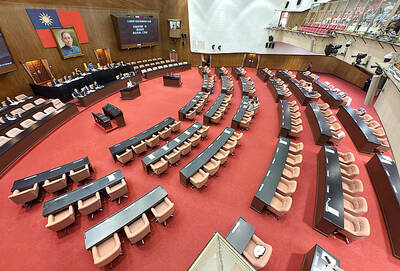
The Chinese Nationalist Party (KMT) caucus yesterday decided to shelve proposed legislation that would give elected officials full control over their stipends, saying it would wait for a consensus to be reached before acting. KMT Legislator Chen Yu-jen (陳玉珍) last week proposed amendments to the Organic Act of the Legislative Yuan (立法院組織法) and the Regulations on Allowances for Elected Representatives and Subsidies for Village Chiefs (地方民意代表費用支給及村里長事務補助費補助條例), which would give legislators and councilors the freedom to use their allowances without providing invoices for reimbursement. The proposal immediately drew criticism, amid reports that several legislators face possible charges of embezzling fees intended to pay

REQUIREMENTS: The US defense secretary must submit a Taiwan security assistance road map and an appraisal of Washington’s ability to respond to Indo-Pacific conflict The US Congress has released a new draft of the National Defense Authorization Act (NDAA), which includes up to US$1 billion in funding for Taiwan-related security cooperation next year. The version published on Sunday by US House of Representatives Speaker Mike Johnson removed earlier language that would have invited Taiwan to participate in the US-led Rim of the Pacific Exercise (RIMPAC). A statement on Johnson’s Web page said the NDAA “enhances U.S. defense initiatives in the Indo-Pacific to bolster Taiwan’s defense and support Indo-Pacific allies.” The bill would require the US secretary of defense to “enable fielding of uncrewed and anti-uncrewed systems capabilities”

Renewed border fighting between Thailand and Cambodia showed no signs of abating yesterday, leaving hundreds of thousands of displaced people in both countries living in strained conditions as more flooded into temporary shelters. Reporters on the Thai side of the border heard sounds of outgoing, indirect fire yesterday. About 400,000 people have been evacuated from affected areas in Thailand and about 700 schools closed while fighting was ongoing in four border provinces, said Thai Rear Admiral Surasant Kongsiri, a spokesman for the military. Cambodia evacuated more than 127,000 villagers and closed hundreds of schools, the Thai Ministry of Defense said. Thailand’s military announced that


 RSS
RSS