


The wireless technology known as WiFi, which allows users of personal and hand-held computers to connect to the Internet at high speed without cables, got a significant stamp of approval on Thursday when AT&T, IBM and Intel announced a new company to create a nationwide network.
The unruly technology, which has largely been a playground for hackers, hobbyists and high-technology start-ups, is already sprouting mushroom-like in coffee shops, bookstores, airports, hotels, homes, businesses and even a few parks.
The new company, Cometa Networks, has set ambitious goals for itself: to deploy more than 20,000 wireless access points by the end of 2004, placing a cable-less high-speed Internet connection within a five-minute walk in urban areas or a five-minute drive in suburban communities.
Executives from the technology companies and the two investment firms, Apax Partners and 3i, that joined to create the network said they would begin offering their service through cellular and wired telephone companies, DSL and cable Internet service providers and other Internet retailers sometime in 2003.
The service is intended to let subscribers pop open their laptops and have a seamless high-speed wireless extension of their personal or corporate Internet services -- initially in the 50 largest metropolitan areas -- without having to give credit card numbers or enter additional information, as is generally the case now. Connections would generally be at least the speed of a typical home broadband connection.
The Cometa executives said that they expected the national availability of the wireless network would combine with Intel's planned inclusion of wireless Internet capability in all of its mobile microprocessors next year to spur a fundamental shift in the way Americans will use the Internet.
"This is that big," said Dr. Lawrence B. Brilliant, chief executive of Cometa Networks. "It's that exciting; it's that much of a distortion in the computing field. It's a change in the way people use technology."
Until now WiFi has been viewed by many technology analysts as an upstart, from-the-bottom technology that has the potential of upsetting other capital-intensive technology deployments, like the expensive next-generation, data-oriented cellular networks known as 2.5G and 3G that are being established by companies like AT&T Wireless, Cingular, Nextel, T-Mobile, Sprint and Verizon.
But Cometa executives said that because they had chosen a wholesale business strategy, in which they will not sell Internet service directly to consumers or businesses, it was more likely that the two technologies would complement each other. In addition, users of the wireless access points would generally be stationary while connecting to the Internet.
Industry analysts have said they believe that growing WiFi use could steal valuable subscribers from cellular companies that are hoping consumers will begin using their cell phones for data services like movie times, restaurant reviews and shopping deals wherever they are traveling.
The Cometa executives said they were not certain how the new network would be used, but were convinced that the nation's 100 million Internet users would begin to use their portable computers in new ways once connections are widely and easily available as they travel.
The executives and industry analysts acknowledged that creating a new nationwide wireless network was something of an act of faith given the general economic and technological gloom in the telecommunications industry. It is widely believed that the industry has overbuilt and has over-invested in the Internet boom of the last decade.
The new company would not disclose its planned prices or the equity stakes of the five partners. Wireless industry analysts, however, have said WiFi hot spots can cost as much as US$4,000 apiece to install in public places. If the average cost is half that, the installation of 20,000 access points would cost US$40 million.
"One of the problems is that giant companies creating wireless ventures often have not had tremendous success," said Alan Reiter, publisher of Wireless Internet and Mobile Computing, an industry newsletter based in Chevy Chase, Maryland.
Other analysts questioned whether Cometa Networks would be able to make headway in an already crowded WiFi marketplace that has had both early failures and a host of smaller, aggressive start-ups. "It's obvious that what is happening right now is a wireless land grab," said Andrew Seybold, editor of Outlook 4Mobility, a publishing and consulting firm based in Los Gatos, California. "The question is how many places can they lock up and how quickly?"
Cometa executives insisted, however, that they were in a different position from their predecessors. The companies have a technological advantage in that they will not have to create customer equipment, relying on Intel's equipping the nation's portable computers with wireless abilities.
They said Cometa was also in a particularly strong position with respect to its competitors because it could use AT&T's existing data network to connect the planned 20,000 wireless access points.
Leaving the relationship with individual customers to Internet service providers "is smart from a business point of view," said Richard Miller, a wireless data industry consultant at Breo Ventures in Palo Alto, California. At the same time, he noted, the venture will not succeed unless big corporate customers demand the service.
To gain the confidence of corporate customers, the new network will have to meet stringent data security standards. Brilliant said that Cometa planned to take advantage of industry standards like virtual private networks to add security to the WiFi standard.
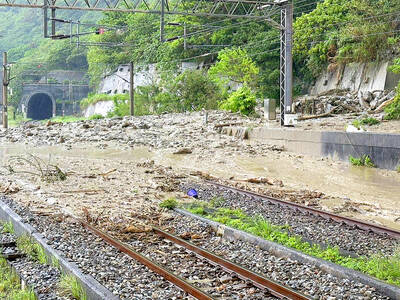
ROLLER-COASTER RIDE: More than five earthquakes ranging from magnitude 4.4 to 5.5 on the Richter scale shook eastern Taiwan in rapid succession yesterday afternoon Back-to-back weather fronts are forecast to hit Taiwan this week, resulting in rain across the nation in the coming days, the Central Weather Administration said yesterday, as it also warned residents in mountainous regions to be wary of landslides and rockfalls. As the first front approached, sporadic rainfall began in central and northern parts of Taiwan yesterday, the agency said, adding that rain is forecast to intensify in those regions today, while brief showers would also affect other parts of the nation. A second weather system is forecast to arrive on Thursday, bringing additional rain to the whole nation until Sunday, it
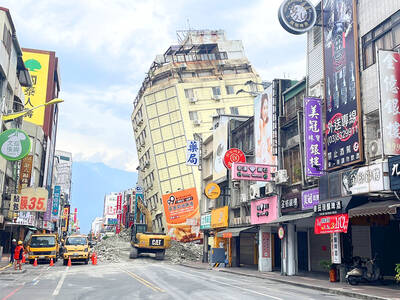
LANDSLIDES POSSIBLE: The agency advised the public to avoid visiting mountainous regions due to more expected aftershocks and rainfall from a series of weather fronts A series of earthquakes over the past few days were likely aftershocks of the April 3 earthquake in Hualien County, with further aftershocks to be expected for up to a year, the Central Weather Administration (CWA) said yesterday. Based on the nation’s experience after the quake on Sept. 21, 1999, more aftershocks are possible over the next six months to a year, the agency said. A total of 103 earthquakes of magnitude 4 on the local magnitude scale or higher hit Hualien County from 5:08pm on Monday to 10:27am yesterday, with 27 of them exceeding magnitude 5. They included two, of magnitude
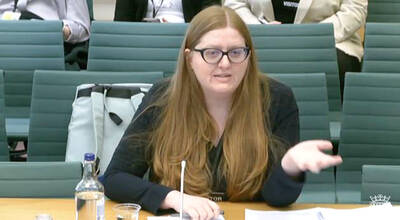
CONDITIONAL: The PRC imposes secret requirements that the funding it provides cannot be spent in states with diplomatic relations with Taiwan, Emma Reilly said China has been bribing UN officials to obtain “special benefits” and to block funding from countries that have diplomatic ties with Taiwan, a former UN employee told the British House of Commons on Tuesday. At a House of Commons Foreign Affairs Committee hearing into “international relations within the multilateral system,” former Office of the UN High Commissioner for Human Rights (OHCHR) employee Emma Reilly said in a written statement that “Beijing paid bribes to the two successive Presidents of the [UN] General Assembly” during the two-year negotiation of the Sustainable Development Goals. Another way China exercises influence within the UN Secretariat is

Taiwan’s first drag queen to compete on the internationally acclaimed RuPaul’s Drag Race, Nymphia Wind (妮妃雅), was on Friday crowned the “Next Drag Superstar.” Dressed in a sparkling banana dress, Nymphia Wind swept onto the stage for the final, and stole the show. “Taiwan this is for you,” she said right after show host RuPaul announced her as the winner. “To those who feel like they don’t belong, just remember to live fearlessly and to live their truth,” she said on stage. One of the frontrunners for the past 15 episodes, the 28-year-old breezed through to the final after weeks of showcasing her unique


 RSS
RSS