


It takes just two words to enrage the average Japanese person these days: Muneo Suzuki.
The former political heavyweight, who two weeks ago resigned in disgrace from the ruling Liberal Democratic Party, personifies all that is wrong in the world's second-biggest economy. He reluctantly quit the party amid allegations of bid rigging and influence-peddling to direct lucrative Foreign Ministry aid contracts to companies from his constituency.
Suzuki's sordid tale is just one of many to come to light in the past two weeks. Koichi Kato, who made a run for Japan's top job less than two years ago, resigned from the LDP after a former aide was arrested on tax evasion charges. This week, Social Democratic Party lawmaker Kiyomi Tsujimoto admitted to spending a former aide's salary on personal expenses.
Corruption scandals are hardly new in Japanese politics -- 1970s Prime Minister Kakuei Tanaka was charged with accepting about US$1.7 million in bribes from Lockheed Corp to help the US airplane maker sell 21 jets to a Japanese airline.
Still, the latest rash has captivated public imagination. They have also reminded the world of the corruption that exists at the highest levels of Japanese government -- and undermines it. As the nation's economy crumbles, some politicians are too busy seeking power or lining their pockets to fix the problem.
The events show just how disconnected many politicians are from Japan's electorate. As unemployment climbs to record levels, deflation worsens and bankruptcies soar, politicians are doing nothing to stop the bloodletting. Worse, many spend more time worrying about their own careers -- and bank accounts -- than the people they're meant to represent.
No one's naive enough to believe Japan has a monopoly on corruption -- it's got lots of competition right here in Asia. Yet, as Suzuki's case attests, Tokyo is rich with examples of lawmakers and bureaucrats misusing funds. Look no further than Japan's Foreign Ministry, where bureaucrats used a secret slush fund to wine and dine diplomats, or local governments, where myriad small-town mayors have been charged with bid-rigging offenses.
Things would seem less dire if forces were in place to clean the smear of corruption and cronyism from the LDP. Prime Minister Junichiro Koizumi certainly hasn't lived up to his campaign promise to "Change the LDP, Change Japan!" Now, as Koizumi approaches the end of his first year in office, it's clear that it's business as usual in Japanese politics.
For all his assertions to the contrary, Koizumi has proven to be an old-style LDP apparatchik. Sure, he wears nicer suits, has better hair and speaks differently than his comrades, but he's cut from the same cloth.
Koizumi's all-talk-no-action act has restored the cloud of gloom and uncertainty hanging over Tokyo. That's quite a letdown for this one-party nation of 126 million people, who lack anything approaching a viable opposition. The LDP has ruled for all but 10 months since the US occupation forces pulled out in 1952.
Since the LDP is mostly a network of entrenched politicians looking out for themselves, change is pretty much impossible.
Is it any wonder so many Japanese citizens have disengaged from the political process? That they don't get to vote directly for the Prime Minister is one reason for the lack of grass-roots activism.
Add in the fact that the LDP is the only game in town and you have a perfect recipe for voter apathy.
Even when a candidate sells himself or herself as a maverick -- here Koizumi comes to mind -- they so rarely, if ever, turn out to be the real thing.
All of this gets at the reason Japan's economy is in this mess.
Even when a well-intentioned reformer steps forward, they come up against an impenetrable wall of resistance. Folks of Suzuki's ilk are there to stop change at every turn. For politicians like Suzuki, change means losing power, and their seat on the gravy grain.
One wonders if Japan has any hope unless the LDP is tossed from power for good. Maybe Koizumi should adopt a new slogan of "Destroy the LDP, Save Japan." Does the public want to stop corruption? At first glance, the question seems absurd, says Robert Feldman, chief economist at Morgan Stanley Dean Witter & Co in Tokyo. Yet in recent discussions with investors across Japan, a strange phenomenon emerged.
While discussing the idea of a Newt Gingrich-style "Contract with Japan" with clients in Tokyo, corruption was on top of the agenda. However, discussing the same issues with investors in Sendai -- a city about two hours northeast of the capital -- there was only one vote out of about 50 for putting corruption among the top three items in such a contract.
The implication, Feldman says, is that urban voters want to root out corruption, but rural voters don't, presumably because they benefit most from the public works contracts that are at the heart of corruption. If this implication is true, then prospects for reform are questionable, because the voting districts remain heavily skewed toward rural areas.
This view jibes with others you hear and read. In a recent poll on JapanToday.com about whether Suzuki should have resigned, 44-year old Yoshihiro Nakashima had this to say: "I think he should resign. I would support him if he were from my hometown. It's natural for people to support their local candidate because he can bring them lots of benefits."
In other words, as long as my town is benefiting or I'm getting my slice of the pie, whatever shady things Suzuki does are fine.
If you believe political change happens only when the people want it, Japan may have a ways to go.
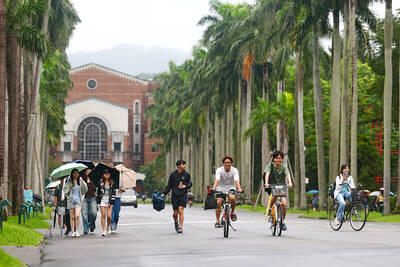
National Taiwan University (NTU) yesterday said it disqualified a person from an entrance examination for using AI smart glasses to cheat, along with two others for making untruthful statements in their curriculum vitae. The three applicants were given null scores, Taiwan’s highest-ranked university said, calling on prospective students to be honest in the admissions process. NTU registrar Lee Hung-sen (李宏森) said that the cheating applicant wore a hat and thick-rimmed glasses to the second written exam for medical school, claiming that they felt cold. Suspicions were aroused when the applicant stared oddly at the test for long stretches while steadily bringing the paper
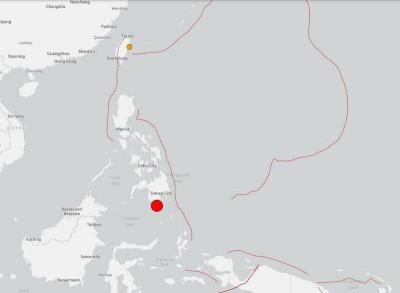
A magnitude 7.8 earthquake struck off the southern coast of Mindanao in the Philippines at 7:38am today, prompting the US Tsunami Warning System to issue an alert for neighboring countries, including Taiwan. The system issued a purple alert indicating a "tsunami threat." The potential threat zone includes Taiwan, the Philippines, Papua New Guinea, Yap and Palau. Philippine authorities were assessing the damage from the quake, with the office of civil defense seeking to verifying initial reports that 15 people had been killed and 129 injured in the region, mostly from falling debris. Arlene Hollero, disaster chief of Maasim town in the Philippines' Sarangani Province,

‘GRAY ZONE’ PRESSURE: Beijing’s activities are intended to create the deceitful impression that China has jurisdiction over the area around Taiwan, the CGA said Taiwan’s rights over its territorial waters and exclusive economic zone must not be violated by any country, the Mainland Affairs Council said yesterday, adding that it will not accept any unprovoked actions. The council issued the remarks in response to the China Coast Guard conducting maritime enforcement drills near eastern Taiwan and claiming to fully exercise China’s maritime administrative law enforcement authority. The Coast Guard Administration (CGA) has been closely monitoring the situation and is taking concrete steps to defend the nation’s sovereignty and secure its waters, the council said. China has no sovereign rights over the waters off eastern
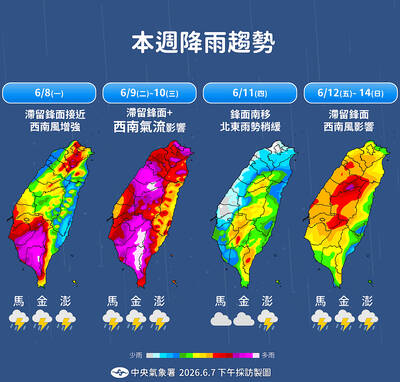
Heavy rain is expected to affect parts of Taiwan this week, the Central Weather Administration (CWA) said yesterday as a meteorologist said the active part of the annual plum rain season has started. A stationary plum rain front and southwesterly winds would bring unstable weather and abundant moisture to Taiwan from today for about a week, with the heaviest rainfall forecast for tomorrow and Wednesday, the CWA said. The agency said western and northeastern Taiwan, and mountainous areas in the east and southeast, could expect showers or thunderstorms on those two days, with localized heavy rain possible. Other parts of


 RSS
RSS