


A chip plant that South Korea’s Samsung Electronics Co is building in Taylor, Texas, would cost the world’s biggest memorychip maker more than US$25 billion, up more than US$8 billion from initial forecasts, three people familiar with the matter said.
The increase in cost is primarily due to inflation, the people said, declining to be named because the information is not public.
“The higher construction cost is about 80 percent of the cost increase,” one of the sources said. “The materials have gotten more expensive.”
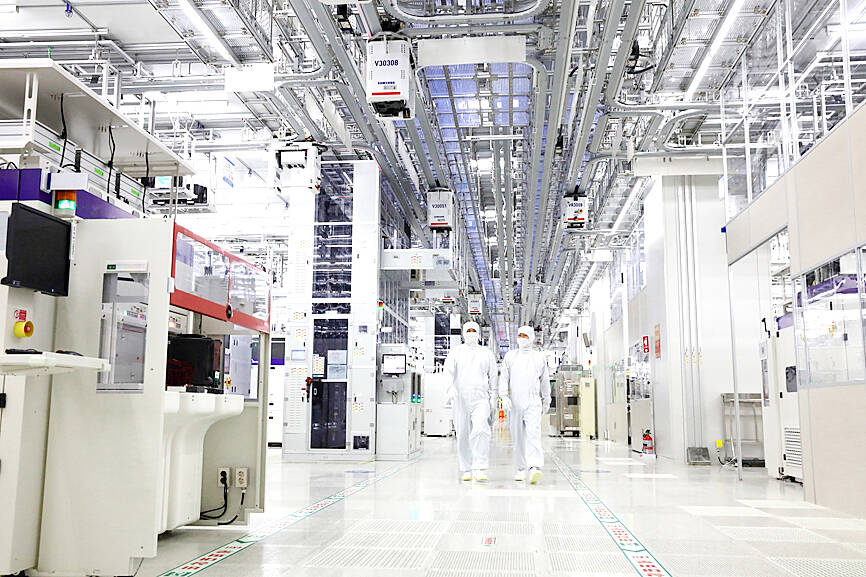
Photo: Reuters
“The newly estimated cost could go up even more if the construction of the Taylor plant gets delayed,” a second source said, adding that the estimate could be fluid.
“The later the plant is completed, the higher cost we would be looking at,” they said.
Samsung did not immediately respond to a request for comment.
Chipmakers are applying for billions of US dollars in grants from US President Joe Biden’s administration through the Creating Helpful Incentives to Produce Semiconductors (CHIPS) and Science Act, aimed at ramping up chip production in the US.
However, increasing costs raise questions about how far those dollars will go. The bill was proposed in 2020, before a historic run-up in inflation that US officials are still working to tame.
Most US government grants would only cover up to 15 percent of the cost of new plants, US Department of Commerce officials said early this month.
In the three years since lawmakers first floated the US$52 billion figure for CHIPS Act grants, of which only US$39 billion is earmarked for direct investment in plant construction, the cost of labor has risen sharply, along with the price of construction materials such as steel.
That could push up the cost of what are already huge spending plans.
Last year, Taiwan Semiconductor Manufacturing Co (台積電), the world’s largest contract chip manufacturer, announced it was more than tripling a planned investment in a new plant in Arizona to US$40 billion.
Intel Corp announced a US$20 billion chip factory in Ohio that could cost up to US$100 billion, while Micron Technology Inc last year said that it planned to invest up to US$100 billion over the next 20-plus years to build a computer chip factory complex in upstate New York.
Samsung, the world’s No. 2 contract chip manufacturer, announced its Taylor plant in 2021.
It aims to make advanced chips for functions such as artificial intelligence, 5G and mobile phones, and promises to create 2,000 high-tech jobs.
Unlike some of its rivals, Samsung has already broken ground.
The company is rushing to finish the plant by next year so it can produce chips by 2025, which would put the company ahead of a 2026 deadline to secure investment tax credits on tools for the factory, one of the sources said.
Samsung has already spent as much as half of the US$17 billion initially projected for the Taylor site, two of the sources said.

Cairo’s new monorail slices across the city skyline, running above the familiar chaos of blaring horns and aging buses’ exhaust fumes that mark rush hour below. The US$4.5 billion monorail, opened this month, is among Egypt’s most prominent new transport projects, part of a debt-funded infrastructure drive criticized for sapping state finances while bringing limited benefits to most of the country’s 109 million people. “It feels like you’re in a different country,” said Ramy Sayed, a restaurant manager, aboard a driverless Innovia 300 train. “No noise, no traffic, we’re not used to this.” The eastern line runs 56km from the bustling middle-class
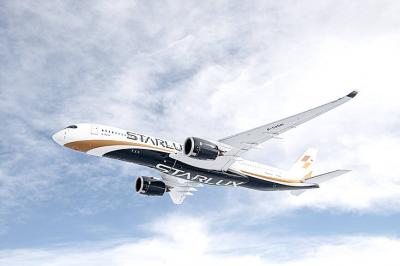
Starlux Airlines Co (星宇航空) today unveiled a long-haul network expansion plan at a shareholders’ meeting in Taipei, including direct flights to Barcelona, Spain, and Zurich, Switzerland, as well as a service connecting Taipei, Sydney and New Zealand. Starlux is to become the first Taiwanese carrier to offer non-stop services to the two European cities, while the inaugural oceanic route is expected to expand transit opportunities within the Australia-New Zealand market, Starlux said. Flight services to Chicago, Dallas, Washington and New York are under evaluation, the airline added. Prior to the shareholders’ meeting, the airline earlier this year announced that it would be

Taiwanese firms have increased investment in the Philippines in recent years as Manila’s ties with Washington deepen and global supply chains continue to shift away from China, an expert at the Chung-Hua Institution for Economic Research (CIER, 中華經濟研究院) said yesterday. The Philippines had not been among Taiwanese investors’ top choices in Southeast Asia, CIER Taiwan ASEAN Studies Center director Kristy Hsu (徐遵慈) said at a seminar in Taipei. However, Taiwan’s investment in the country has grown significantly since the COVID-19 pandemic, reaching US $257 million last year, a high in recent years, she said. Although Taiwan’s total investment in the Philippines still lags
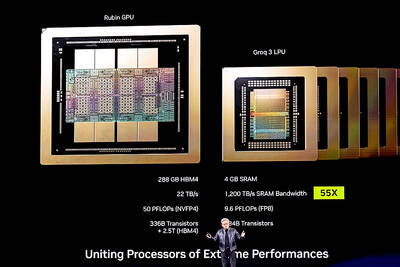
Taiwanese prosecutors suspect that three people successfully smuggled at least one shipment of Nvidia Corp artificial intelligence (AI) chips to China after first exporting them to Japan, people familiar with the matter said. The trio was detained last week by the Keelung District Prosecutors’ Office for allegedly falsifying documents related to exports of Super Micro Computer Inc servers containing advanced Nvidia chips, which the US has barred from sale to China without a license from Washington. The move marked Taiwan’s first public crackdown on AI chip diversion after years of pressure from the US to take a more active role in curtailing


 RSS
RSS