


An offshore wind developer is opening a hub in Providence, Rhode Island, that its executives hope will help accelerate the takeoff of the industry in the US.
Orsted US Offshore Wind, a division of the Denmark-based Orsted A/S, is to launch its US innovation hub in Providence today.
Orsted employees are to meet at the hub with US-based start-ups and small companies to discuss early-stage technologies to address issues the industry faces.
Orsted could potentially help these companies bring solutions to the market faster to help accelerate and scale the US industry, Orsted head of strategy, digital and innovation Thomas Nygaard Hamann said.
“In essence, a lot of this is really about taking the global know-how that we bring on this industry and connecting that to novel innovation in the US,” the Copenhagen-based Hamann said.
For example, Orsted is looking for ways to improve monitoring the movements of whales near wind farms, and ideas for reducing noise when turbines are installed, Hamann said.
Last year, to ensure that its technicians could safely transfer between small boats and offshore wind turbines, Orsted signed a deal to invest in the Scottish company Pict Offshore, which had developed a hoist system.
Orsted bought Providence-based Deepwater Wind in 2018. Deepwater Wind began operating the first US offshore wind farm off of Rhode Island’s Block Island in late 2016.
The US operations for Orsted are jointly headquartered in Providence and Boston, Massachusetts.
Rhode Island Governor Gina Raimondo said the hub’s opening further cements the state’s “status as America’s offshore wind capital.”
Several offshore wind and renewable energy companies have offices in Providence. The state offers tax credits and incentives to lure more of these businesses to Rhode Island, and launched a program in 2018 to train students for offshore wind industry jobs.
“It’s my hope that this will just keep building on itself, and over time you’re going to see, in Rhode Island, more supply-chain companies to service the offshore wind farm, more energy storage companies, more undersea mapping technologies,” Raimondo said in an interview last week. “It’s a whole ecosystem and it’s starting to build right here.”
Orsted has US federal lease areas in the US’ northeast and in the mid-Atlantic, where a total of six wind farms are in development. The northeast wind farms are joint ventures with Eversource.
Driving down the pricing for offshore wind has been, and will continue to be, an important driver of innovation, Orsted Northeast markets head Matthew Morrissey said.
However, they are looking to evolve every aspect of their business to improve the standardization, safety and overall operation of wind farms, as well as create jobs locally, he said.
The hub is to serve as the first point of contact for US companies interested in contracting with Orsted.
Morrissey said the goal is to make it easy for companies to make a pitch, get clear information and perhaps contracts.
The Danish parent company employs about 6,500 people and reported revenue for the group at 9.1 billion euros (US$10 billion) last year.
Orsted considered locating the hub in Boston or Cambridge, but Morrissey said Providence was the clear choice.
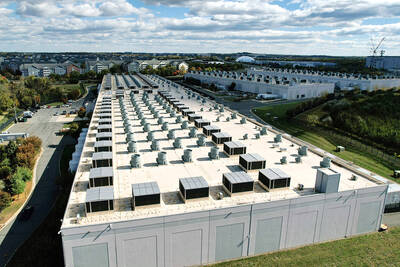
The demise of the coal industry left the US’ Appalachian region in tatters, with lost jobs, spoiled water and countless kilometers of abandoned underground mines. Now entrepreneurs are eyeing the rural region with ambitious visions to rebuild its economy by converting old mines into solar power systems and data centers that could help fuel the increasing power demands of the artificial intelligence (AI) boom. One such project is underway by a non-profit team calling itself Energy DELTA (Discovery, Education, Learning and Technology Accelerator) Lab, which is looking to develop energy sources on about 26,305 hectares of old coal land in
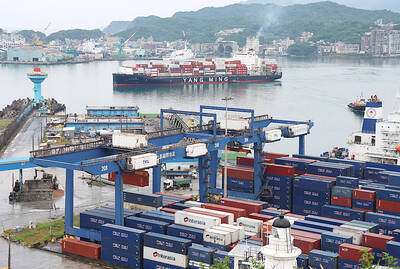
Taiwan’s exports soared 56 percent year-on-year to an all-time high of US$64.05 billion last month, propelled by surging global demand for artificial intelligence (AI), high-performance computing and cloud service infrastructure, the Ministry of Finance said yesterday. Department of Statistics Director-General Beatrice Tsai (蔡美娜) called the figure an unexpected upside surprise, citing a wave of technology orders from overseas customers alongside the usual year-end shopping season for technology products. Growth is likely to remain strong this month, she said, projecting a 40 percent to 45 percent expansion on an annual basis. The outperformance could prompt the Directorate-General of Budget, Accounting and

Netflix on Friday faced fierce criticism over its blockbuster deal to acquire Warner Bros Discovery. The streaming giant is already viewed as a pariah in some Hollywood circles, largely due to its reluctance to release content in theaters and its disruption of traditional industry practices. As Netflix emerged as the likely winning bidder for Warner Bros — the studio behind Casablanca, the Harry Potter movies and Friends — Hollywood’s elite launched an aggressive campaign against the acquisition. Titanic director James Cameron called the buyout a “disaster,” while a group of prominent producers are lobbying US Congress to oppose the deal,

Two Chinese chipmakers are attracting strong retail investor demand, buoyed by industry peer Moore Threads Technology Co’s (摩爾線程) stellar debut. The retail portion of MetaX Integrated Circuits (Shanghai) Co’s (上海沐曦) upcoming initial public offering (IPO) was 2,986 times oversubscribed on Friday, according to a filing. Meanwhile, Beijing Onmicro Electronics Co (北京昂瑞微), which makes radio frequency chips, was 2,899 times oversubscribed on Friday, its filing showed. The bids coincided with Moore Threads’ trading debut, which surged 425 percent on Friday after raising 8 billion yuan (US$1.13 billion) on bets that the company could emerge as a viable local competitor to Nvidia


 RSS
RSS