


German automakers Volkswagen AG and Daimler AG have launched a study to push for more “sustainable” lithium mining in Chile, lobbyist filings showed, a sign of growing supply chain concerns ahead of an expected electric vehicle boom.
Chile’s Atacama salt flat is by far the biggest source of supply of the ultralight battery metal in South America’s “lithium triangle.” The region, whose fragile ecosystem relies on a limited water supply, is home to the globe’s top two producers, US-based Albemarle Corp and Chile’s SQM.
However, concerns over sustainability have long plagued Atacama’s miners, which extract the metal from pools of brine beneath the world’s driest desert. Residents and environmental groups worry about potential damage to a regional ecosystem, home to an ancient indigenous culture, lagoons inhabited with rare flamingos and a booming tourism industry.
Lobbying records show a team from German development agency GIZ and the public-private Fundacion Chile met with Cristobal de La Maza, chief of top Chilean environmental regulator SMA, early this year to formally present plans for the “feasibility study.”
“This project is driven by the Volkswagen and Daimler companies,” the filings showed. “The growing importance of batteries has made the sustainability of lithium a key priority for these companies.”
Volkswagen confirmed in an e-mail that it had contracted the study. Daimler declined to comment.
Pressure is mounting on German automakers to fast-track production of electric vehicles to meet increasingly stringent EU anti-pollution rules. Volkswagen alone has staked its future on a US$91 billion plan to profitably mass-produce zero-emission vehicles.
That push has prompted beefed-up scrutiny of mining practices around key metals, such as cobalt, copper and lithium, all of which are predicted to see a spike in demand in the coming years.
The filings suggest work has already begun on the “feasibility study,” including talks with local communities, regulators and miners.
The goal of the meetings, the filings showed, is to develop a “joint action plan” and in time, “implement prioritized actions” to address the growing concerns about lithium mining in the region.
Concerns about sustainability have emerged as a key vulnerability for Chile as a lithium mining hot spot.
A Chilean environmental court in December last year called the Atacama ecosystem particularly fragile. It warned of a “high level of scientific uncertainty” around the behavior of its water table.
The water usage issue has also become a sticking point for the plans of both SQM and Albemarle to boost output from Chile to meet the anticipated spike in demand.
Australia, the world’s No. 1 producer of the white metal, mines its lithium from hard rock, not brine.
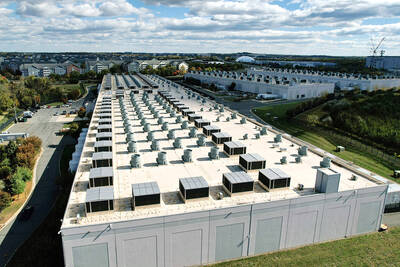
The demise of the coal industry left the US’ Appalachian region in tatters, with lost jobs, spoiled water and countless kilometers of abandoned underground mines. Now entrepreneurs are eyeing the rural region with ambitious visions to rebuild its economy by converting old mines into solar power systems and data centers that could help fuel the increasing power demands of the artificial intelligence (AI) boom. One such project is underway by a non-profit team calling itself Energy DELTA (Discovery, Education, Learning and Technology Accelerator) Lab, which is looking to develop energy sources on about 26,305 hectares of old coal land in

Taiwan’s exports soared 56 percent year-on-year to an all-time high of US$64.05 billion last month, propelled by surging global demand for artificial intelligence (AI), high-performance computing and cloud service infrastructure, the Ministry of Finance said yesterday. Department of Statistics Director-General Beatrice Tsai (蔡美娜) called the figure an unexpected upside surprise, citing a wave of technology orders from overseas customers alongside the usual year-end shopping season for technology products. Growth is likely to remain strong this month, she said, projecting a 40 percent to 45 percent expansion on an annual basis. The outperformance could prompt the Directorate-General of Budget, Accounting and
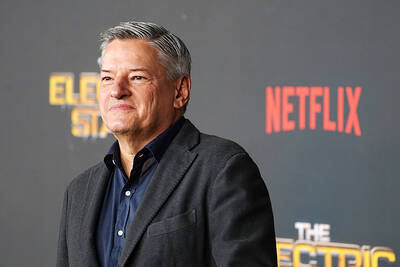
Netflix on Friday faced fierce criticism over its blockbuster deal to acquire Warner Bros Discovery. The streaming giant is already viewed as a pariah in some Hollywood circles, largely due to its reluctance to release content in theaters and its disruption of traditional industry practices. As Netflix emerged as the likely winning bidder for Warner Bros — the studio behind Casablanca, the Harry Potter movies and Friends — Hollywood’s elite launched an aggressive campaign against the acquisition. Titanic director James Cameron called the buyout a “disaster,” while a group of prominent producers are lobbying US Congress to oppose the deal,

Two Chinese chipmakers are attracting strong retail investor demand, buoyed by industry peer Moore Threads Technology Co’s (摩爾線程) stellar debut. The retail portion of MetaX Integrated Circuits (Shanghai) Co’s (上海沐曦) upcoming initial public offering (IPO) was 2,986 times oversubscribed on Friday, according to a filing. Meanwhile, Beijing Onmicro Electronics Co (北京昂瑞微), which makes radio frequency chips, was 2,899 times oversubscribed on Friday, its filing showed. The bids coincided with Moore Threads’ trading debut, which surged 425 percent on Friday after raising 8 billion yuan (US$1.13 billion) on bets that the company could emerge as a viable local competitor to Nvidia


 RSS
RSS