


Foreign direct investment (FDI) approved by the government last year fell from a year earlier, but still hit the fourth-highest level on record because of investments in the local semiconductor and renewable energy sectors, the Investment Commission said yesterday.
Approved FDI was US$11.20 billion, down 2.14 percent year-on-year because of a high comparison base, the commission said.
However, it was the fourth-highest amount since FDI was first recorded in 1953, trailing only US$15.3 billion in 2007, US$13.9 billion in 2006 and US$11.4 billion in 2018.
Despite the year-on-year decrease, the number of approved applications rose 13.73 percent from a year earlier to 4,118, commission data showed.
The biggest approved investment was US$2.12 billion by US chipmaker Micron Technology Inc, while Alphabet Inc, the parent company of search engine giant Google, invested US$835 million in its local operation, the commission said.
With the nation promoting offshore wind power development, Germany’s Yunlin Holding GmbH, Denmark’s Orsted Wind Power TW Holding A/S, Australia’s Macquarie Corporate Holdings Pty and Dutch firm JERA Formosa 2 BV proposed investing a combined US$1.8 billion.
Approved FDI from China was down 57.97 percent year-on-year to US$97.18 million, but the number of applications approved by the commission were up 1.42 percent year-on-year to 143.
Since June 30, 2009, when the government lifted a ban on investment from China, 1,371 applications committing to US$2.28 billion in investment have been approved, the commission said.
Meanwhile, the commission last year approved US$6.85 billion in foreign investment not including China, down 52.07 percent from 2018.
Much of the decline came in investment to non-Asian destinations, especially in holding companies in the Caribbean.
However, outbound investment in nations targeted by the New Southbound Policy rose 16.16 percent year-on-year to US$2.79 billion, largely in Vietnam, Singapore, Thailand and Australia.
The government’s New Southbound Policy promotes exchanges with ASEAN and South Asian nations, as well as Australia and New Zealand, in a bid to reduce Taiwan’s economic reliance on China.
The commission said the increase in investment in those nations was due to caution about the Chinese market amid a trade dispute between Washington and Beijing.
That was also reflected in China-bound investment approved by the commission, which fell 51 percent year-on-year to US$4.17 billion, the fourth consecutive annual decline, the commission’s data showed.
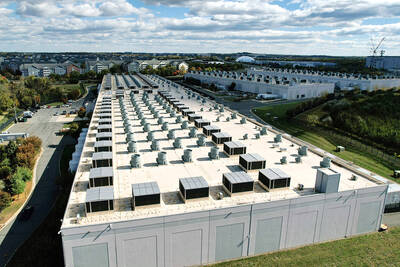
The demise of the coal industry left the US’ Appalachian region in tatters, with lost jobs, spoiled water and countless kilometers of abandoned underground mines. Now entrepreneurs are eyeing the rural region with ambitious visions to rebuild its economy by converting old mines into solar power systems and data centers that could help fuel the increasing power demands of the artificial intelligence (AI) boom. One such project is underway by a non-profit team calling itself Energy DELTA (Discovery, Education, Learning and Technology Accelerator) Lab, which is looking to develop energy sources on about 26,305 hectares of old coal land in
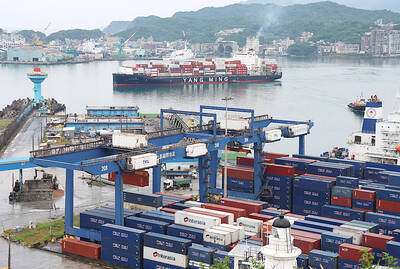
Taiwan’s exports soared 56 percent year-on-year to an all-time high of US$64.05 billion last month, propelled by surging global demand for artificial intelligence (AI), high-performance computing and cloud service infrastructure, the Ministry of Finance said yesterday. Department of Statistics Director-General Beatrice Tsai (蔡美娜) called the figure an unexpected upside surprise, citing a wave of technology orders from overseas customers alongside the usual year-end shopping season for technology products. Growth is likely to remain strong this month, she said, projecting a 40 percent to 45 percent expansion on an annual basis. The outperformance could prompt the Directorate-General of Budget, Accounting and
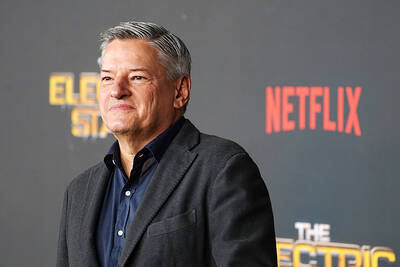
Netflix on Friday faced fierce criticism over its blockbuster deal to acquire Warner Bros Discovery. The streaming giant is already viewed as a pariah in some Hollywood circles, largely due to its reluctance to release content in theaters and its disruption of traditional industry practices. As Netflix emerged as the likely winning bidder for Warner Bros — the studio behind Casablanca, the Harry Potter movies and Friends — Hollywood’s elite launched an aggressive campaign against the acquisition. Titanic director James Cameron called the buyout a “disaster,” while a group of prominent producers are lobbying US Congress to oppose the deal,
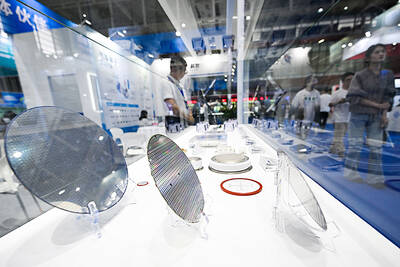
Two Chinese chipmakers are attracting strong retail investor demand, buoyed by industry peer Moore Threads Technology Co’s (摩爾線程) stellar debut. The retail portion of MetaX Integrated Circuits (Shanghai) Co’s (上海沐曦) upcoming initial public offering (IPO) was 2,986 times oversubscribed on Friday, according to a filing. Meanwhile, Beijing Onmicro Electronics Co (北京昂瑞微), which makes radio frequency chips, was 2,899 times oversubscribed on Friday, its filing showed. The bids coincided with Moore Threads’ trading debut, which surged 425 percent on Friday after raising 8 billion yuan (US$1.13 billion) on bets that the company could emerge as a viable local competitor to Nvidia


 RSS
RSS