


China’s economic growth cooled to its weakest in nearly 30 years last year amid a bruising trade dispute with the US, and more stimulus is expected this year as Beijing tries to boost sluggish investment and demand.
However, data released yesterday showed the world’s second-largest economy ended the rough year on a somewhat firmer note as a trade truce revived business confidence and earlier growth-boosting measures finally appeared to be taking hold.
As expected, China’s growth slowed to 6.1 percent last year, from 6.6 percent in 2018, National Bureau of Statistics data showed. Although still strong by global standards, and within the government’s target range, it was the weakest expansion since 1990.
This year is crucial for the Chinese Communist Party to fulfill its goal of doubling GDP and incomes in the decade to 2020, and turning China into a “moderately prosperous” nation.
Analysts reckon that long-term target would need growth this year to remain around 6 percent, though top officials have warned the economy may face even greater pressure than in last year.
More recent data, along with optimism over a “phase one” US-China trade deal signed on Wednesday, have raised hopes that the economy might be bottoming out.
Fourth-quarter GDP rose 6.0 percent from a year earlier, steadying from the third quarter, though still the weakest in nearly three decades. Last month’s industrial output, investment and retail sales all rose more than expected after an improved showing in November last year.
Policy sources have said that Beijing plans to set a lower growth target of around 6 percent this year from last year’s 6 to 6.5 percent, relying on increased infrastructure spending to ward off a sharper slowdown. Key targets are due to be announced in March.
On a quarterly basis, the economy grew 1.5 percent from October to December last year, also the same pace as the previous three months.
“We expect China’s growth rate will come further down to below 6 percent” in the coming year, Sony Financial Holdings chief economist Masaaki Kanno said.
“The Chinese economy is unlikely to fall abruptly because of ... government policies, but at the same time the trend of a further slowdown of the economy will remain unchanged,” Kanno said.
Data on last month released along with GDP showed a surprising acceleration in industrial output and a more modest pick-up in investment growth, while retail sales were solid.
Industrial output grew 6.9 percent from a year earlier, the strongest pace in nine months, while retail sales rose 8.0 percent. Fixed-asset investment rose 5.4 percent for the full year, but growth had plumbed record lows in autumn.
Easing trade tensions have made manufacturers more optimistic about the business outlook, analysts said, though many of the tit-for-tat tariffs both sides imposed during the trade war remain in place.
“Despite the recent uptick in activity, we think it is premature to call the bottom of the current economic cycle,” Capital Economics’ Julian Evans-Pritchard and Martin Rasmussen said in a note.
“External headwinds should ease further in the coming quarters thanks to the ‘phase one’ trade deal and a recovery in global growth,” they said. “But we think this will be offset by a renewed slowdown in domestic demand, triggering further monetary easing by the People’s Bank.”
Among other key risks this year, infrastructure — a crucial part of Beijing’s stabilization strategy — has remained stubbornly weak.
Infrastructure investment grew just 3.8 percent last year, decelerating from 4 percent in January to November, despite sharply higher local government bond issuance and other policy measures.
“This shows that local governments continued to face funding constraints,” said Tommy Xie (謝東明), China economist at OCBC Bank in Singapore.
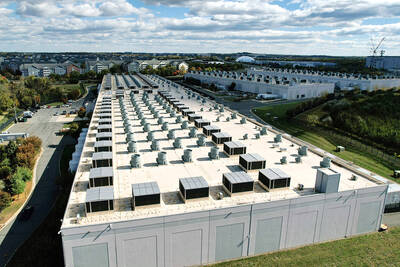
The demise of the coal industry left the US’ Appalachian region in tatters, with lost jobs, spoiled water and countless kilometers of abandoned underground mines. Now entrepreneurs are eyeing the rural region with ambitious visions to rebuild its economy by converting old mines into solar power systems and data centers that could help fuel the increasing power demands of the artificial intelligence (AI) boom. One such project is underway by a non-profit team calling itself Energy DELTA (Discovery, Education, Learning and Technology Accelerator) Lab, which is looking to develop energy sources on about 26,305 hectares of old coal land in
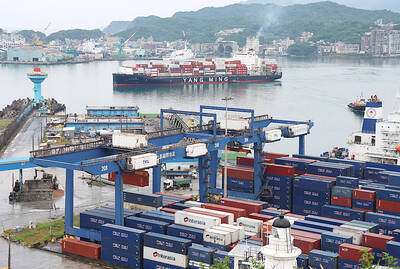
Taiwan’s exports soared 56 percent year-on-year to an all-time high of US$64.05 billion last month, propelled by surging global demand for artificial intelligence (AI), high-performance computing and cloud service infrastructure, the Ministry of Finance said yesterday. Department of Statistics Director-General Beatrice Tsai (蔡美娜) called the figure an unexpected upside surprise, citing a wave of technology orders from overseas customers alongside the usual year-end shopping season for technology products. Growth is likely to remain strong this month, she said, projecting a 40 percent to 45 percent expansion on an annual basis. The outperformance could prompt the Directorate-General of Budget, Accounting and

Netflix on Friday faced fierce criticism over its blockbuster deal to acquire Warner Bros Discovery. The streaming giant is already viewed as a pariah in some Hollywood circles, largely due to its reluctance to release content in theaters and its disruption of traditional industry practices. As Netflix emerged as the likely winning bidder for Warner Bros — the studio behind Casablanca, the Harry Potter movies and Friends — Hollywood’s elite launched an aggressive campaign against the acquisition. Titanic director James Cameron called the buyout a “disaster,” while a group of prominent producers are lobbying US Congress to oppose the deal,
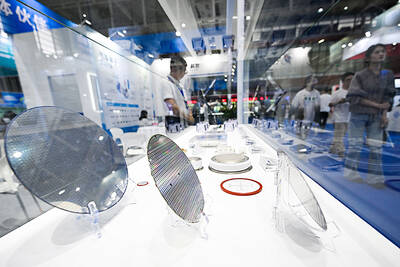
Two Chinese chipmakers are attracting strong retail investor demand, buoyed by industry peer Moore Threads Technology Co’s (摩爾線程) stellar debut. The retail portion of MetaX Integrated Circuits (Shanghai) Co’s (上海沐曦) upcoming initial public offering (IPO) was 2,986 times oversubscribed on Friday, according to a filing. Meanwhile, Beijing Onmicro Electronics Co (北京昂瑞微), which makes radio frequency chips, was 2,899 times oversubscribed on Friday, its filing showed. The bids coincided with Moore Threads’ trading debut, which surged 425 percent on Friday after raising 8 billion yuan (US$1.13 billion) on bets that the company could emerge as a viable local competitor to Nvidia


 RSS
RSS