


President Tsai Ing-wen’s (蔡英文) landslide election victory has reinforced a winning run for Taiwan’s financial markets.
Saturday’s election results are helping extend what has been a positive period of investor sentiment for Taiwan, with the TAIEX closing up 0.74 percent at 12,113.42 points yesterday, its highest level in more than three weeks, while the New Taiwan dollar gained 0.22 percent to end at NT$29.952 per US dollar, the highest in nearly 19 months.
The yield on 10-year government bonds was little changed at 0.6456 percent.
Foreign investors bought a net NT$10.75 billion (US$358.91 million) of local stocks, the most in almost a month, Taiwan Stock Exchange data showed.
“Investors will pay attention to beneficiary stocks in the short-term,” Mega International Investment Services Co (兆豐投顧) chairman Shelly Lee (李秀利) said. “With the upcoming trade deal signing and expectations of [US] Federal Reserve easing, the bullish trend will continue for Taiwan’s markets.”
Buying in select stocks favored by Tsai’s “five plus two” industrial development policy, such as in the green energy and defense industries, got a boost yesterday, and stocks in the biotech and medical care sector were among the best performers on bets that they would continue to benefit from supportive government policies.
Century Iron & Steel Industrial Co (世紀鋼構) and Hsin Kuang Steel Co (新光鋼鐵), which are keen to invest in offshore wind power development, moved sharply higher, rising 3.42 percent and 2.39 percent respectively, to close at NT$72.5 and NT$32.1.
In terms of national defense, shipbuilder CSBC Corp, Taiwan (台灣國際造船), rose 0.95 percent to close at NT$26.5, while Aerospace Industrial Development Corp (漢翔航空) ended unchanged at NT$34.95, after coming off a high of NT$36.7 on profit taking.
A gauge of tourism stocks was the worst performer, ending 2.63 percent lower, amid concerns that the election result would further worsen cross-strait ties.
If recent history is any guide, Taiwan’s equities are poised to extend gains in the coming month. The TAIEX has climbed by an average of 7.4 percent in the 30 days after the past six presidential elections, as investor concern about political risk fades.
“Taiwan stocks tend to rise after an election, as uncertainty is removed,” President Capital Management Co (統一投顧) chairman Li Fang-kuo (黎方國) said.
He sees the TAIEX hitting a record high by April, helped by continued inflows and a strong outlook for the technology sector.
Strong foreign inflows into the technology sector have in turn helped boost the NT dollar.
The NT dollar is expected to rise to 29.5 per US dollar by year-end, driven by the appeal of companies related to 5G and further repatriation of investment, said Cliff Tan (陳仲華), head of global markets research for East Asia at MUFG Bank Ltd.
Government bonds are expected to be boosted by limited supply under Tsai’s leadership, Jih Sun Securities Co (日盛證券) trader Kevin Shih said.
However, the market would remain constrained by global trade concerns, analysts said.
“Although the United States and China are scheduled to sign a phase one trade deal on Jan. 15, many investors still want to see the contents of the agreement,” Concord Securities Co (康和證券) analyst Kerry Huang (黃志祺) said.
Additional reporting by CNA

KEEPING UP: The acquisition of a cleanroom in Taiwan would enable Micron to increase production in a market where demand continues to outpace supply, a Micron official said Micron Technology Inc has signed a letter of intent to buy a fabrication site in Taiwan from Powerchip Semiconductor Manufacturing Corp (力積電) for US$1.8 billion to expand its production of memory chips. Micron would take control of the P5 site in Miaoli County’s Tongluo Township (銅鑼) and plans to ramp up DRAM production in phases after the transaction closes in the second quarter, the company said in a statement on Saturday. The acquisition includes an existing 12 inch fab cleanroom of 27,871m2 and would further position Micron to address growing global demand for memory solutions, the company said. Micron expects the transaction to
Vincent Wei led fellow Singaporean farmers around an empty Malaysian plot, laying out plans for a greenhouse and rows of leafy vegetables. What he pitched was not just space for crops, but a lifeline for growers struggling to make ends meet in a city-state with high prices and little vacant land. The future agriculture hub is part of a joint special economic zone launched last year by the two neighbors, expected to cost US$123 million and produce 10,000 tonnes of fresh produce annually. It is attracting Singaporean farmers with promises of cheaper land, labor and energy just over the border.

US actor Matthew McConaughey has filed recordings of his image and voice with US patent authorities to protect them from unauthorized usage by artificial intelligence (AI) platforms, a representative said earlier this week. Several video clips and audio recordings were registered by the commercial arm of the Just Keep Livin’ Foundation, a non-profit created by the Oscar-winning actor and his wife, Camila, according to the US Patent and Trademark Office database. Many artists are increasingly concerned about the uncontrolled use of their image via generative AI since the rollout of ChatGPT and other AI-powered tools. Several US states have adopted
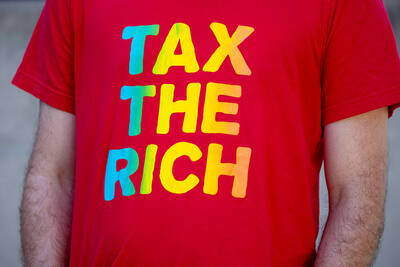
A proposed billionaires’ tax in California has ignited a political uproar in Silicon Valley, with tech titans threatening to leave the state while California Governor Gavin Newsom of the Democratic Party maneuvers to defeat a levy that he fears would lead to an exodus of wealth. A technology mecca, California has more billionaires than any other US state — a few hundred, by some estimates. About half its personal income tax revenue, a financial backbone in the nearly US$350 billion budget, comes from the top 1 percent of earners. A large healthcare union is attempting to place a proposal before


 RSS
RSS