


The warning signs are clear: Debt is rising on every continent and especially in the business sector, which has spent the past decade ramping up its borrowing to previously unheard-of levels.
In October last year, the IMF said that almost 40 percent of the corporate debt in eight leading countries — the US, China, Japan, Germany, Britain, France, Italy and Spain — would become so expensive during a recession that it would be impossible to service. In other words, tens of thousands of businesses, employing millions of people, would have gambled with high levels of borrowing and lost, making themselves insolvent.
Worse, the IMF said the risks were “elevated” in eight out of 10 countries that boasted systemically important financial sectors, adding that this situation was a repeat of the years running up to the previous financial crisis.
Last month, the World Bank joined in.
It said that emerging-market and developing economies (EMDEs) had pushed their borrowing to a record US$55 trillion in 2018.
EMERGING ECONOMIES
Unlike the richer nations already mentioned, the 100 EMDEs across Africa, Asia and South America covered by the report were affected by rising private-sector debt coupled with higher government borrowing. This extra state borrowing is not only larger, it has also changed in character:
First, it has gone from being largely directed to investment spending to, more recently, being used simply to cope with the costs of healthcare, education and welfare.
Second, it is being more commonly borrowed from international investors hungry to lend developing countries cash at, relatively speaking, sky-high rates of interest.
There is little evidence that anyone is paying any attention to the dire misgivings expressed by either organization. This year, the US S&P 500 resumed its long-term (100-year) upward trend following a near 200 percent increase since 2010. Likewise, the German DAX has soared over the past 10 years from 5,500 to more than 13,000, while the Paris CAC 40 has almost doubled to 6,000.
BRITISH SITUATION
Britain’s main market in shares has struggled to make any headway over the past three years while Brexit uncertainty dominated. Yet the FTSE 100 shows a gain from less than 4,000 in 2009 to 7,600 today.
Some analysts have argued that the IMF and World Bank are over-cooking their analysis after missing the last financial crash — seeing danger around every corner. Others dismiss them as archaic remnants of the post-World War II consensus that fail to understand how the global economy has entered a new phase, one that keeps stock markets humming along and bad recessions at bay.
Without higher interest rates, everyone can keep merrily borrowing. In the short term at least, the optimists could be right.
FED EFFECT
That is largely down to the actions of the US Federal Reserve, which was on course to repeat the mistake of 2005-2007, when it matched rising debt levels — especially in sub-prime mortgage loans — with rising interest rates, triggering the kind of financial crash that the IMF and World Bank now fear is around the corner.
This time, the Fed retreated after pushing base rates to almost 2.5 percent, still well short of the pre-crash normality of 4 to 5 percent, but higher than almost everywhere else.
After three rate cuts last year, the US economy starts this year with the base rate back to between 1.5 percent and 1.75 percent.
Without higher interest rates, everyone can keep merrily borrowing. When, for most businesses, borrowing rates remain below their potential income growth rate — even when that is lackluster — there is not the usual imperative to boost growth through investment to afford higher debt repayments.
SKEWED VIEW
However, this is a back-to-front way of discussing the issue. Most of the problems afflicting the global economy relate to a lack of demand for goods and services, at least on average, compared with the years prior to the 2008 crash. Much of the weak demand relates to aging populations, which, in the main, focus more on storing up savings for retirement than on spending.
They are also in the habit of voting for governments that promise to keep taxes low and property prices high, allowing them to accumulate even more wealth.
Through pensions and private investments, governments treat companies like cash machines, demanding a higher dividend every six months. Much of the borrowing by companies has been to pay these dividends, not to invest.
Baby boomers will pretty much all have retired by the end of this new decade, so most will have stopped investing and just be withdrawing funds.
It is this turn of the wheel of fortune that will wreck the global economy — if the accumulation of debt has not got there first.
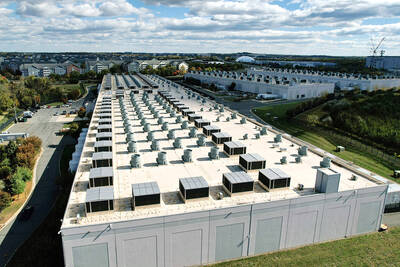
The demise of the coal industry left the US’ Appalachian region in tatters, with lost jobs, spoiled water and countless kilometers of abandoned underground mines. Now entrepreneurs are eyeing the rural region with ambitious visions to rebuild its economy by converting old mines into solar power systems and data centers that could help fuel the increasing power demands of the artificial intelligence (AI) boom. One such project is underway by a non-profit team calling itself Energy DELTA (Discovery, Education, Learning and Technology Accelerator) Lab, which is looking to develop energy sources on about 26,305 hectares of old coal land in
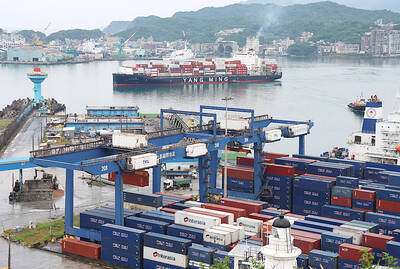
Taiwan’s exports soared 56 percent year-on-year to an all-time high of US$64.05 billion last month, propelled by surging global demand for artificial intelligence (AI), high-performance computing and cloud service infrastructure, the Ministry of Finance said yesterday. Department of Statistics Director-General Beatrice Tsai (蔡美娜) called the figure an unexpected upside surprise, citing a wave of technology orders from overseas customers alongside the usual year-end shopping season for technology products. Growth is likely to remain strong this month, she said, projecting a 40 percent to 45 percent expansion on an annual basis. The outperformance could prompt the Directorate-General of Budget, Accounting and
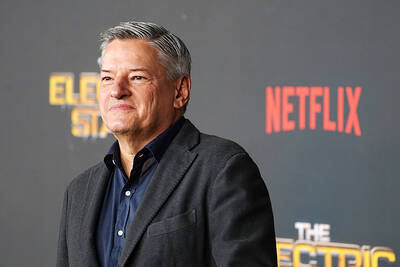
Netflix on Friday faced fierce criticism over its blockbuster deal to acquire Warner Bros Discovery. The streaming giant is already viewed as a pariah in some Hollywood circles, largely due to its reluctance to release content in theaters and its disruption of traditional industry practices. As Netflix emerged as the likely winning bidder for Warner Bros — the studio behind Casablanca, the Harry Potter movies and Friends — Hollywood’s elite launched an aggressive campaign against the acquisition. Titanic director James Cameron called the buyout a “disaster,” while a group of prominent producers are lobbying US Congress to oppose the deal,

Two Chinese chipmakers are attracting strong retail investor demand, buoyed by industry peer Moore Threads Technology Co’s (摩爾線程) stellar debut. The retail portion of MetaX Integrated Circuits (Shanghai) Co’s (上海沐曦) upcoming initial public offering (IPO) was 2,986 times oversubscribed on Friday, according to a filing. Meanwhile, Beijing Onmicro Electronics Co (北京昂瑞微), which makes radio frequency chips, was 2,899 times oversubscribed on Friday, its filing showed. The bids coincided with Moore Threads’ trading debut, which surged 425 percent on Friday after raising 8 billion yuan (US$1.13 billion) on bets that the company could emerge as a viable local competitor to Nvidia


 RSS
RSS