


Sinbon Electronics Co (信邦電子), which produces cables, connectors and modems, on Friday reported consolidated sales of NT$1.32 billion (US$43.85 million) for last month, up 14.23 percent year-on-year, but down 4.11 percent month-on-month.
Sinbon attributed the monthly decrease to customers digesting inventory before the end of last year and front loading of orders in the third quarter of last year to avoid higher tariffs amid the US-China trade dispute.
Cable assemblies contributed 74.02 percent of the company’s total sales last month, while connectors and other components and accessories made up 25.98 percent, Sinbon said in a statement.
The company’s product shipment breakdown showed that industrial control devices accounted for 28.22 percent of overall shipments, communications and electronic peripheral components contributed 27.4 percent, and green energy-related components made up 26.34 percent, while medical and care devices took up 9.22 percent and automotive items 8.82 percent.
Sales last quarter decreased 19.65 percent from the previous quarter to NT$4.11 billion due to seasonal factors and a US customer putting off orders, but last quarter’s sales still increased 6.29 percent from the same period in 2018, Sinbon said.
For the whole of last year, accumulated sales rose 14.9 percent annually to NT$18.172 billion, an all-time record for the company.
“Even though the world economy in 2019 was in an unstable status due to the US-China trade war, Sinbon has generated a good record for the year,” the company said.
Last year’s sales figure was comparable to Yuanta Securities Investment and Consulting Co’s (元大投顧) forecast of a 15 percent increase to NT$18 billion and Jih Sun Securities Investment Consulting Co’s (日盛投顧) estimate of a 14.44 percent rise to NT$17.9 billion.
At a meeting with analysts last month, the company said that the fourth quarter would be a low point and sales this year would rise by a double-digit percentage to set a new record.
Sinbon’s order visibility has extended to 2022-2023, with major growth drivers including potential demand from logistics and EU-based electric vehicle clients, sensor modules and gateway products for Internet of Things applications, as well as special cables used in firefighting and defense, it said.
“Thanks to long-term relationships, Sinbon has greater access to clients versus peers when products are at the research and development stage, and can often ship as a preferred supplier ... and generally see stable orders,” said Yuanta Securities Investment Consulting Co (元大投顧) analyst Wang Deng-cheng (王登城), who attended the briefing, on Dec. 18.
About 70 percent of the company’s production capacity is in China, but Sinbon has built manufacturing sites in Taiwan, Hungary and the US.
As there is little possibility that Washington will lower its 25 percent tariffs on electronics imported from China before the US presidential election on Nov. 3, Sinbon is aggressively expanding its capacity in Taiwan, with its third Miaoli plant to start mass production early this year, the company said.
The trade dispute is likely to last for another five or six years, it said.
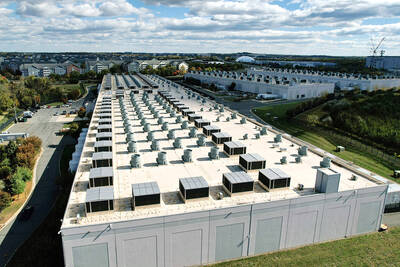
The demise of the coal industry left the US’ Appalachian region in tatters, with lost jobs, spoiled water and countless kilometers of abandoned underground mines. Now entrepreneurs are eyeing the rural region with ambitious visions to rebuild its economy by converting old mines into solar power systems and data centers that could help fuel the increasing power demands of the artificial intelligence (AI) boom. One such project is underway by a non-profit team calling itself Energy DELTA (Discovery, Education, Learning and Technology Accelerator) Lab, which is looking to develop energy sources on about 26,305 hectares of old coal land in
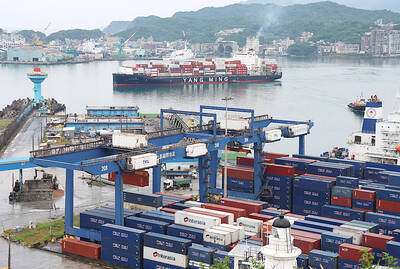
Taiwan’s exports soared 56 percent year-on-year to an all-time high of US$64.05 billion last month, propelled by surging global demand for artificial intelligence (AI), high-performance computing and cloud service infrastructure, the Ministry of Finance said yesterday. Department of Statistics Director-General Beatrice Tsai (蔡美娜) called the figure an unexpected upside surprise, citing a wave of technology orders from overseas customers alongside the usual year-end shopping season for technology products. Growth is likely to remain strong this month, she said, projecting a 40 percent to 45 percent expansion on an annual basis. The outperformance could prompt the Directorate-General of Budget, Accounting and

Netflix on Friday faced fierce criticism over its blockbuster deal to acquire Warner Bros Discovery. The streaming giant is already viewed as a pariah in some Hollywood circles, largely due to its reluctance to release content in theaters and its disruption of traditional industry practices. As Netflix emerged as the likely winning bidder for Warner Bros — the studio behind Casablanca, the Harry Potter movies and Friends — Hollywood’s elite launched an aggressive campaign against the acquisition. Titanic director James Cameron called the buyout a “disaster,” while a group of prominent producers are lobbying US Congress to oppose the deal,
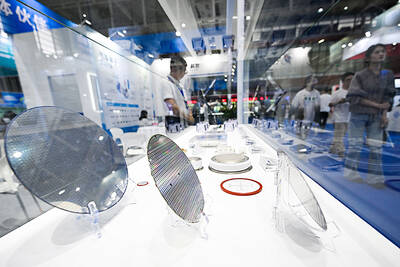
Two Chinese chipmakers are attracting strong retail investor demand, buoyed by industry peer Moore Threads Technology Co’s (摩爾線程) stellar debut. The retail portion of MetaX Integrated Circuits (Shanghai) Co’s (上海沐曦) upcoming initial public offering (IPO) was 2,986 times oversubscribed on Friday, according to a filing. Meanwhile, Beijing Onmicro Electronics Co (北京昂瑞微), which makes radio frequency chips, was 2,899 times oversubscribed on Friday, its filing showed. The bids coincided with Moore Threads’ trading debut, which surged 425 percent on Friday after raising 8 billion yuan (US$1.13 billion) on bets that the company could emerge as a viable local competitor to Nvidia


 RSS
RSS