


US President Donald Trump on Monday announced plans to re-impose tariffs on steel and aluminum from Brazil and Argentina, hitting back at what he called their “unfair” policies.
The move appeared to surprise Brazilian President Jair Bolsonaro, who considers himself an ideological ally of the Republican leader.
Industry leaders in both countries cried foul.
“Brazil and Argentina have been presiding over a massive devaluation of their currencies,” which is hurting US farmers, Trump said on Twitter.
“Effective immediately, I will restore the Tariffs on all Steel & Aluminum that is shipped into the US from those countries,” he said.
Trump last year announced global tariffs of 25 percent on steel and 10 percent on aluminum, but later approved exemptions for some countries, including Argentina and Brazil — after they agreed to quotas.
Bolsonaro sought to play down the issue, saying he would appeal to Trump for more understanding of Brazil’s position and boasting that he has an “open channel” with the US leader if needed.
Later, in a radio interview, Bolsonaro said: “I hope he understands and doesn’t penalize us in this matter.”
He added that he was confident he would receive a favorable hearing from the US president.
“I am almost convinced that he will hear us,” Bolsonaro said.
For its part, the Argentinian Ministry of Production and Labor said in a statement that it had asked the US for clarification about the announcement and was looking into possible “joint action” with Brazil in response.
The Brazil Steel Institute said that it was perplexed by the decision.
“There is no initiative by the government to artificially devalue the real, and the decision to tax Brazilian steel as a way to compensate American farmers is a retaliation against Brazil, which is inconsistent with the partnership relationship between the two countries,” it said.
The decision “ends up hurting the American steelmaking industry itself, which needs semi-finished products exported by Brazil in order to operate its mills,” the institute added.
Brazil is the second-largest supplier of steel to the US market behind Canada.
Jose Urtubey, spokesman for Argentina’s powerful Union Industrial Argentina employer federation, said producers in the country would be harmed immediately by the tariffs.
With Argentina’s “lack of competitiveness” as a producer, the fact that the US had the lowest steel and aluminum tariffs was “beneficial,” Urtubey said.
Javier Mandanes Quintanilla, chairman of the Aluar Group, Argentina’s only aluminum producer, viewed the tariff plan with trepidation.
“This is a measure that affects us very strongly,” he told La Nacion.
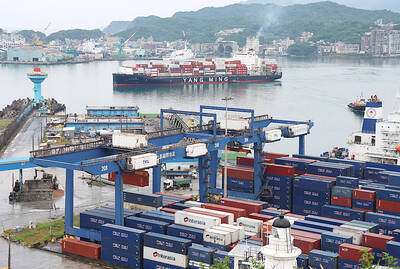
Taiwan’s exports soared 56 percent year-on-year to an all-time high of US$64.05 billion last month, propelled by surging global demand for artificial intelligence (AI), high-performance computing and cloud service infrastructure, the Ministry of Finance said yesterday. Department of Statistics Director-General Beatrice Tsai (蔡美娜) called the figure an unexpected upside surprise, citing a wave of technology orders from overseas customers alongside the usual year-end shopping season for technology products. Growth is likely to remain strong this month, she said, projecting a 40 percent to 45 percent expansion on an annual basis. The outperformance could prompt the Directorate-General of Budget, Accounting and
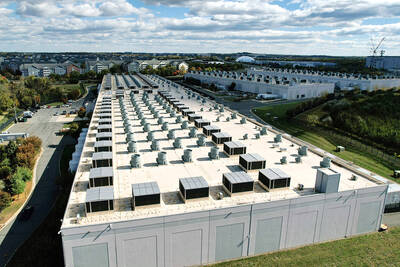
The demise of the coal industry left the US’ Appalachian region in tatters, with lost jobs, spoiled water and countless kilometers of abandoned underground mines. Now entrepreneurs are eyeing the rural region with ambitious visions to rebuild its economy by converting old mines into solar power systems and data centers that could help fuel the increasing power demands of the artificial intelligence (AI) boom. One such project is underway by a non-profit team calling itself Energy DELTA (Discovery, Education, Learning and Technology Accelerator) Lab, which is looking to develop energy sources on about 26,305 hectares of old coal land in
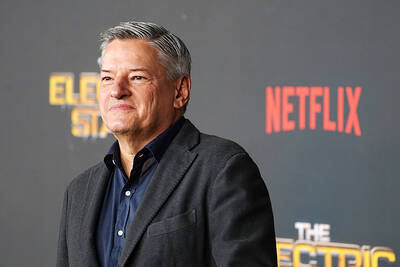
Netflix on Friday faced fierce criticism over its blockbuster deal to acquire Warner Bros Discovery. The streaming giant is already viewed as a pariah in some Hollywood circles, largely due to its reluctance to release content in theaters and its disruption of traditional industry practices. As Netflix emerged as the likely winning bidder for Warner Bros — the studio behind Casablanca, the Harry Potter movies and Friends — Hollywood’s elite launched an aggressive campaign against the acquisition. Titanic director James Cameron called the buyout a “disaster,” while a group of prominent producers are lobbying US Congress to oppose the deal,

Two Chinese chipmakers are attracting strong retail investor demand, buoyed by industry peer Moore Threads Technology Co’s (摩爾線程) stellar debut. The retail portion of MetaX Integrated Circuits (Shanghai) Co’s (上海沐曦) upcoming initial public offering (IPO) was 2,986 times oversubscribed on Friday, according to a filing. Meanwhile, Beijing Onmicro Electronics Co (北京昂瑞微), which makes radio frequency chips, was 2,899 times oversubscribed on Friday, its filing showed. The bids coincided with Moore Threads’ trading debut, which surged 425 percent on Friday after raising 8 billion yuan (US$1.13 billion) on bets that the company could emerge as a viable local competitor to Nvidia


 RSS
RSS