


Taipei Times (TT): Many Taiwanese do not feel as much of a need as before to save money in the bank due to low interest rates. We noticed that Standard Chartered [StanChart] Taiwan’s deposits rose only 1.06 percent last year from a year earlier. Are you concerned with the slow pace given that banks traditionally rely on retail deposits to fund long-term loans?
Andy Halford: Interest rates go up and go down. If you go back to the beginning of this year, most people worldwide were expecting interest would be gently rising. The fact is that no one will know how the benchmark rates would change in the next 10 months or 20 months.
Even though in a low interest rate environment, customers still need to find a home for their money. Banks that are trustworthy, safe and competitive should still have good potential in deposit business. Deposits are important for us. We must make sure we are market competitive. Currently, we book a market share between 3 to 4 percent globally, so there are growth opportunities.
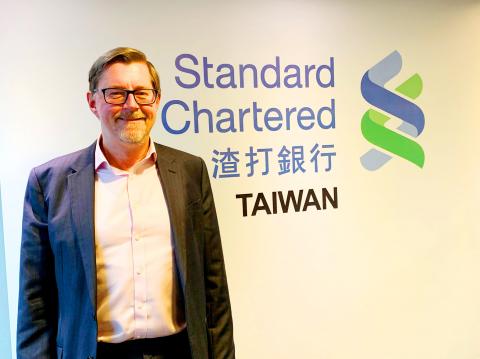
Photo: Kao Shih-ching, Taipei Times
We focus on our relationships with customers. It seems that customers move more into digital space so we are to use new digital programs to attract them.
TT: StanChart earlier this year announced that it would accelerate its digital transformation. Could you share how that would help the bank grow?
Halford: I spent 15 years working in Vodafone Group PLC. People buy and use more mobile services. Technology is changing consumers’ behavior ... and with [the younger generation] growing up, we need to play a part in digital service and offer them mobile access to our financial service.
We have four approaches. Firstly, we have won Hong Kong’s first three licenses to open a virtual bank. We [plan to] launch the bank next year. We see that as an interesting opportunity to deploy different technologies and would use a new operational model running the bank. If it is successful, there is no reason why the approach cannot be adopted in other countries.
Secondly, we have launched digital-only banks and offer a mobile-based application for consumers to apply for loans in Africa. Currently, the services have been operated in eight markets. It has been very, very successful. We have signed up as many new customers in the past six months as in the previous six years.
Thirdly, were are looking to develop software that would enable us to join up with e-commerce operators who have got bountiful customers but do not currently offer financial services or products. Customers who want to borrow money or use a better payment service could be extended into our service through the software connection. So, we can find new customers.
As for which operators we are to partner with, it would vary by market. We will be looking at market dynamics and be flexible.
Lastly, we are working with other companies doing experiments with new ideas to see what new service we can offer to meet new demand from our clients. An instance is the application of blockchain.
TT: Has StanChart seen new business opportunities with the supply chain reshuffling amid the US-China trade tensions?
Halford: Taiwan has some very valuable suppliers. If companies are considering making a change, we can help them plan, advise them and offer them financing and other services, as we have significant and longstanding operations in many markets. We are neutral about which country they should invest in.
Meanwhile, supply chains have been more complex in a time [that is] less predictable. How fast the supply chain transfer occurs varies by different sectors and depends on specific and individual circumstances.
Some types of investment are less easy to move due to human capital. [Moving] is also about whether companies think current uncertainties would be there for a long time, or there is no point to disrupt business just for something that may come and go.
TT: How are your operations in Hong Kong coping with the unrest and do you agree with some analysts that Hong Kong could lose its position as Asia’s financial center?
Halford: We are very responsive at what is going on in the city. We have to be more flexible. We want our staff to be safe, and if some branches have to close earlier than usual, we will do that.
Business overall has actually been strong during this period, and in the third quarter, profits rose year-on-year. Lending and deposits also both advanced from a year earlier. One part of our business has been affected, but not all of it.
Only a small number of clients have opened additional accounts in other countries, including Singapore, since the protests. We sincerely hope the tensions settle and that Hong Kong would go back where it was before. It is a vibrant financial center.
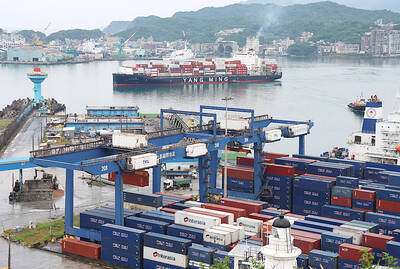
Taiwan’s exports soared 56 percent year-on-year to an all-time high of US$64.05 billion last month, propelled by surging global demand for artificial intelligence (AI), high-performance computing and cloud service infrastructure, the Ministry of Finance said yesterday. Department of Statistics Director-General Beatrice Tsai (蔡美娜) called the figure an unexpected upside surprise, citing a wave of technology orders from overseas customers alongside the usual year-end shopping season for technology products. Growth is likely to remain strong this month, she said, projecting a 40 percent to 45 percent expansion on an annual basis. The outperformance could prompt the Directorate-General of Budget, Accounting and

The demise of the coal industry left the US’ Appalachian region in tatters, with lost jobs, spoiled water and countless kilometers of abandoned underground mines. Now entrepreneurs are eyeing the rural region with ambitious visions to rebuild its economy by converting old mines into solar power systems and data centers that could help fuel the increasing power demands of the artificial intelligence (AI) boom. One such project is underway by a non-profit team calling itself Energy DELTA (Discovery, Education, Learning and Technology Accelerator) Lab, which is looking to develop energy sources on about 26,305 hectares of old coal land in
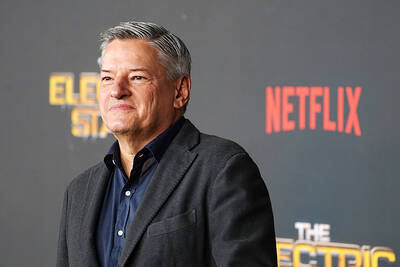
Netflix on Friday faced fierce criticism over its blockbuster deal to acquire Warner Bros Discovery. The streaming giant is already viewed as a pariah in some Hollywood circles, largely due to its reluctance to release content in theaters and its disruption of traditional industry practices. As Netflix emerged as the likely winning bidder for Warner Bros — the studio behind Casablanca, the Harry Potter movies and Friends — Hollywood’s elite launched an aggressive campaign against the acquisition. Titanic director James Cameron called the buyout a “disaster,” while a group of prominent producers are lobbying US Congress to oppose the deal,

Two Chinese chipmakers are attracting strong retail investor demand, buoyed by industry peer Moore Threads Technology Co’s (摩爾線程) stellar debut. The retail portion of MetaX Integrated Circuits (Shanghai) Co’s (上海沐曦) upcoming initial public offering (IPO) was 2,986 times oversubscribed on Friday, according to a filing. Meanwhile, Beijing Onmicro Electronics Co (北京昂瑞微), which makes radio frequency chips, was 2,899 times oversubscribed on Friday, its filing showed. The bids coincided with Moore Threads’ trading debut, which surged 425 percent on Friday after raising 8 billion yuan (US$1.13 billion) on bets that the company could emerge as a viable local competitor to Nvidia


 RSS
RSS