


Asia stocks were mixed on Friday amid muted volumes, as investors awaited further details on US-China trade discussions.
Japanese shares steadied after three days of declines, although volumes were below average. Stocks climbed in South Korea and Hong Kong, and slipped in China.
It has been a mixed picture on the trade front this week. Chinese Vice Premier Liu He (劉鶴) has invited US Trade Representative Robert Lighthizer to Beijing for talks later this month, people familiar with the matter have said, and Washington is likely to postpone new tariffs scheduled for next month even if there is no deal by then, the South China Morning Post reported.
However, US President Donald Trump might soon sign into law a bill supporting Hong Kong’s protesters, a decision Beijing has criticized.
Meanwhile, Chinese President Xi Jinping (習近平) said that his nation wants to work toward a phase-one trade agreement with the US on the “basis of mutual respect and equality,“ his first comments on a partial deal that he could potentially sign with Trump.
“The market is looking for some bullish signal that things aren’t going to get worse and that we’re not going to see further deterioration in trade talks between the US and China,” Erin Browne, a portfolio manager at Pacific Investment Management Co, told Bloomberg TV. “They just don’t want to see further escalation.”
Japan’s TOPIX rose 0.12 percent to 1,691.34, but fell 0.31 percent for the week. The Shanghai Composite slid 0.63 percent to 2,885.29, dropping 0.21 percent for the week, and South Korea’s KOSPI rose 0.26 percent to 2,101.96, but lost 2.79 percent over the week.
Meanwhile, Hong Kong stocks rebounded on Friday as the Asian financial hub took a breather from political unrest ahead of key local elections today.
At the close of trade, the Hang Seng index was up 0.48 percent at 26,595.08, posting a weekly gain of 1.02 percent.
Shares in Taiwan closed little changed on Friday after late-session buying helped the market rebound from a decline earlier in the day, dealers said.
However, turnover was relatively low as investors were concerned about ongoing trade friction between the US and China and the possibility that they would not sign the phase one agreement by the end of the year, dealers said.
The weighted index on the Taiwan Stock Exchange, the TAIEX, closed up 8.53 points, or 0.07 percent, at 11,566.80, after moving between 11,534.15 and 11,577.02, on turnover of NT$107.248 billion (US$3.51 billion). It gained 0.36 percent from last week’s 11,525.60 points.
The market opened down 1.52 points and soon returned to positive territory on a technical rebound from a session earlier, when the TAIEX closed down 0.63 percent, dealers said.
However, with the TAIEX moving closer to the nearest technical resistance ahead of 11,600 points at about 9:30am, selling set in again as investors reacted to the 0.2 percent decline in the Dow Jones Industrial Average overnight, they said.
In the final minutes of the session, buying emerged in big-cap stocks such as Taiwan Semiconductor Manufacturing Co (台積電) and defensive telecom stocks, including Chunghwa Telecom Co (中華電信), to help the TAIEX finish above its previous closing level.
“International media reports said the US and China are expected to delay the signing of a phase-one trade agreement to 2020 instead of later this year, which raised anxiety over global trade,” Hua Nan Securities Co (華南永昌證券) analyst Kevin Su (蘇俊宏) said.
“Amid renewed uncertainty over global trade, it was no surprise that Taiwan’s stock market was in consolidation mode throughout the session today [Friday] and turnover was limited,” Su said.
“The silver lining was that some bargain hunters were willing to buy and support the TAIEX by the end of the session,” Su added.

Taiwan’s exports soared 56 percent year-on-year to an all-time high of US$64.05 billion last month, propelled by surging global demand for artificial intelligence (AI), high-performance computing and cloud service infrastructure, the Ministry of Finance said yesterday. Department of Statistics Director-General Beatrice Tsai (蔡美娜) called the figure an unexpected upside surprise, citing a wave of technology orders from overseas customers alongside the usual year-end shopping season for technology products. Growth is likely to remain strong this month, she said, projecting a 40 percent to 45 percent expansion on an annual basis. The outperformance could prompt the Directorate-General of Budget, Accounting and
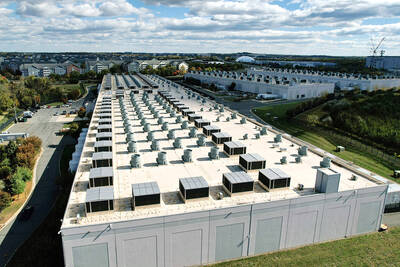
The demise of the coal industry left the US’ Appalachian region in tatters, with lost jobs, spoiled water and countless kilometers of abandoned underground mines. Now entrepreneurs are eyeing the rural region with ambitious visions to rebuild its economy by converting old mines into solar power systems and data centers that could help fuel the increasing power demands of the artificial intelligence (AI) boom. One such project is underway by a non-profit team calling itself Energy DELTA (Discovery, Education, Learning and Technology Accelerator) Lab, which is looking to develop energy sources on about 26,305 hectares of old coal land in

Netflix on Friday faced fierce criticism over its blockbuster deal to acquire Warner Bros Discovery. The streaming giant is already viewed as a pariah in some Hollywood circles, largely due to its reluctance to release content in theaters and its disruption of traditional industry practices. As Netflix emerged as the likely winning bidder for Warner Bros — the studio behind Casablanca, the Harry Potter movies and Friends — Hollywood’s elite launched an aggressive campaign against the acquisition. Titanic director James Cameron called the buyout a “disaster,” while a group of prominent producers are lobbying US Congress to oppose the deal,
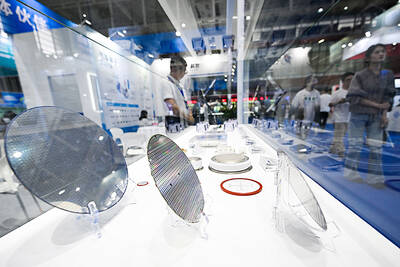
Two Chinese chipmakers are attracting strong retail investor demand, buoyed by industry peer Moore Threads Technology Co’s (摩爾線程) stellar debut. The retail portion of MetaX Integrated Circuits (Shanghai) Co’s (上海沐曦) upcoming initial public offering (IPO) was 2,986 times oversubscribed on Friday, according to a filing. Meanwhile, Beijing Onmicro Electronics Co (北京昂瑞微), which makes radio frequency chips, was 2,899 times oversubscribed on Friday, its filing showed. The bids coincided with Moore Threads’ trading debut, which surged 425 percent on Friday after raising 8 billion yuan (US$1.13 billion) on bets that the company could emerge as a viable local competitor to Nvidia


 RSS
RSS