


Fridges across Europe and the US are filled with almond drinks, oat milk and plant-based meat substitutes. So where is the imitation cheese? Until it starts to taste more like the real thing, it is likely to stay out of the kitchen.
The global vegan cheese market was worth US$1.9 billion last year, according to Future Market Insights. That is just a tiny fraction of the dairy-alternatives industry and the US$121 billion in real cheese. Much of it is mozzarella or cheddar — used in cooking where the taste and feel can be disguised, rather than enjoyed on its own or accompanied by a nice chardonnay.
A new breed of entrepreneurs is trying to change that by ridding fake cheese of its rubbery reputation and getting in on the boom in plant-based burgers, milk, yogurt and ice cream.
One of them is New Roots, headquartered at the foot of the Swiss Alps — the home of fondue and raclette. Founded only four years ago, the 15-employee company supplies about 73 tonnes of imitation camembert, cream cheese and other products annually as millennial consumers embrace vegan diets.
Most faux cheesemakers just add flavors and enhancers to a milk substitute mass to mimic the taste and texture of cheese.
However, New Roots and France’s Tomm’Pousse are among the first companies pioneering a new way to make plant-based alternatives using traditional cheesemaking methods. Tomm’Pousse mixes cashews and water into a puree, while New Roots makes cashew milk. Both add probiotic cultures for fermentation and both ripen their product like real cheese.
“I wanted to keep the Swiss tradition alive and not just create an analogous product mixed together from 20 different synthetic ingredients,” New Roots founder Freddy Hunziker said in an interview at the company’s factory in Thun, where the windowsills are lined with another millennial favorite, cactuses in terracotta pots. “And it has really taken off.”
New Roots is just one of hundreds of start-ups that have popped up in Europe and North America to try to revolutionize the category.
In the US, Miyoko’s Kitchen supplies about 12,000 stores. Fatburger Corp has teamed up with Canada’s Daiya Foods Inc to offer a 100 percent plant-based cheeseburger, pairing Daiya’s cheddar slices with the Impossible Burger.
European food giants are starting to catch on. Nestle SA has developed alternatives to cheese and bacon, designed to complement its existing plant-based burger patties. French yogurt maker Danone SA said it plans to expand its vegan cheese offering after entering the category with its acquisition of soy milk producer WhiteWave.
Kraft Heinz Co, whose Singles and Velveeta brands have been struggling, this year led a US$3.5 million investment in biotech start-up New Culture, which is developing lab-grown vegan cheese by cultivating dairy proteins without the use of animals.
New Culture is taking aim at the biggest challenge for alternative cheeses: There is no plant-based substitute for the casein proteins in cow’s milk that has the same texture. Efforts to create substitutes with oils, starches and artificial flavorings have mostly fallen flat, holding back the growth of vegan diets.
“Most people are afraid to go vegan,” according to a study by researcher Future Market Insights, because “they cannot live without cheese and fast-food products such as burgers, pizzas and other foods in which cheese is an essential ingredient.”
Another hurdle is pricing. New Roots’ most expensive camembert alternative sells at 11.50 Swiss francs (US$11.55) per 120g, or more than three times as much as the regular variety. Prices are high partly because vegan cheesemakers do not enjoy the government subsidies that many dairy farmers receive. Plant-based offerings are also made on a smaller scale and face less competition than alternative milk or yogurt.
As demand for alternatives grows, new shops, such as La Fauxmagerie in London, have opened. Chains like Coop in Switzerland, Planet Organic in the UK and British branches of Amazon.com Inc’s Whole Foods are stocking New Roots’ alternatives.
New Roots has moved to bigger sites three times in the past four years and produces about 10,000 pieces of imitation cheese a week. The company, previously financed via bank loans, this year won its first outside investor in private equity firm Blue Horizon, which also backs Impossible Foods Inc and Beyond Meat Inc.
Prices of alternative cheese could come down as multinational companies seek to expand their plant-based portfolios. After Danone completed its US$10 billion WhiteWave purchase in 2017, Nestle acquired veggie companies Sweet Earth and Terrafertil. Unilever jumped on the bandwagon with its purchase of the Vegetarian Butcher.
Both New Roots and Tomm’Pousse said they have been approached by big food companies with takeover and collaboration offers, which they have rebuffed.

Taiwan’s exports soared 56 percent year-on-year to an all-time high of US$64.05 billion last month, propelled by surging global demand for artificial intelligence (AI), high-performance computing and cloud service infrastructure, the Ministry of Finance said yesterday. Department of Statistics Director-General Beatrice Tsai (蔡美娜) called the figure an unexpected upside surprise, citing a wave of technology orders from overseas customers alongside the usual year-end shopping season for technology products. Growth is likely to remain strong this month, she said, projecting a 40 percent to 45 percent expansion on an annual basis. The outperformance could prompt the Directorate-General of Budget, Accounting and

The demise of the coal industry left the US’ Appalachian region in tatters, with lost jobs, spoiled water and countless kilometers of abandoned underground mines. Now entrepreneurs are eyeing the rural region with ambitious visions to rebuild its economy by converting old mines into solar power systems and data centers that could help fuel the increasing power demands of the artificial intelligence (AI) boom. One such project is underway by a non-profit team calling itself Energy DELTA (Discovery, Education, Learning and Technology Accelerator) Lab, which is looking to develop energy sources on about 26,305 hectares of old coal land in
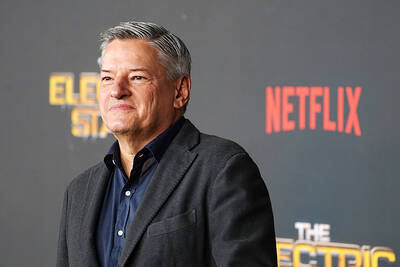
Netflix on Friday faced fierce criticism over its blockbuster deal to acquire Warner Bros Discovery. The streaming giant is already viewed as a pariah in some Hollywood circles, largely due to its reluctance to release content in theaters and its disruption of traditional industry practices. As Netflix emerged as the likely winning bidder for Warner Bros — the studio behind Casablanca, the Harry Potter movies and Friends — Hollywood’s elite launched an aggressive campaign against the acquisition. Titanic director James Cameron called the buyout a “disaster,” while a group of prominent producers are lobbying US Congress to oppose the deal,

Two Chinese chipmakers are attracting strong retail investor demand, buoyed by industry peer Moore Threads Technology Co’s (摩爾線程) stellar debut. The retail portion of MetaX Integrated Circuits (Shanghai) Co’s (上海沐曦) upcoming initial public offering (IPO) was 2,986 times oversubscribed on Friday, according to a filing. Meanwhile, Beijing Onmicro Electronics Co (北京昂瑞微), which makes radio frequency chips, was 2,899 times oversubscribed on Friday, its filing showed. The bids coincided with Moore Threads’ trading debut, which surged 425 percent on Friday after raising 8 billion yuan (US$1.13 billion) on bets that the company could emerge as a viable local competitor to Nvidia


 RSS
RSS