


The New Taiwan dollar on Friday fell against the US dollar, shedding NT$0.008 to close at NT$30.594, but gaining 0.1 percent from NT$30.611 on Oct. 18.
Turnover totaled US$703 million during the trading session.
The greenback opened at NT$30.600, and moved between NT$30.566 and NT$30.610 before the close.
Elsewhere, the US dollar strengthened against the pound after Reuters reported that a source close to French President Emmanuel Macron said that an extension to negotiations for Britain’s exit from the EU was not justified at this stage.
“France wants a justified and proportionate extension. However, we have nothing of the sort so far. We must show the British that it is up to them to clarify the situation and that an extension is not a given,” the source said.
Against the pound, the US dollar was up 0.29 percent to US$1.281.
Since hitting a five-and-a-half-month high on Monday, sterling has fallen nearly 1.5 percent after British Prime Minister Boris Johnson’s timetable to pass legislation that would withdraw Britain from the EU was rejected by parliament, the reason for the requested extension.
On Thursday, Johnson called for a general election on Dec. 12 in an effort to break the political deadlock over Brexit.
Despite the uncertainty, the pound’s fall has been limited, as the chance of a “no-deal exit has been all, but eliminated. The pound remains up 4.34 percent this month.
Against the euro, it was down 0.17 percent to £0.8655 per euro.
“There’s still a focus on the UK and sterling, but that’s going to be a feature for a long time,” Credit Suisse Group AG global head of foreign exchange strategy Shahab Jalinoos said.
Apart from the ongoing Brexit saga, Jalinoos said that the international currency market was relatively quiet on Friday.
“At the moment, the market is taking a breather on most fronts. The next event that’s a major focus is the APEC summit in the middle of November, when the market will want to see what transpires from phase-one negotiations between the US and China. That’s far enough in the future that it’s eliminating some reasons to aggressively trade,” Jalinoos said.
The low-volatility environment is encouraging flows into certain higher-yielding assets like emerging markets and out of the funding currencies such as the Swiss franc and the euro, he said.
The single currency was last down 0.14 percent against the US dollar to US$1.109.
Some focus will shift next week to the US Federal Reserve’s two-day policy meeting. The central bank is on Wednesday expected to announce the third interest rate cut of the year.
Money markets have largely priced in a quarter-percentage-point reduction, Refinitiv data showed.
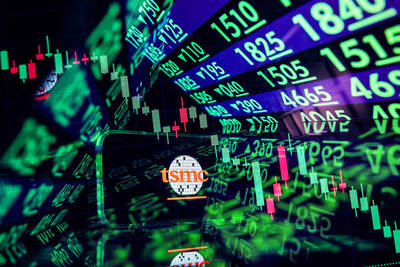
Taiwan Semiconductor Manufacturing Co (TSMC, 台積電) last week recorded an increase in the number of shareholders to the highest in almost eight months, despite its share price falling 3.38 percent from the previous week, Taiwan Stock Exchange data released on Saturday showed. As of Friday, TSMC had 1.88 million shareholders, the most since the week of April 25 and an increase of 31,870 from the previous week, the data showed. The number of shareholders jumped despite a drop of NT$50 (US$1.59), or 3.38 percent, in TSMC’s share price from a week earlier to NT$1,430, as investors took profits from their earlier gains

In a high-security Shenzhen laboratory, Chinese scientists have built what Washington has spent years trying to prevent: a prototype of a machine capable of producing the cutting-edge semiconductor chips that power artificial intelligence (AI), smartphones and weapons central to Western military dominance, Reuters has learned. Completed early this year and undergoing testing, the prototype fills nearly an entire factory floor. It was built by a team of former engineers from Dutch semiconductor giant ASML who reverse-engineered the company’s extreme ultraviolet lithography (EUV) machines, according to two people with knowledge of the project. EUV machines sit at the heart of a technological Cold
AI TALENT: No financial details were released about the deal, in which top Groq executives, including its CEO, would join Nvidia to help advance the technology Nvidia Corp has agreed to a licensing deal with artificial intelligence (AI) start-up Groq, furthering its investments in companies connected to the AI boom and gaining the right to add a new type of technology to its products. The world’s largest publicly traded company has paid for the right to use Groq’s technology and is to integrate its chip design into future products. Some of the start-up’s executives are leaving to join Nvidia to help with that effort, the companies said. Groq would continue as an independent company with a new chief executive, it said on Wednesday in a post on its Web

CHINA RIVAL: The chips are positioned to compete with Nvidia’s Hopper and Blackwell products and would enable clusters connecting more than 100,000 chips Moore Threads Technology Co (摩爾線程) introduced a new generation of chips aimed at reducing artificial intelligence (AI) developers’ dependence on Nvidia Corp’s hardware, just weeks after pulling off one of the most successful Chinese initial public offerings (IPOs) in years. “These products will significantly enhance world-class computing speed and capabilities that all developers aspire to,” Moore Threads CEO Zhang Jianzhong (張建中), a former Nvidia executive, said on Saturday at a company event in Beijing. “We hope they can meet the needs of more developers in China so that you no longer need to wait for advanced foreign products.” Chinese chipmakers are in


 RSS
RSS