


Aboubakary Guiro, a financial expert from Ivory Coast, was full of hope after attending the first-ever Russia-Africa Summit and Economic Forum this week in the Black Sea resort of Sochi.
“We forget about Russians when we talk business,” said Guiro, the copartner of a financial advisory firm based in Abidjan, Ivory Coast.
“We think about the EU-USA-China trio,” he said, pointing to a number of psychological and language barriers. “From now on, we will be much more open.”
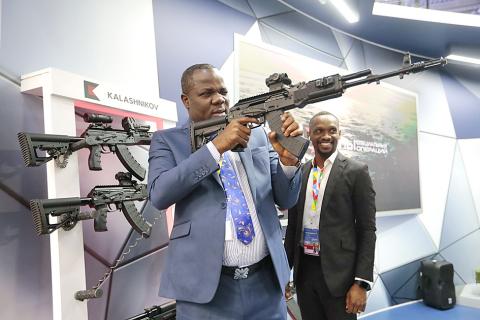
Photo: AFP
Russian President Vladimir Putin pulled off a major feat bringing together delegates of all 54 African states for the summit on Wednesday and Thursday.
At the close of the meeting, Putin hailed a “new page” in relations.
“We want to strengthen economic cooperation,” Putin said, reiterating his aim to boost Africa-Russia trade turnover to US$40 billion within five years.
Moscow was a crucial player on the continent in the Soviet era, backing independence movements and training a generation of African leaders. Today, the Kremlin is hoping to rekindle Soviet-era relationships and build new alliances.
It wants to hold an Africa-Russia summit every three years.
The gathering was a colorful affair, with some African participants flaunting traditional fabrics and headdresses in contrast to the black-suited Russian delegates.
For Guiro, it was a great way to make “first contact.”
“The contracts, if there are any, will only come in one or two years,” Guiro said.
However, Russians should also “come to Africa,” he said, adding that Russia has been virtually absent from Francophone countries, except for aluminum producer United Company RUSAL PLC, which has mining interests in Guinea.
Russia has used a traditional combination of debt relief, arms supplies and defense expertise to expand its footprint in Africa.
However, in the past several years Moscow has also sought to make use of soft power tools, such as multilingual state media and various funds, to promote its influence on the continent.
Earlier this year, Konstantin Malofeyev, a Russian Orthodox businessman with ties to the Kremlin, helped set up a development agency to assist the governments of Russia’s partner countries.
The International Agency for Sovereign Development set up a massive stand on the sidelines of the Sochi summit.
Its booklet said in four languages that the outfit’s top goal is to help countries, especially in Africa, “attract investment and “unlock their growth potential.”
The US and Ukraine have accused Malofeyev of helping bankroll separatists fighting against Kiev forces in eastern Ukraine.
Alexander Malkevich, a Kremlin-connected media manager, was another prominent presence at the summit.
Malkevich, head of the Foundation for the Protection of National Values, hosted a roundtable discussion that saw speakers, including Central African Minister of National Defense, Veterans, War Victims and Restructuring of the Army Marie-Noelle Koyara, denounce the influence of “former colonial powers.”
Malkevich, who was last year put on a US sanctions list for alleged attempted election interference, said that his foundation conducted research in Africa.
“We try to help Russian business establish in Africa,” he told reporters. “We know who is who.”
However, critics have said that people like Malkevich might be Kremlin agents of influence.
This year, two employees of the foundation were detained in Libya over alleged election interference attempts.
Malkevich is believed to have links to an infamous troll farm and used to edit an English-language Web site that tried to stage a rally in front of the White House.
The US Department of the Treasury said that the site posted content that was “generally ridden with inaccuracies.”
Malkevich shrugged off the accusations, denouncing Washington’s “cruel censorship.”
And the demonstration he sought to organize?
“It was a joke,” he said.
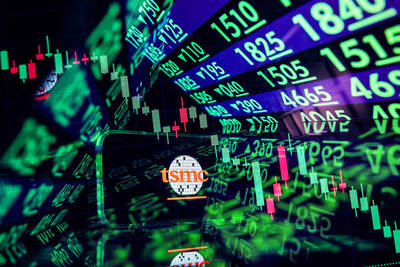
Taiwan Semiconductor Manufacturing Co (TSMC, 台積電) last week recorded an increase in the number of shareholders to the highest in almost eight months, despite its share price falling 3.38 percent from the previous week, Taiwan Stock Exchange data released on Saturday showed. As of Friday, TSMC had 1.88 million shareholders, the most since the week of April 25 and an increase of 31,870 from the previous week, the data showed. The number of shareholders jumped despite a drop of NT$50 (US$1.59), or 3.38 percent, in TSMC’s share price from a week earlier to NT$1,430, as investors took profits from their earlier gains
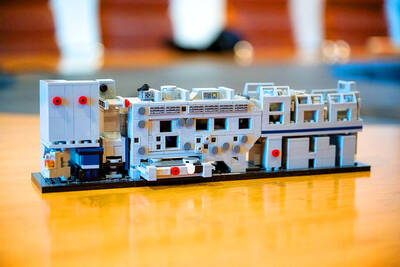
In a high-security Shenzhen laboratory, Chinese scientists have built what Washington has spent years trying to prevent: a prototype of a machine capable of producing the cutting-edge semiconductor chips that power artificial intelligence (AI), smartphones and weapons central to Western military dominance, Reuters has learned. Completed early this year and undergoing testing, the prototype fills nearly an entire factory floor. It was built by a team of former engineers from Dutch semiconductor giant ASML who reverse-engineered the company’s extreme ultraviolet lithography (EUV) machines, according to two people with knowledge of the project. EUV machines sit at the heart of a technological Cold
AI TALENT: No financial details were released about the deal, in which top Groq executives, including its CEO, would join Nvidia to help advance the technology Nvidia Corp has agreed to a licensing deal with artificial intelligence (AI) start-up Groq, furthering its investments in companies connected to the AI boom and gaining the right to add a new type of technology to its products. The world’s largest publicly traded company has paid for the right to use Groq’s technology and is to integrate its chip design into future products. Some of the start-up’s executives are leaving to join Nvidia to help with that effort, the companies said. Groq would continue as an independent company with a new chief executive, it said on Wednesday in a post on its Web

CHINA RIVAL: The chips are positioned to compete with Nvidia’s Hopper and Blackwell products and would enable clusters connecting more than 100,000 chips Moore Threads Technology Co (摩爾線程) introduced a new generation of chips aimed at reducing artificial intelligence (AI) developers’ dependence on Nvidia Corp’s hardware, just weeks after pulling off one of the most successful Chinese initial public offerings (IPOs) in years. “These products will significantly enhance world-class computing speed and capabilities that all developers aspire to,” Moore Threads CEO Zhang Jianzhong (張建中), a former Nvidia executive, said on Saturday at a company event in Beijing. “We hope they can meet the needs of more developers in China so that you no longer need to wait for advanced foreign products.” Chinese chipmakers are in


 RSS
RSS