


Johannes Reck should be feeling pretty groovy. He is the cofounder of one of the hottest start-ups in Berlin. GetYourGuide lets holiday makers book tours online in 150 countries and is on course to increase ticket sales this year by 75 percent. In May, it raised US$484 million from investors and it is now valued at more than US$1 billion.
Reck’s company is precisely the type of unicorn European policymakers want to see more of as they champion entrepreneurship that can kick-start much-needed economic growth. However, he is fuming.
“It’s not even that I am disappointed — I am angry, really angry, because you don’t need to reinvent the wheel here,” said Reck, a 34-year-old German with the wiry build of a marathoner. “It’s not like we are asking politicians to do something unheard of.”

Photo: Reuters
The problem? Reck cannot provide his people with a stake in the future of their venture without incurring crushing costs and hassle.
For decades, tech mavens in the US have used stock options for employees to spur innovation — and unprecedented wealth. Unlike Silicon Valley, where equity incentive plans have become as ubiquitous as foosball tables and midday yoga sessions, the options culture has yet to take root in many European countries.
While some lawmakers are taking action to loosen restrictions on pay, it is going to be hard to close the gap when income inequality is becoming a more urgent issue on both sides of the Atlantic.
European consumers and lawmakers have long decried outsize paydays as unfair and vulgar. A few years ago, the Netherlands capped bonuses for bankers, money managers and other financial professionals at 20 percent of their base salaries.
Entrepreneurs must navigate onerous tax rates and restrictions that often make equity sharing and options more trouble than they are worth.
When employees in Germany exercise options, they have to pay income tax on the difference between the fair market value and the strike price, and that rate runs from 14 to 47.5 percent. They also have to pay a 25 percent capital-gains tax on additional profits when they sell their shares.
In contrast, US employees typically pay a 0 to 20 percent rate on capital gains when options are redeemed, though they might have to pay additional levies when they are exercised, depending on the timing and the type of equity incentive program.
Germany and 14 other countries, including Sweden and the Netherlands, are more burdensome than the US regarding options, according to a study last year by Index Ventures, a venture capital firm in London and Silicon Valley.
For entrepreneurs and venture capitalists, the problem is not just about attracting top talent. The compensation bind might also be a big reason why Europe does not produce world-beating tech companies at the same level as the US.
Other forces are at work, too. Even though they are part of the EU, member states remain a fragmented collection of markets that cannot muster the borderless scale achieved in the US. Plus, there is the widely shared belief that European business culture simply does not tolerate the experimentation and inevitable failures that are par for the course in, say, Silicon Valley.
While governments across the EU have devoted hundreds of millions of euros to venture capital-style programs to invest in start-ups, the one tool entrepreneurs truly want remains out of reach.
“There are two ingredients to growth in a start-up,” Index Ventures partner Martin Mignot said. “One is capital and the other is talent, and when you’re not highly profitable you have to incentivize employees on the promise of the upside. Your currency is that promise.”
Spotify Technology SA, Klarna Bank AB, and TransferWise lead a roster of European companies that have shaken up industries with new products and created wealth for their investors and employees. Likewise, a handful of countries hew to the US approach on compensation; the UK, Italy, Portugal, and, interestingly enough, France, tax options as capital gains when they are cashed in.
Yet they are the exceptions. In many other European markets, start-up founders have to use various workarounds to vest employees in their businesses. In Sweden, options can be taxed as income at rates of more than 50 percent.
Klarna, a digital payments firm, sidesteps the bill by issuing warrants priced at fair market value using the Black-Scholes model, which are taxed as capital gains at 25 to 30 percent at the time of sale.
However, as incentives, fully priced warrants are not as potent as cheaper priced options, Klarna chief operating officer Knut Frangsmyr said.
Companies in Austria, the Czech Republic, Germany and Spain distribute “virtual share options,” but the instruments are really just cash bonuses by another name and might not deliver the windfalls that bona fide options do when a company is acquired or holds an initial public offering.
In Germany, at least, help might finally be on the way. Bettina Stark-Watzinger, chairwoman of the Finance Committee in the Bundestag, has crafted legislation that would cut the tax rate on stock options in half by treating them as capital gains instead of income.
Stark-Watzinger, a member of the centrist opposition Free Democratic Party, has argued that Germany has become complacent about supporting digital innovation.
She is worried that promising tech companies will decamp to other countries if lawmakers do not change things.
“We are so preoccupied with the economy of the last century,” Stark-Watzinger said in her office suite near Berlin’s iconic Brandenburg Gate. “We are so proud of our trade surplus and our automobile industry, but we have fallen behind in the digital economy. This is where value and growth will come from in the future.”
It would not be easy for Stark-Watzinger to persuade parties in Germany’s governing coalition to embrace legislation that might be seen as favoring workers in the relatively well-off tech sector.
Reck, for one, was relieved the issue is finally on the agenda.
Birgit Jennen contributed to this report

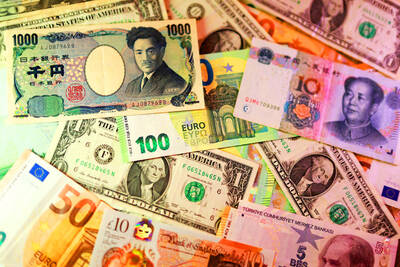
Taiwan’s foreign exchange reserves fell below the US$600 billion mark at the end of last month, with the central bank reporting a total of US$596.89 billion — a decline of US$8.6 billion from February — ending a three-month streak of increases. The central bank attributed the drop to a combination of factors such as outflows by foreign institutional investors, currency fluctuations and its own market interventions. “The large-scale outflows disrupted the balance of supply and demand in the foreign exchange market, prompting the central bank to intervene repeatedly by selling US dollars to stabilize the local currency,” Department of Foreign

Intel Corp is joining Elon Musk’s long-shot effort to develop semiconductors for Tesla Inc, Space Exploration Technologies Corp and xAI, marking a surprising twist in the chipmaker’s comeback bid. Intel would help the Terafab project “refactor” the technology in a chip factory, the company said on Tuesday in a post on X, Musk’s social media platform. That is a stage in the development process that typically helps make chips more powerful or reliable. The chipmaker’s shares jumped 4.2 percent to US$52.91 in New York trading on Tuesday. The Terafab project is a grand plan by Musk to eventually manufacture his own chips for

Some robotaxi passengers were left stranded in the middle of fast-moving traffic in a major Chinese city after their driverless vehicles stopped running, according to police and media reports on Wednesday. A preliminary investigation indicates more than 100 robotaxis came to a halt because of a “system malfunction,” police in the city of Wuhan said in a statement, without elaborating. No injuries were reported. One passenger told Chinese media that their robotaxi stopped after turning a corner. An instruction on a screen read: “Driving system malfunction. Staff are expected to arrive in 5 minutes.” After no one showed up, the passenger pushed
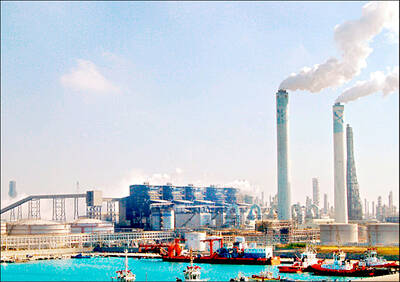
Taiwan Power Co (Taipower, 台電) yesterday said it plans to resume operations at two coal-fired power generators for three months to boost security of electricity supply as liquefied natural gas (LNG) supply risks are running high due to the Middle East conflict. The two coal-fired power generators are at Mailiao Power Plant in Yunlin County’s Mailiao Township (麥寮). The plant, operated by Formosa Plastics Group (台塑集團), supplied electricity to Taipower’s power grid until the end of last year. Taipower’s decision came about one month after Minister of Economic Affairs Kung Ming-hsin (龔明鑫) on March 10 said that the nation had no imminent


 RSS
RSS