


The Japanese Chamber of Commerce and Industry in Taipei yesterday called on the government to enhance bilateral trade ties by joining regional trade blocs and removing a lingering ban on Japanese food imports.
The trade group made the plea as it presented its 11th annual position paper to National Development Council Minister Chen Mei-ling (陳美伶).
Taiwan should actively seek membership in the Comprehensive and Progressive Agreement for Trans-Pacific Partnership, as its member economies account for 13.4 percent of global GDP, making it the third-largest free-trade area after the North American Free Trade Agreement and the European Single Market, the paper said.
Taiwan should also pursue an economic partnership agreement or free-trade agreement with Japan, allowing Taiwanese firms to boost their competitiveness on the world stage, it said.
Japanese corporations consider Taiwan a strategically important base in Asia and authorities should seek to consolidate the nation’s position in the region, it said.
Japan is Taiwan’s third-largest trading partner, with direct investment by Japanese companies growing more than twofold from 2017 to last year, government data showed.
Most Japanese firms in Taiwan engage in selling goods and services to the local market.
The paper urged Taiwan to deal with imports of Japanese food in a rational and scientific manner, as Taiwan has kept a ban on products from five Japanese prefectures — Fukushima, Ibaraki, Tochigi, Gunma and Chiba — since the Fukushima Dai-ichi nuclear power plant disaster in 2011.
The group expressed deep regret that a referendum held in November last year lent support to the ban, even though not a single food item from Japan has failed to meet safety tests.
A report commissioned by the Food and Drug Administration confirmed that food imports from areas near the Japanese nuclear power plant carry “negligible” radiation risk to human health.
The disaster struck eight years ago and uneasy emotions should have settled, allowing science and reason to guide policymaking, the paper said.
The chamber also voiced concern that government efficiency would slow in the buildup to the presidential and legislative elections in January, as the presidential campaign heats up and draws all public attention.
“We hope there will not be any delay or stagnation in government operations or regulatory reviews,” the paper said.
The group also urged the government to make known details on how it would guarantee stable electricity supply after phasing out nuclear power plants, so that private-sector companies can draw up investment and response plans.
Japanese companies have experience in dealing with alternative energy deployment and could help, it said.
Shares of contract chipmaker Taiwan Semiconductor Manufacturing Co (TSMC, 台積電) came under pressure yesterday after a report that Apple Inc is looking to shift some orders from the Taiwanese company to Intel Corp. TSMC shares fell NT$55, or 2.4 percent, to close at NT$2,235 on the local main board, Taiwan Stock Exchange data showed. Despite the losses, TSMC is expected to continue to benefit from sound fundamentals, as it maintains a lead over its peers in high-end process development, analysts said. “The selling was a knee-jerk reaction to an Intel-Apple report over the weekend,” Mega International Investment Services Corp (兆豐國際投顧) analyst Alex Huang
Taiwan Semiconductor Manufacturing Co (TSMC, 台積電) is expected to remain Apple Inc’s primary chip manufacturing partner despite reports that Apple could shift some orders to Intel Corp, industry experts said yesterday. The comments came after The Wall Street Journal reported on Friday that Apple and Intel had reached a preliminary agreement following more than a year of negotiations for Intel to manufacture some chips for Apple devices. Taiwan Institute of Economic Research (台灣經濟研究院) economist Arisa Liu (劉佩真) said TSMC’s advanced packaging technologies, including integrated fan-out and chip-on-wafer-on-substrate, remain critical to the performance of Apple’s A-series and M-series chips. She said Intel and Samsung
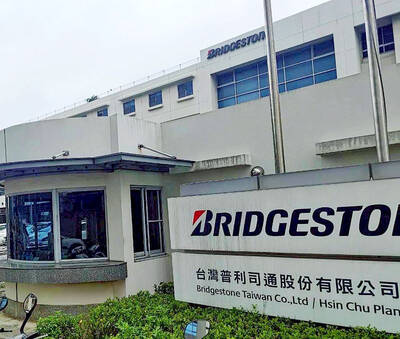
TRANSITION: With the closure, the company would reorganize its Taiwanese unit to a sales and service-focused model, Bridgestone said Bridgestone Corp yesterday announced it would cease manufacturing operations at its tire plant in Hsinchu County’s Hukou Township (湖口), affecting more than 500 workers. Bridgestone Taiwan Co (台灣普利司通) said in a statement that the decision was based on the Tokyo-based tire maker’s adjustments to its global operational strategy and long-term market development considerations. The Taiwanese unit would be reorganized as part of the closure, effective yesterday, and all related production activities would be concluded, the statement said. Under the plan, Bridgestone would continue to deepen its presence in the Taiwanese market, while transitioning to a sales and service-focused business model, it added. The Hsinchu
Taiwan Semiconductor Manufacturing Co (TSMC, 台積電) has approved a capital budget of US$31.28 billion for production expansion to meet long-term development needs during the artificial intelligence (AI) boom. The company’s board meeting yesterday approved the capital appropriation plan for purposes such as the installation of advanced technology capacity and fab construction, the world’s largest contract chipmaker said in a statement. At an earnings conference last month, TSMC forecast that its capital expenditure for this year would be at the higher end of the US$52 billion to US$56 billion range it forecast in January in response to robust demand for 5G, AI and


 RSS
RSS