


Oil on Friday extended its biggest monthly decline since May as concern over US-China trade tensions outweighed signs that OPEC’s supply cuts are trimming stockpiles.
Futures fell 2.8 percent in New York, extending last month’s slide to almost 6 percent.
Concerns about demand for swelling US production have been stoked as China prepared to start taxing US oil from today. US oil explorers, even as they cut drilling to a 19-month low, are producing record volumes of crude.
“It’s simply positioning ahead of the long weekend,” Mizuho Securities USA futures director Bob Yawger said in New York.
“If you were long, would you want to go home this weekend still long, with really no idea what kind of twitter feed the POTUS [president of the United States] is going to unload while you hanging out at the beach bar?” he added.
Oil remains under pressure as the outlook for the global economy continues to be weak and the US pumps out crude at record-high levels.
Furthermore, Russia earlier said that it was cutting production, but not as much as it had agreed to with OPEC and its allies. At the same time, there are signs that inventories are being drawn down.
US stockpiles fell in the week ended Aug. 23 to the lowest level since November last year, government data showed.
Beijing’s impending 5 percent tariff on US oil is particularly responsible for the recent weakness in West Texas Intermediate relative to Brent.
The US benchmark was fetching a US$5.49 per barrel discount to its global counterpart, the widest in nearly a month.
“The wider spread is a sign of the trade war,” said Rob Haworth, who helps oversee US$151 billion at US Bank Wealth Management in Seattle.
Chinese buyers would have to find alternatives, as US oil has become more expensive, he said.
“That will push up Brent prices, while weakening US oil,” he added.
West Texas Intermediate for delivery next month sank US$1.61 to settle at US$55.10 per barrel on the New York Mercantile Exchange.
Brent for settlement next month, which expired on Friday, fell US$0.65 to US$60.43 per barrel on the ICE Futures Europe Exchange. The more-active November contract sank US$1.24 to US$59.25.
Traders are also keeping an eye on Hurricane Dorian, which was expected to become a Category 4 storm and make landfall on Florida’s east coast, the first major hurricane to hit the area in 15 years.
Threats of the storm had already forced Chevron Corp to remove some nonessential staff from two of its platforms in the Gulf of Mexico.
In other energy trading, wholesale gasoline fell US$0.07 to US$1.61 per gallon and heating oil declined US$0.03 to US$1.83 per gallon, while natural gas fell US$0.01 to US$2.29 per 1,000 cubic feet.
Gold fell US$7.40 to US$1519.10 per ounce and silver rose US$0.02 to US$18.19 per ounce, while copper fell US$0.03 to US$2.53 per pound.
Additional reporting by AP

Shares of contract chipmaker Taiwan Semiconductor Manufacturing Co (TSMC, 台積電) came under pressure yesterday after a report that Apple Inc is looking to shift some orders from the Taiwanese company to Intel Corp. TSMC shares fell NT$55, or 2.4 percent, to close at NT$2,235 on the local main board, Taiwan Stock Exchange data showed. Despite the losses, TSMC is expected to continue to benefit from sound fundamentals, as it maintains a lead over its peers in high-end process development, analysts said. “The selling was a knee-jerk reaction to an Intel-Apple report over the weekend,” Mega International Investment Services Corp (兆豐國際投顧) analyst Alex Huang
Taiwan Semiconductor Manufacturing Co (TSMC, 台積電) is expected to remain Apple Inc’s primary chip manufacturing partner despite reports that Apple could shift some orders to Intel Corp, industry experts said yesterday. The comments came after The Wall Street Journal reported on Friday that Apple and Intel had reached a preliminary agreement following more than a year of negotiations for Intel to manufacture some chips for Apple devices. Taiwan Institute of Economic Research (台灣經濟研究院) economist Arisa Liu (劉佩真) said TSMC’s advanced packaging technologies, including integrated fan-out and chip-on-wafer-on-substrate, remain critical to the performance of Apple’s A-series and M-series chips. She said Intel and Samsung
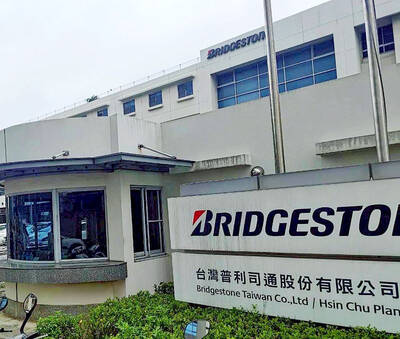
TRANSITION: With the closure, the company would reorganize its Taiwanese unit to a sales and service-focused model, Bridgestone said Bridgestone Corp yesterday announced it would cease manufacturing operations at its tire plant in Hsinchu County’s Hukou Township (湖口), affecting more than 500 workers. Bridgestone Taiwan Co (台灣普利司通) said in a statement that the decision was based on the Tokyo-based tire maker’s adjustments to its global operational strategy and long-term market development considerations. The Taiwanese unit would be reorganized as part of the closure, effective yesterday, and all related production activities would be concluded, the statement said. Under the plan, Bridgestone would continue to deepen its presence in the Taiwanese market, while transitioning to a sales and service-focused business model, it added. The Hsinchu

Taiwan Semiconductor Manufacturing Co (TSMC, 台積電) has approved a capital budget of US$31.28 billion for production expansion to meet long-term development needs during the artificial intelligence (AI) boom. The company’s board meeting yesterday approved the capital appropriation plan for purposes such as the installation of advanced technology capacity and fab construction, the world’s largest contract chipmaker said in a statement. At an earnings conference last month, TSMC forecast that its capital expenditure for this year would be at the higher end of the US$52 billion to US$56 billion range it forecast in January in response to robust demand for 5G, AI and


 RSS
RSS