


The Directorate-General of Budget, Accounting and Statistics (DGBAS) yesterday raised its forecast for GDP growth this year to 2.46 percent, ending three downward revisions, as exports fared better than expected and could gain momentum in the rest of this year.
That was an improvement of 0.27 percentage points from the 2.19 percent it forecast in May, even though international research bodies trimmed global trade volume projections amid growing uncertainty.
“Global scenes look increasingly fluid and unfavorable, but economic data at home point to steady growth, thanks to benefits from order transfers and homeward relocation of overseas production capacity,” DGBAS Minister Chu Tzer-ming (朱澤民) told a news conference.
Several Taiwanese firms have moved high-end production lines back from China to Taiwan, with more planning to follow suit to avoid the effects of a US-China trade dispute, he said.
That has attenuated the contribution from intermediary trade to Taiwan’s economy, but has boosted direct exports, allowing the nation to reap higher added value in the supply chain, he added.
Intermediary trade yielded US$7.02 billion in gross profit in the first six months and is unlikely to catch up with the US$18.3 billion for the whole of last year, Chu said, adding that it translated into thin average profit of 4 percent.
Local manufacturing would mean more investment and job opportunities, and drive up demand for factory and office space, he said.
External demand — including goods and services — last quarter grew 4.13 percent and might advance 3.47 percent for the entire year, up 0.85 percentage points from the previous forecast, DGBAS official Tsai Yu-tai (蔡鈺泰) said.
A decline in commodity exports would narrow to 0.09 percent this quarter and swing to growth of 1.69 percent next quarter, the agency said in a report.
Private investment would become the main growth driver with an expected increase of 5.01 percent this year, up 0.53 percentage points from the previous estimate, it said.
While the government has processed more than 100 capital repatriation applications with a total investment value of more than NT$500 billion (US$15.9 billion), Tsai said that only NT$110 billion would have effect this year, so the agency added only 0.2 percentage points to its growth update.
“It will take some time for firms to import machinery equipment from abroad,” Tsai said.
Meanwhile, local technology firms such as Taiwan Semiconductor Manufacturing Co (台積電) have spent huge sums buying new capital equipment to maintain technology leadership and expand capacity, he said.
Apart from that, domestic demand has little else to boast about, as the agency forecast that private consumption would increase 2.03 percent, up just 0.01 percentage points, as volatile financial markets have shaken investment confidence.

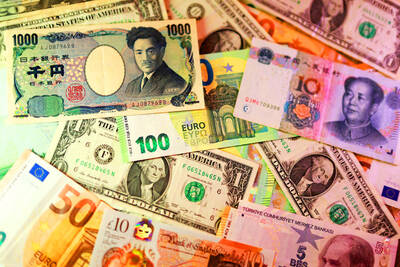
Taiwan’s foreign exchange reserves fell below the US$600 billion mark at the end of last month, with the central bank reporting a total of US$596.89 billion — a decline of US$8.6 billion from February — ending a three-month streak of increases. The central bank attributed the drop to a combination of factors such as outflows by foreign institutional investors, currency fluctuations and its own market interventions. “The large-scale outflows disrupted the balance of supply and demand in the foreign exchange market, prompting the central bank to intervene repeatedly by selling US dollars to stabilize the local currency,” Department of Foreign

Intel Corp is joining Elon Musk’s long-shot effort to develop semiconductors for Tesla Inc, Space Exploration Technologies Corp and xAI, marking a surprising twist in the chipmaker’s comeback bid. Intel would help the Terafab project “refactor” the technology in a chip factory, the company said on Tuesday in a post on X, Musk’s social media platform. That is a stage in the development process that typically helps make chips more powerful or reliable. The chipmaker’s shares jumped 4.2 percent to US$52.91 in New York trading on Tuesday. The Terafab project is a grand plan by Musk to eventually manufacture his own chips for
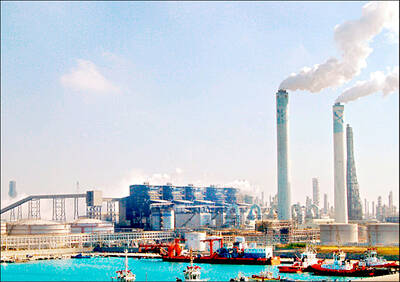
Taiwan Power Co (Taipower, 台電) yesterday said it plans to resume operations at two coal-fired power generators for three months to boost security of electricity supply as liquefied natural gas (LNG) supply risks are running high due to the Middle East conflict. The two coal-fired power generators are at Mailiao Power Plant in Yunlin County’s Mailiao Township (麥寮). The plant, operated by Formosa Plastics Group (台塑集團), supplied electricity to Taipower’s power grid until the end of last year. Taipower’s decision came about one month after Minister of Economic Affairs Kung Ming-hsin (龔明鑫) on March 10 said that the nation had no imminent

Some robotaxi passengers were left stranded in the middle of fast-moving traffic in a major Chinese city after their driverless vehicles stopped running, according to police and media reports on Wednesday. A preliminary investigation indicates more than 100 robotaxis came to a halt because of a “system malfunction,” police in the city of Wuhan said in a statement, without elaborating. No injuries were reported. One passenger told Chinese media that their robotaxi stopped after turning a corner. An instruction on a screen read: “Driving system malfunction. Staff are expected to arrive in 5 minutes.” After no one showed up, the passenger pushed


 RSS
RSS