


Machinery maker Hiwin Technologies Co (上銀科技) is to invest about NT$6.2 billion (US$197.4 million) in Taiwan to meet rising demand from returning Taiwanese businesses as the US-China trade dispute continues, the Ministry of Economic Affairs said yesterday.
Hiwin, the world’s No. 2 biggest linear motion component vendor, manufactures ball screws, linear guides and industrial robots among other products.
As 70 percent of the returning Taiwanese firms are Hiwin’s customers, the company plans to add new production lines at its headquarters in the Taichung Precision Machinery Science and Technology Innovation Park (台中精密機械園區), expand its plants at the Taichung Industrial Park (台中工業區) and the Dapumei Precision Machinery Park (嘉義大埔美精密機械園區) in Chiayi County, as well as set up a new manufacturing facility in the Yunlin Technology Industrial Park (雲林科技工業區), the ministry said.
The company’s investment is expected to create 1,250 job opportunities, the ministry added.
Hiwin is one of the five latest returning companies that have won the ministry’s approval to invest NT$12.3 billion in the nation.
Printed circuit board maker HannStar Board Corp (瀚宇博德) is to invest more than NT$1.5 billion to expand its plant in Taoyuan’s Guanyin District (觀音), focusing on high value-added products, such as servers, network communication devices, electric vehicles and industrial computers, the ministry said.
The company plans to hire 90 local professionals, it said.
Antenna manufacturer Wha Yu Industrial Co (譁裕實業), which supplies companies such as Hon Hai Precision Industry Co (鴻海精密), Asustek Computer Inc (華碩) and Ericsson AB, is to invest NT$500 million to move its base station antenna production lines to Hsinchu County’s Fengshan Industrial Park (鳳山工業區) in line with clients’ demand.
The company is expected to provide about 95 job opportunities, the ministry said.
Another industry peer that manufactures GPS antennas and protective components for smartphones, laptops and Internet of Things applications plans to invest more than NT$2.3 billion to set up smart production lines following the relocation of its major network communication clients to Taiwan, the ministry said, adding that this is expected to create 460 jobs.
Sanitary paper product manufacturer KNH Enterprise Co (康那香) is to invest about NT$1.7 billion to set up a new plant in Tainan and recruit up to 87 local professionals as the company looks to improve the production technology of non-woven fabrics, the ministry said.
Since the beginning of this year, 111 companies have joined a government program encouraging investment back home, pledging to pour in a combined NT$548.4 billion that could provide 47,660 job opportunities, the ministry said.
Separately, three small and medium-sized enterprises (SMEs) are to invest a combined NT$2.1 billion in the nation, the ministry said, after approving their applications to join one of three government programs to boost domestic investment.
So far, the ministry has approved 10 SMEs’ applications since the program was launched last month, resulting in a total of NT$5.1 billion in investments that could provide more than 800 jobs.
Tainan-based Mei Shual Cosmetics Co (美帥化學) is to invest NT$1.1 billion by setting up an automated plant in Tainan Technology Industrial Park (台南科技工業區); Taichung-based Marwi Taiwan Industrial Co (台萬工業), a leading manufacturer of bicycle pedals, plans to invest NT$300 million to set up a new plant in Taichung; and Chyi Ding Technologies Co (奇鼎科技), a manufacturer of minienvironment control equipment, plans to invest up to NT$700 million to expand its plant in Hsinchu County, and implement smart production and management systems, the ministry said.
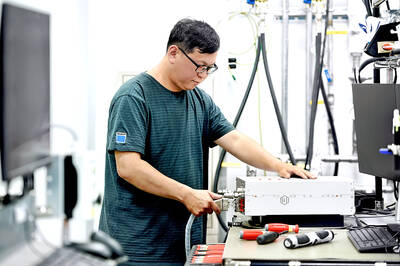
SEMICONDUCTORS: The German laser and plasma generator company will expand its local services as its specialized offerings support Taiwan’s semiconductor industries Trumpf SE + Co KG, a global leader in supplying laser technology and plasma generators used in chip production, is expanding its investments in Taiwan in an effort to deeply integrate into the global semiconductor supply chain in the pursuit of growth. The company, headquartered in Ditzingen, Germany, has invested significantly in a newly inaugurated regional technical center for plasma generators in Taoyuan, its latest expansion in Taiwan after being engaged in various industries for more than 25 years. The center, the first of its kind Trumpf built outside Germany, aims to serve customers from Taiwan, Japan, Southeast Asia and South Korea,

Gasoline and diesel prices at domestic fuel stations are to fall NT$0.2 per liter this week, down for a second consecutive week, CPC Corp, Taiwan (台灣中油) and Formosa Petrochemical Corp (台塑石化) announced yesterday. Effective today, gasoline prices at CPC and Formosa stations are to drop to NT$26.4, NT$27.9 and NT$29.9 per liter for 92, 95 and 98-octane unleaded gasoline respectively, the companies said in separate statements. The price of premium diesel is to fall to NT$24.8 per liter at CPC stations and NT$24.6 at Formosa pumps, they said. The price adjustments came even as international crude oil prices rose last week, as traders

SIZE MATTERS: TSMC started phasing out 8-inch wafer production last year, while Samsung is more aggressively retiring 8-inch capacity, TrendForce said Chipmakers are expected to raise prices of 8-inch wafers by up to 20 percent this year on concern over supply constraints as major contract chipmakers Taiwan Semiconductor Manufacturing Co (TSMC, 台積電) and Samsung Electronics Co gradually retire less advanced wafer capacity, TrendForce Corp (集邦科技) said yesterday. It is the first significant across-the-board price hike since a global semiconductor correction in 2023, the Taipei-based market researcher said in a report. Global 8-inch wafer capacity slid 0.3 percent year-on-year last year, although 8-inch wafer prices still hovered at relatively stable levels throughout the year, TrendForce said. The downward trend is expected to continue this year,
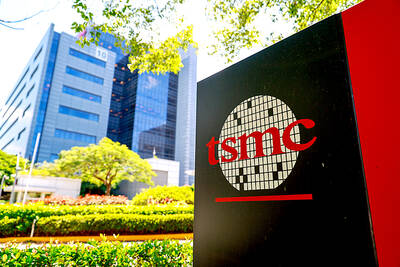
Taiwan Semiconductor Manufacturing Co (TSMC, 台積電), which supplies advanced chips to Nvidia Corp and Apple Inc, yesterday reported NT$1.046 trillion (US$33.1 billion) in revenue for last quarter, driven by constantly strong demand for artificial intelligence (AI) chips, falling in the upper end of its forecast. Based on TSMC’s financial guidance, revenue would expand about 22 percent sequentially to the range from US$32.2 billion to US$33.4 billion during the final quarter of 2024, it told investors in October last year. Last year in total, revenue jumped 31.61 percent to NT$3.81 trillion, compared with NT$2.89 trillion generated in the year before, according to


 RSS
RSS