


Taipei Fubon Commercial Bank (台北富邦銀行) yesterday said that its Vietnamese operations saw annual loan growth in the first five months of this year grow 40 percent, thanks to increasing investments by Taiwanese and local companies.
The bank declined to reveal the total loan amount.
“Companies are seeking more funds for new investments within the next three to five years and we expect the demand for funds to continue to rise in light of their new investments or production expansion in Vietnam,” Stephen Chen (陳恩光), Fubon’s head of international banking group, told the Taipei Times by telephone.
Fubon has three branches in Vietnam, the highest number among Taiwanese lenders.
The bank in 2008 established its first branch in Ho Chi Minh City, and the other two in Hanoi and Binh Duong in 2010.
For the January-to-May period, the bank helped arrange or participated in four syndicated loans, ranging from US$100 million to US$200 million each, for textile maker Formosa Industries Corp (台灣興業), Vinmec International Hospital, Vietnam Electricity and Formosa Ha Tinh Steel Corp (台塑河靜鋼鐵興業), Chen said.
Formosa Industries is a unit of Formosa Plastics Group (FPG, 台塑集團), while Formosa Ha Tinh is a joint venture by FPG, China Steel Corp (中鋼) and Nippon Steel Corp.
It is difficult for Fubon to compete with Vietnamese banks in loans denominated in Vietnamese dong, but it has an advantage when offering US dollar-denominated loans, as it has better credit ratings and can charge lower interests compared with local and other foreign banks, Chen said.
The bank’s Vietnamese operations have so far extended half of their loans to Taiwanese companies operating there and the other half to Vietnamese exporters, he said.
The three branches reported that net profit rose 35 percent from a year earlier in the first five months, thanks to rising fee and interest income, Chen said.
He did not provide exact earnings figures.
As the incomes of Vietnamese continue to increase, the bank would expand its focus to include personal loans and mortgages, he said.

Cairo’s new monorail slices across the city skyline, running above the familiar chaos of blaring horns and aging buses’ exhaust fumes that mark rush hour below. The US$4.5 billion monorail, opened this month, is among Egypt’s most prominent new transport projects, part of a debt-funded infrastructure drive criticized for sapping state finances while bringing limited benefits to most of the country’s 109 million people. “It feels like you’re in a different country,” said Ramy Sayed, a restaurant manager, aboard a driverless Innovia 300 train. “No noise, no traffic, we’re not used to this.” The eastern line runs 56km from the bustling middle-class
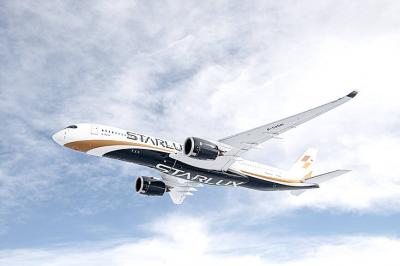
Starlux Airlines Co (星宇航空) today unveiled a long-haul network expansion plan at a shareholders’ meeting in Taipei, including direct flights to Barcelona, Spain, and Zurich, Switzerland, as well as a service connecting Taipei, Sydney and New Zealand. Starlux is to become the first Taiwanese carrier to offer non-stop services to the two European cities, while the inaugural oceanic route is expected to expand transit opportunities within the Australia-New Zealand market, Starlux said. Flight services to Chicago, Dallas, Washington and New York are under evaluation, the airline added. Prior to the shareholders’ meeting, the airline earlier this year announced that it would be

Taiwanese prosecutors suspect that three people successfully smuggled at least one shipment of Nvidia Corp artificial intelligence (AI) chips to China after first exporting them to Japan, people familiar with the matter said. The trio was detained last week by the Keelung District Prosecutors’ Office for allegedly falsifying documents related to exports of Super Micro Computer Inc servers containing advanced Nvidia chips, which the US has barred from sale to China without a license from Washington. The move marked Taiwan’s first public crackdown on AI chip diversion after years of pressure from the US to take a more active role in curtailing
Taiwan Semiconductor Manufacturing Co (TSMC, 台積電) employee bonuses are likely to grow more than 30 percent this year, in line with the past few years as the company’s profits continue to set new records, an anonymous source cited TSMC chairman C.C. Wei (魏哲家) as saying yesterday. TSMC, the world’s largest contract chipmaker, is committed to taking care of its workers, the source said, citing Wei’s meeting with employees yesterday morning. Wei also expressed gratitude to employees for their contribution to the company’s improving bottom line, the source added. Since 2023, TSMC’s employee bonuses have grown at an annual rate of


 RSS
RSS