


Facing potential US tariffs of more than 400 percent on Vietnamese steel exports, China Steel Corp (CSC, 中鋼), Taiwan’s largest steel manufacturer, yesterday said that it is looking into the matter and would react accordingly.
The company’s remark came after the US Department of Commerce on Tuesday said that it would impose duties of up to 456 percent on certain steel products made in Taiwan and South Korea that are shipped to Vietnam for minor processing and then exported to the US.
The department said that it had found corrosion-resistant steel products and cold-rolled steel produced in Vietnam using a substrate of Taiwanese or South Korean origin had circumvented US anti-dumping and anti-subsidy duties.
China Steel Sumikin Vietnam Joint Stock Co (中鋼住金), based in Vietnam’s Ba Ria-Vung Tau Province, uses raw materials from Formosa Ha Tinh Steel Corp (台塑河靜鋼鐵興業), a joint venture by CSC, Formosa Plastics Group (台塑集團) and Nippon Steel Corp, CSC told the Taipei Times.
The Ba Ria-Vung Tau plant specializes in the production of cold-rolled steel coils and hot-dipped galvanized steel coils, as well as other products that might be subject to US duties, CSC said.
The company said that it would adjust raw material sources for products destined for the US to steer clear of the higher tariffs.
The Bureau of Foreign Trade said that it has yet to clarify the matter, but added that steel exports to Vietnam have had slow growth over the past few years, suggesting a weak link in the US’ allegations of Taiwanese companies evading tariffs by processing steel products in the Southeast Asian country.
“From 2015 to last year, exports of hot-rolled steel products increased 17 percent from 1 million tonnes to 1.17 million tonnes,” bureau Deputy Director-General William Liu (劉威廉) told the Taipei Times by telephone, adding that cold-rolled steel exports increased by only 3 percent from 32,000 tonnes to 33,500 tonnes over the same period.
Separately, the Ministry of Economic Affairs said that it is reinforcing efforts to prevent companies from shipping Chinese-origin products to Taiwan before exporting them to the US to avoid US tariffs amid an unresolved US-China trade conflict.
Customs officials have intercepted five such cases since the end of last year, while another shipment of Chinese-origin products was discovered in May, the ministry said.
The ministry said that it has implemented five measures to prevent such scenarios, two of which involve severe punishments, such as canceling a company’s license.
A draft amendment to the Foreign Trade Act (貿易法), which is being reviewed by the Legislative Yuan, would increase fines from NT$30,000 to NT$3 million (US$964 to US$96,370), it added.
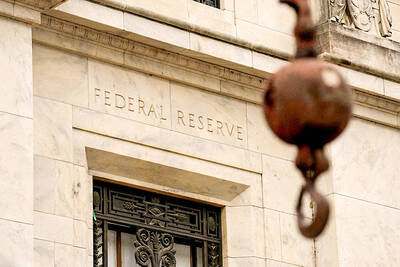
DAMAGE REPORT: Global central banks are assessing war-driven inflation risks as the law of unintended consequences careens around the world, spiking oil prices Central banks from Washington to London and from Jakarta to Taipei are about to make their first assessments of economic damage after more than two weeks of conflict between the US and Iran. Decisions this week encompassing every member of the G7 and eight of the world’s 10 most-traded currency jurisdictions are likely to confirm to investors that the specter of a new inflation shock is already worrying enough to prompt heightened caution. The US Federal Reserve is widely expected to do exactly what everyone anticipated weeks ahead of its March 17-18 policy gathering: hold rates steady. The narrative surrounding that
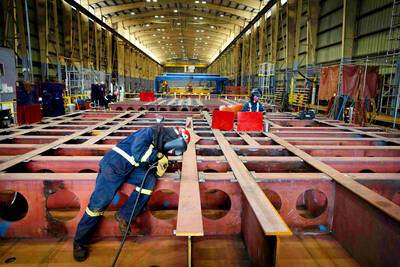
At a massive shipyard in North Vancouver, Canadian workers grind metal beams for a powerful new icebreaker crucial to cementing the country’s presence in the increasingly contested arctic. Icebreakers are specialized, expensive vessels able to navigate in the frozen far north. And “this is the crown jewel,” said Eddie Schehr, vice president of production at the Seaspan shipyard. For Canadian Prime Minister Mark Carney, who heads to Norway next Friday to observe arctic defense drills involving troops from 14 NATO states, Canada’s extreme north has emerged as a strategic priority. “Canada is and forever will be an Arctic nation,” he said ahead of

Chinese entrepreneur Frank Gao used to spend long hours running his social media accounts but now outsources the chore to artificial intelligence (AI) agent tool OpenClaw, which is taking China by storm despite official warnings over cybersecurity. OpenClaw, created in November by an Austrian coder, differs from bots such as ChatGPT because it can execute real-life tasks such as sending e-mails, organizing files or even booking flight tickets. “Since January, I’ve spent hours on the lobster every day,” Gao said in an interview, referring to OpenClaw’s red crustacean mascot. “We’re family.” After downloading OpenClaw, users connect it to artificial intelligence models of their
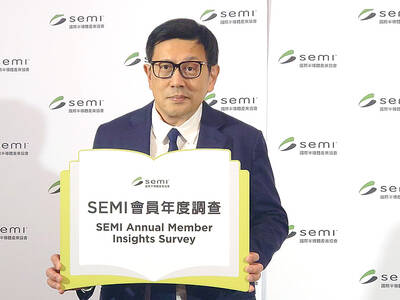
PRICE HIKES: The war in the Middle East would not significantly disrupt supply in the short term, but semiconductor companies are facing price surges for materials Taiwan’s semiconductor companies are not facing imminent supply disruptions of essential chemicals or raw materials due to the war in the Middle East, but surges in material costs loom large, industry association SEMI Taiwan said yesterday. The association’s comments came amid growing concerns that supplies of helium and other key raw materials used in semiconductor production could become a choke point after Qatar shut down its liquefied natural gas (LNG) production and helium output earlier this month due to the conflict. Qatar is the second-largest LNG supplier in the world and accounts for about 33 percent of global helium output. Helium is


 RSS
RSS