


Deutsche Bank AG is considering slashing headcount by more than a fifth in what is shaping up to be its biggest makeover in years, two people familiar with the matter said.
CEO Christian Sewing might decide to cut as many as 20,000 jobs when he presents his latest restructuring plan, perhaps as early as this week, the people said, asking not to be identified as the matter is private.
The decision has not been formally adopted yet and the number might change, they said.
“Deutsche Bank is working on measures to accelerate its transformation so as to improve its sustainable profitability,” a spokeswoman said by e-mail. “We will update all stakeholders if and when required.”
Sewing announced at the lender’s annual general meeting in May he was working on “tough” cutbacks after he decided to walk away from merger talks with domestic rival Commerzbank AG in April.
His previous turnaround plan, unveiled shortly after he took over as CEO a little more than a year ago, has failed to restore the bank to a healthy level of profitability.
Deutsche Bank had 91,500 staff at the end of the first quarter, down from 95,400 when Sewing took over.
Deutsche Bank shares gained as much as 3.5 percent in Frankfurt trading amid a broader stock rally in Europe and were up 3.4 percent at 7 euros as of 9:13am. The Euro Stoxx 600 index was up 1.1 percent.
The bank expects to make a formal announcement no later than Monday next week, one person said.
The Wall Street Journal first reported on the plan to cut as many as 20,000 jobs.
The sweeping restructuring is likely to hit Deutsche Bank’s investment banking division the hardest, particularly its US operations as well as trading equities and interest rate derivatives, people familiar have said.
The bank is planning to cut its global equities headcount by 50 percent, they have said.
Reuters on Sunday reported that the lender is looking to hire 300 people globally for its wealth management arm by 2021.
It plans to hire those managers across Europe, America and emerging markets, according to the report, which cited global head of wealth management Fabrizio Campelli.
Deutsche Bank would also make changes to the management board, with investment banking head Garth Ritchie, chief regulatory officer Sylvie Matherat and chief financial officer James von Moltke all potentially leaving, people familiar with the matter have said.
Sewing is likely to take over formal oversight of the investment bank at the management board level, they said.
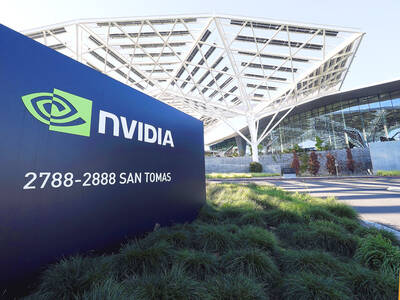
CHIP RACE: Three years of overbroad export controls drove foreign competitors to pursue their own AI chips, and ‘cost US taxpayers billions of dollars,’ Nvidia said China has figured out the US strategy for allowing it to buy Nvidia Corp’s H200s and is rejecting the artificial intelligence (AI) chip in favor of domestically developed semiconductors, White House AI adviser David Sacks said, citing news reports. US President Donald Trump on Monday said that he would allow shipments of Nvidia’s H200 chips to China, part of an administration effort backed by Sacks to challenge Chinese tech champions such as Huawei Technologies Co (華為) by bringing US competition to their home market. On Friday, Sacks signaled that he was uncertain about whether that approach would work. “They’re rejecting our chips,” Sacks
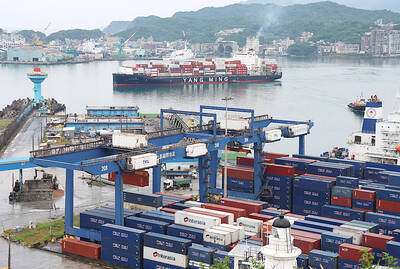
Taiwan’s exports soared 56 percent year-on-year to an all-time high of US$64.05 billion last month, propelled by surging global demand for artificial intelligence (AI), high-performance computing and cloud service infrastructure, the Ministry of Finance said yesterday. Department of Statistics Director-General Beatrice Tsai (蔡美娜) called the figure an unexpected upside surprise, citing a wave of technology orders from overseas customers alongside the usual year-end shopping season for technology products. Growth is likely to remain strong this month, she said, projecting a 40 percent to 45 percent expansion on an annual basis. The outperformance could prompt the Directorate-General of Budget, Accounting and

NATIONAL SECURITY: Intel’s testing of ACM tools despite US government control ‘highlights egregious gaps in US technology protection policies,’ a former official said Chipmaker Intel Corp has tested chipmaking tools this year from a toolmaker with deep roots in China and two overseas units that were targeted by US sanctions, according to two sources with direct knowledge of the matter. Intel, which fended off calls for its CEO’s resignation from US President Donald Trump in August over his alleged ties to China, got the tools from ACM Research Inc, a Fremont, California-based producer of chipmaking equipment. Two of ACM’s units, based in Shanghai and South Korea, were among a number of firms barred last year from receiving US technology over claims they have
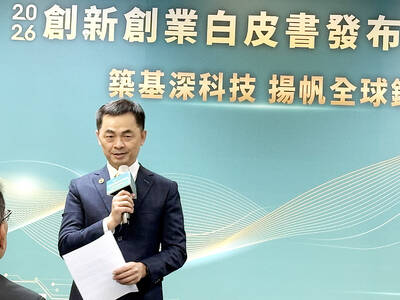
BARRIERS: Gudeng’s chairman said it was unlikely that the US could replicate Taiwan’s science parks in Arizona, given its strict immigration policies and cultural differences Gudeng Precision Industrial Co (家登), which supplies wafer pods to the world’s major semiconductor firms, yesterday said it is in no rush to set up production in the US due to high costs. The company supplies its customers through a warehouse in Arizona jointly operated by TSS Holdings Ltd (德鑫控股), a joint holding of Gudeng and 17 Taiwanese firms in the semiconductor supply chain, including specialty plastic compounds producer Nytex Composites Co (耐特) and automated material handling system supplier Symtek Automation Asia Co (迅得). While the company has long been exploring the feasibility of setting up production in the US to address


 RSS
RSS