


Oil on Friday rocketed to its biggest weekly gain in more than two years as US President Donald Trump’s aborted airstrikes against Iran left Middle East tensions simmering with the endgame uncertain.
Crude futures rose in New York to complete a 9.4 percent rally for the week.
Trump said on Twitter that he called off raids because of concern the death toll would not have been “proportionate” to Iran’s downing of a US spy drone earlier this week.
Trump said that he was in “no hurry” to respond, despite a series of provocations in the oil-rich region.
The canceled attack sent a “very confusing” message, Daniel Yergin, an oil historian and vice chairman at IHS Markit Ltd, said in a Bloomberg TV interview.
“The fear is that this could pretty quickly escalate. There’s plenty of room for accident, misunderstanding, future incidents. The Iranians are in a corner,” Yergin said.
West Texas Intermediate for August delivery on Friday closed up US$0.36 at US$57.43 per barrel on the New York Mercantile Exchange. The US benchmark notched its biggest weekly increase since December 2016.
Brent for August settlement rose US$0.75 to US$65.20 on London’s ICE Futures Europe Exchange.
Meanwhile, gasoline futures jumped 3.9 percent to US$1.86 per gallon as a fire raged at the biggest refinery on the US east coast.
Hostilities have been mounting in the Persian Gulf region, source of one-third of the world’s oil, with the drone incident, missile strikes on Saudi Arabia and an attack on tankers near the Strait of Hormuz.
On Thursday, a rocket exploded near an Exxon Mobil Corp workers’ camp in Iraq.
A US attack on Iranian targets, which would have included airstrikes, was close to being carried out when it was halted, said a US administration official who was granted anonymity to discuss a national security matter.
The official would not discuss whether the plan might be revived.
Despite crude’s recent rally, a prolonged US-China trade war has dented the demand outlook. Washington and Beijing are set to resume talks next week, providing a glimmer of hope for the global economy.
However, investors want a resolution to the dispute, not merely more talks, Yergin said.
“The market is poised between where it was before, which was just gloom,” and “the possibility that demand will spike up because there will be some kind of settlement with China,” Yergin said. “If there isn’t, there will be real disappointment and that will certainly show up in the oil price.”
Meanwhile, near-record US crude production has also been weighing on prices.
In other commodities trading, heating oil climbed 1.7 percent to US$1.92 per gallon and natural gas was little changed at US$2.19 per 1,000 cubic feet.
Gold edged up 0.2 percent to US$1,400.10 per ounce and silver fell 1.3 percent to US$15.29 per ounce, while copper fell 0.3 percent to US$2.70 per pound.
Additional reporting by AP
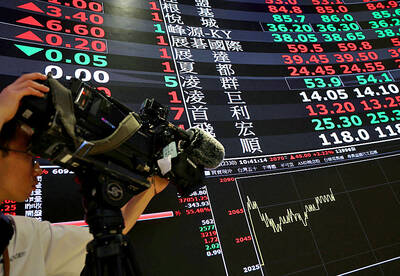
After several years flying high as Asia’s best Nvidia Corp proxy, Taiwan Semiconductor Manufacturing Co (TSMC, 台積電) is increasingly vying with other artificial intelligence (AI) stocks for investor attention. Stock traders are chasing a wider array of beneficiaries as mainstream usage of AI creates demand for hardware beyond the most-advanced chips TSMC makes for Nvidia. Subthemes from the deepening memory crunch to advances in robotics are also luring bids. At the same time, investment caps on single stocks are pushing funds to diversify, while retail investors long familiar with TSMC through its US depositary receipts are being offered a broader set of
UNDER MICROSCOPE: Taiwan detained three people who allegedly conspired to buy servers in Taiwan and export them using fraudulent documentation, prosecutors said Nvidia Corp chief executive officer Jensen Huang (黃仁勳) on Saturday urged Super Micro Computer Inc to tighten up on compliance after Taiwan detained three people this week for allegedly making fraudulent declarations about artificial intelligence (AI) servers made by its US partner. The development marked the nation’s first crackdown on semiconductor smuggling, which grew after the US slapped restrictions on exports of high-end chips such as Nvidia AI accelerators to China. Nvidia is “rigorous” in explaining regulations to all of its partners, Huang told reporters after arriving in Taipei. “Ultimately Super Micro has to run their own company,” he said in response to
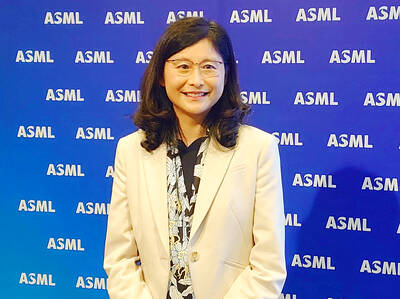
Netherlands-based semiconductor equipment supplier ASML Holding NV yesterday said that it is planning to hire an additional 1,000 people in Taiwan this year in response to growing demand from clients. ASML had previously planned to recruit 600 people this year, but that the plan has been adjusted upward, ASML vice president and ASML Taiwan general manager Grace Wang (汪佳慧) told reporters. ASML has a workforce of more than 4,500 in Taiwan, accounting for about 10 percent of its global total, Wang said. This year’s recruitment campaign would focus on adding people in the customer support, manufacturing and supply chain domains to assist ASML

Nvidia Corp yesterday announced that CEO Jensen Huang (黃仁勳) would attend an employee meeting in Taipei tomorrow to celebrate the launch of the company’s Taiwan headquarters project. Huang would attend a gathering at the site of Nvidia’s planned headquarters in Beitou Shilin Technology Park (北投士林科技園區), the company said in a statement. After arriving in Taiwan on Saturday last week, Huang told reporters that he plans to meet with Quanta Computer Inc (廣達) chairman Barry Lam (林百里) and Taiwan Semiconductor Manufacturing Co (TSMC, 台積電) chairman C.C. Wei (魏哲家), and would attend the groundbreaking ceremony for Nvidia’s Taiwan headquarters tomorrow. Nvidia has not yet applied


 RSS
RSS