


TPK Holding Co (宸鴻), a touch sensor supplier for Apple Inc’s iPads, yesterday said it is withdrawing from a consortium that seeks to acquire a 50 percent stake in cash-strapped Japan Display Inc (JDI), citing volatile macroeconomic circumstances and risks in the display industry.
“Judging by the global trade situation, industry dynamics and the company’s current operations, we found the scale of risks [from investing in JDI] has exceeded what we thought,” TPK chief strategic officer Freddie Liu (劉詩亮) told the Taipei Times by telephone.
The company is seeking new investment opportunities, but there is no substantial results yet, Liu said.
The withdrawal came after JDI, an iPhone display supplier, last year reported its third straight year of losses and last month announced large-scale job cuts.
Liu declined to comment on whether JDI’s financial situation was behind TPK’s backtrack.
TPK said it has canceled a US$230 million investment in JDI via a private placement, because “multiple situations have changed,” in a filing with the Taiwan Stock Exchange submitted before the local stock market opened.
TPK said it would scrap a letter of intent it had signed with Suwa Investment Holdings LLC to throw a lifeline of up to ¥80 billion (US$737.1 million) to JDI by acquiring a 49.82 percent stake.
TPK had announced the plan in April.
Taipei-based TPK had expected the deal to help it secure a supply of panels from JDI, boost the company’s role in the industry supply chain, enlarge its customer base and expand its market share in automotive displays.
TPK shares rallied 2.35 percent soon after the stock market opened.
However, they pared those gains and closed down 1.18 percent at NT$50.1.
TPK was the first member to quit the consortium following the expiration of a Friday deadline, when Suwa’s investors were to conclude their internal consultations and report a decision.
Investment firms Cosgrove Global Ltd and Topnotch Corp, owned by Fubon Financial Holding Co’s (富邦金控) Tsai (蔡) family, did not give any notice regarding the results of their internal resolutions, JDI said in a statement posted on its Web site yesterday.
The investment firms originally planned to invest a combined US$130 million in JDI.
China’s Harvest Tech Investment Management Co (嘉實科技) has planned to extend the international consultation period to Thursday next week, JDI said in the statement.
Harvest Tech also plans to extend its internal consultation on a subscription to JDI’s third series of convertible bonds totaling US$20 billion to Thursday next week, the statement said.
JDI said it has received a notification from Oasis Management Co announcing its intent to invest US$150 million in the company.
Oasis would consult with its internal bodies by Thursday next week to make the resolutions required for the investment, JDI said.

Taiwan Semiconductor Manufacturing Co (TSMC, 台積電) last week recorded an increase in the number of shareholders to the highest in almost eight months, despite its share price falling 3.38 percent from the previous week, Taiwan Stock Exchange data released on Saturday showed. As of Friday, TSMC had 1.88 million shareholders, the most since the week of April 25 and an increase of 31,870 from the previous week, the data showed. The number of shareholders jumped despite a drop of NT$50 (US$1.59), or 3.38 percent, in TSMC’s share price from a week earlier to NT$1,430, as investors took profits from their earlier gains
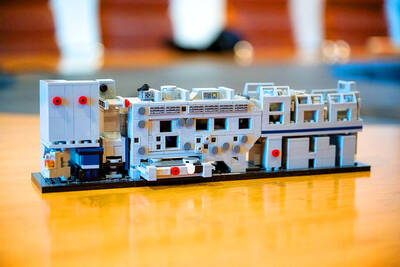
In a high-security Shenzhen laboratory, Chinese scientists have built what Washington has spent years trying to prevent: a prototype of a machine capable of producing the cutting-edge semiconductor chips that power artificial intelligence (AI), smartphones and weapons central to Western military dominance, Reuters has learned. Completed early this year and undergoing testing, the prototype fills nearly an entire factory floor. It was built by a team of former engineers from Dutch semiconductor giant ASML who reverse-engineered the company’s extreme ultraviolet lithography (EUV) machines, according to two people with knowledge of the project. EUV machines sit at the heart of a technological Cold
AI TALENT: No financial details were released about the deal, in which top Groq executives, including its CEO, would join Nvidia to help advance the technology Nvidia Corp has agreed to a licensing deal with artificial intelligence (AI) start-up Groq, furthering its investments in companies connected to the AI boom and gaining the right to add a new type of technology to its products. The world’s largest publicly traded company has paid for the right to use Groq’s technology and is to integrate its chip design into future products. Some of the start-up’s executives are leaving to join Nvidia to help with that effort, the companies said. Groq would continue as an independent company with a new chief executive, it said on Wednesday in a post on its Web

CHINA RIVAL: The chips are positioned to compete with Nvidia’s Hopper and Blackwell products and would enable clusters connecting more than 100,000 chips Moore Threads Technology Co (摩爾線程) introduced a new generation of chips aimed at reducing artificial intelligence (AI) developers’ dependence on Nvidia Corp’s hardware, just weeks after pulling off one of the most successful Chinese initial public offerings (IPOs) in years. “These products will significantly enhance world-class computing speed and capabilities that all developers aspire to,” Moore Threads CEO Zhang Jianzhong (張建中), a former Nvidia executive, said on Saturday at a company event in Beijing. “We hope they can meet the needs of more developers in China so that you no longer need to wait for advanced foreign products.” Chinese chipmakers are in


 RSS
RSS