


Mergers and acquisitions (M&A) surged 42 percent last year with the total transaction value spiking 75 percent, as firms expanded to new overseas markets to cope with global protectionism, PricewaterhouseCoopers (PwC) Taiwan said yesterday.
The number of M&A deals rose from 81 to 115, while transactions increased from US$6.15 billion to US$10.74 billion, PwC Taiwan’s annual M&A report showed.
The trade dispute between the US and China drove Taiwanese firms to diversify production lines beyond China to avoid tariffs imposed by Washington on Chinese goods, Lily Wong (翁麗俐), managing director of deals services at PwC Taiwan, told a forum in Taipei.
“Risk diversification provided the catalyst for M&A activity last year and may continue to do so this year and beyond,” Wong said.
The strategy drove Hon Hai Precision Industry Co’s (鴻海精密) subsidiary Foxconn Interconnect Technology Ltd (鴻騰科技) to acquire a 100 percent stake in Belkin International Inc, a US manufacturer of consumer electronics that specializes in connectivity devices.
Similarly, Yageo Corp (國巨), the world’s biggest supplier of chip resistors, bought US-based Pulse Electronics Corp to expand its product mix and gain access to overseas markets.
Foreign private equity funds lent support to 34 M&A deals, the report showed.
KKR & Co took over Kaohsiung-based LCY Chemical Corp (李長榮化工) to help the local firm transform after a series of gas explosions in the city in 2014, it said.
The development of 5G technology would fuel and dominate M&A activity this year, Wong said.
Meanwhile, the US-China trade dispute is to shake up the global supply chain, Wong said.
Many Taiwanese companies depend on manufacturing facilities in China to fill orders from global technology brands, but the practice might not be sustainable if the US and China keep trading punitive tariffs, she said.
Some Taiwanese companies have moved their production lines back to Taiwan or Southeast Asia, the report said, adding that while it is wise for firms to expand their export markets, they should also seek to adjust and upgrade their product mixes, so that they are not reliant on just a few products.
A considerable number of Taiwanese firms are controlled by families, who should draw up succession plans as top executives age, the report said.
Taiwanese firms are less prepared in this regard, compared with their regional and global peers, it added.
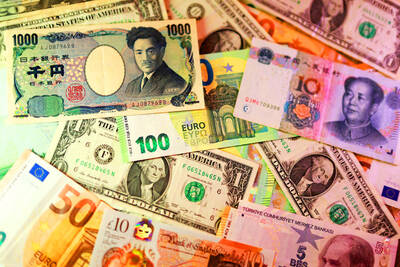
Taiwan’s foreign exchange reserves fell below the US$600 billion mark at the end of last month, with the central bank reporting a total of US$596.89 billion — a decline of US$8.6 billion from February — ending a three-month streak of increases. The central bank attributed the drop to a combination of factors such as outflows by foreign institutional investors, currency fluctuations and its own market interventions. “The large-scale outflows disrupted the balance of supply and demand in the foreign exchange market, prompting the central bank to intervene repeatedly by selling US dollars to stabilize the local currency,” Department of Foreign
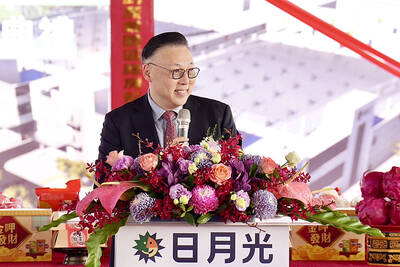
ENERGY ISSUES: The TSIA urged the government to increase natural gas and helium reserves to reduce the impact of the Middle East war on semiconductor supply stability Chip testing and packaging service provider ASE Technology Holding Co (日月光投控) yesterday said it planned to invest more than NT$100 billion (US$3.15 billion) in building a new advanced chip testing facility in Kaohsiung to keep up with customer demand driven by the artificial intelligence (AI) boom. That would be included in the company’s capital expenditure budget next year, ASE said. There is also room to raise this year’s capital spending budget from a record-high US$7 billion estimated three months ago, it added. ASE would have six factories under construction this year, another record-breaking number, ASE chief operating officer Tien Wu

For weeks now, the global tech industry has been waiting for a major artificial intelligence (AI) launch from DeepSeek (深度求索), seen as a benchmark for China’s progress in the fast-moving field. More than a year has passed since the start-up put Chinese AI on the map in early last year with a low-cost chatbot that performed at a similar level to US rivals. However, despite reports and rumors about its imminent release, DeepSeek’s next-generation “V4” model is nowhere in sight. Speculation is also swirling over the geopolitical implications of which computer chips were chosen to train and power the new
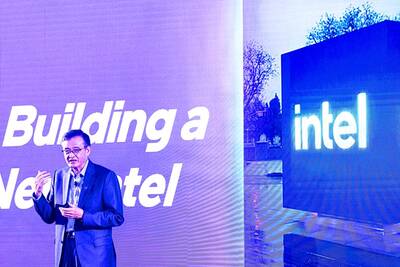
Intel Corp is joining Elon Musk’s long-shot effort to develop semiconductors for Tesla Inc, Space Exploration Technologies Corp and xAI, marking a surprising twist in the chipmaker’s comeback bid. Intel would help the Terafab project “refactor” the technology in a chip factory, the company said on Tuesday in a post on X, Musk’s social media platform. That is a stage in the development process that typically helps make chips more powerful or reliable. The chipmaker’s shares jumped 4.2 percent to US$52.91 in New York trading on Tuesday. The Terafab project is a grand plan by Musk to eventually manufacture his own chips for


 RSS
RSS