


The contraction in Taiwan’s export orders could have narrowed to 5 percent last month from a year earlier, compared with a 10.9 percent decline in February, as Asia’s growth slowdown might be close to a trough, Australia and New Zealand Banking Group Ltd (ANZ) said on Friday.
Export orders — a critical gauge of how actual exports are likely to perform in one to three months — had slipped into negative territory for four straight months, as companies adjusted their inventory during the slow sales season.
The Ministry of Economic Affairs is to release its export order data today.
“A key leading indicator for the global technology cycle is pointing toward a rebound, which would bode well for Asia’s exports,” ANZ said in a note, referring to the region’s purchasing managers’ index (PMI).
Across the region, export data for last month has been mixed, but the latest PMI data point to a likely improvement in the months ahead, it said.
China is Taiwan’s largest trade partner accounting for 40 percent of exports, and its GDP beat expectations increasing 6.4 percent last quarter, ANZ said.
Monetary stimuli from some Asian central banks would also help growth in the region recover in the second half of the year, it added.
However, ANZ said that the magnitude of the predicted recovery is likely to be moderate initially, given the inventory overhang in some economies.
Asia’s exports have been deteriorating since November last year, with a 12.3 percent contraction in all emerging markets in February, which was the worst performance since early 2016, it said.
However, the worst is likely over as evidenced by a recent rebound in the PHLX Semiconductor Index (SOX), the bank said.
The SOX, an equity index of companies listed in the US whose primary business operations involve the design, distribution, manufacture and sale of semiconductors, typically leads actual semiconductor sales by about three months, ANZ said.
The improving SOX suggests that a recovery in global semiconductor sales is around the corner, as Asia’s export cycle is closely tied to the global technology cycle, it said.
Asian economies have seen US$23 billion in foreign equity fund inflows so far this year, which supports the expectation of a recovery, it said.
The amount has not fully offset the outflows of US$39 billion recorded last year, suggesting there is more room for fund inflows and modest appreciation in Asian currencies, ANZ said.

Nvidia Corp chief executive officer Jensen Huang (黃仁勳) on Monday introduced the company’s latest supercomputer platform, featuring six new chips made by Taiwan Semiconductor Manufacturing Co (TSMC, 台積電), saying that it is now “in full production.” “If Vera Rubin is going to be in time for this year, it must be in production by now, and so, today I can tell you that Vera Rubin is in full production,” Huang said during his keynote speech at CES in Las Vegas. The rollout of six concurrent chips for Vera Rubin — the company’s next-generation artificial intelligence (AI) computing platform — marks a strategic
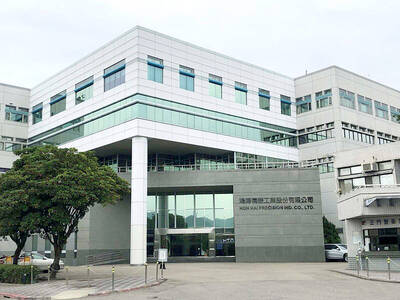
REVENUE PERFORMANCE: Cloud and network products, and electronic components saw strong increases, while smart consumer electronics and computing products fell Hon Hai Precision Industry Co (鴻海精密) yesterday posted 26.51 percent quarterly growth in revenue for last quarter to NT$2.6 trillion (US$82.44 billion), the strongest on record for the period and above expectations, but the company forecast a slight revenue dip this quarter due to seasonal factors. On an annual basis, revenue last quarter grew 22.07 percent, the company said. Analysts on average estimated about NT$2.4 trillion increase. Hon Hai, which assembles servers for Nvidia Corp and iPhones for Apple Inc, is expanding its capacity in the US, adding artificial intelligence (AI) server production in Wisconsin and Texas, where it operates established campuses. This

Garment maker Makalot Industrial Co (聚陽) yesterday reported lower-than-expected fourth-quarter revenue of NT$7.93 billion (US$251.44 million), down 9.48 percent from NT$8.76 billion a year earlier. On a quarterly basis, revenue fell 10.83 percent from NT$8.89 billion, company data showed. The figure was also lower than market expectations of NT$8.05 billion, according to data compiled by Yuanta Securities Investment and Consulting Co (元大投顧), which had projected NT$8.22 billion. Makalot’s revenue this quarter would likely increase by a mid-teens percentage as the industry is entering its high season, Yuanta said. Overall, Makalot’s revenue last year totaled NT$34.43 billion, down 3.08 percent from its record NT$35.52
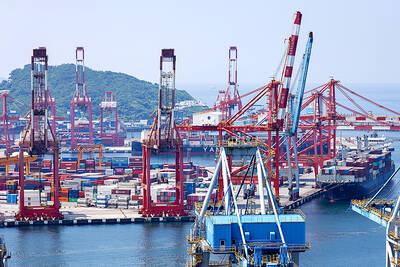
PRECEDENTED TIMES: In news that surely does not shock, AI and tech exports drove a banner for exports last year as Taiwan’s economic growth experienced a flood tide Taiwan’s exports delivered a blockbuster finish to last year with last month’s shipments rising at the second-highest pace on record as demand for artificial intelligence (AI) hardware and advanced computing remained strong, the Ministry of Finance said yesterday. Exports surged 43.4 percent from a year earlier to US$62.48 billion last month, extending growth to 26 consecutive months. Imports climbed 14.9 percent to US$43.04 billion, the second-highest monthly level historically, resulting in a trade surplus of US$19.43 billion — more than double that of the year before. Department of Statistics Director-General Beatrice Tsai (蔡美娜) described the performance as “surprisingly outstanding,” forecasting export growth


 RSS
RSS