


SMARTPHONES
HTC to back blockchain fund
HTC Corp (宏達電) is to support a US$50 million venture capital fund for a new blockchain start-up, Proof of Capital, with the aim of introducing cryptographic technology to the wider public. HTC chief crypto officer Phil Chen (陳信生), who is in charge of the company’s Exodus blockchain smartphone, said in a statement that the partnership would focus on defining the standards and interactions for the next generation of the Internet, and introducing mobile and hardware expertise to its portfolio companies. The US$50 million fund is being led by Chen; Edith Yeung (楊珮珊), a partner at 500 Startups; and Chris McCann, who founded and led the community program at Greylock Partners in Silicon Valley.
COMMUNICATIONS
UMT net profit surges 110%
Universal Microwave Technology Inc (UMT, 昇達科技), which supplies electronic parts and materials for broadband wireless communications, yesterday reported net profit of NT$71 million (US$2.3 million) for the first quarter of this year, up 110 percent from a year earlier, the highest for the first quarter in the company’s history. Revenue in the first quarter rose 8 percent annually to NT$449 million, or earnings per share of NT$1.1. The company said that shipments for this year are expected to continue growing due to several countries’ continued 5G-related investments and rising demand for millimeter-wave and satellite communication products.
TELECOMS
CHT executive shuffle likely
Chunghwa Telecom Co (CHT, 中華電信) is likely to see a high-ranking executive shuffle soon, as speculation swirls that chairman David Cheng (鄭優) is to retire at the end of June. The company did not deny media reports about Cheng’s retirement, but said that any changes in its operational executives would be made following related rules. CHT president Sheih Chi-mau (謝繼茂) has been picked by the government to succeed Cheng, local media reported. The Ministry of Transportation and Communications holds a 35.29 percent stake in the company.
CEMENT
Work unaffected by quake
Asia Cement Corp (亞泥) said that an earthquake in Hualien County yesterday had no significant effects on the company’s financial and business operations. A magnitude 6.1 earthquake early in the afternoon caused no harm to equipment or personnel at its Hualien plant and quarry, the firm said. The plant’s No. 2 kiln was shut down due to the earthquake, but resumed normal operations at 1:23pm, it said. In related news, Taiwan Land Development Corp (台灣土地開發) said that there were no injuries at its mixed-use New Paradiso (新天堂樂園) complex in Hualien following the earthquake.
ELECTRICITY
Plants unaffected by quake
The Hualien earthquake did not affect the Jinshan Nuclear Power Plant in New Taipei City’s Shihmen District (石門) nor the Guosheng Nuclear Plant in Wanli District (萬里), Taiwan Power Co (台電) said yesterday, after it completed routine inspections. The Ma-anshan Nuclear Power Plant in Pingtung County’s Ma-anshan (馬鞍山) also continued to function normally, as did hydroelectric and coal-fired power plants, the firm said. However, the Ministry of Economic Affairs said that four hydropower firms have stopped supplying electricity to Yilan County’s Longte Industrial Park (龍德工業區). Meanwhile, CPC Corp, Taiwan (台灣中油) reported no accidents at its facilities and instituted preventive measures due to aftershocks.
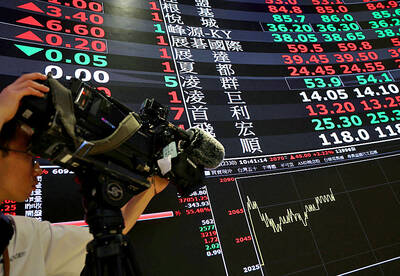
After several years flying high as Asia’s best Nvidia Corp proxy, Taiwan Semiconductor Manufacturing Co (TSMC, 台積電) is increasingly vying with other artificial intelligence (AI) stocks for investor attention. Stock traders are chasing a wider array of beneficiaries as mainstream usage of AI creates demand for hardware beyond the most-advanced chips TSMC makes for Nvidia. Subthemes from the deepening memory crunch to advances in robotics are also luring bids. At the same time, investment caps on single stocks are pushing funds to diversify, while retail investors long familiar with TSMC through its US depositary receipts are being offered a broader set of
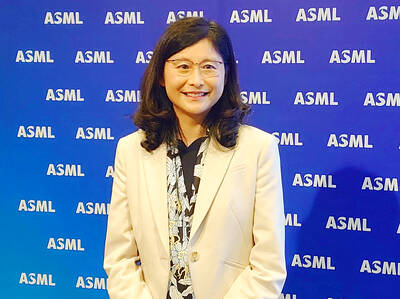
Netherlands-based semiconductor equipment supplier ASML Holding NV yesterday said that it is planning to hire an additional 1,000 people in Taiwan this year in response to growing demand from clients. ASML had previously planned to recruit 600 people this year, but that the plan has been adjusted upward, ASML vice president and ASML Taiwan general manager Grace Wang (汪佳慧) told reporters. ASML has a workforce of more than 4,500 in Taiwan, accounting for about 10 percent of its global total, Wang said. This year’s recruitment campaign would focus on adding people in the customer support, manufacturing and supply chain domains to assist ASML

UNDER MICROSCOPE: Taiwan detained three people who allegedly conspired to buy servers in Taiwan and export them using fraudulent documentation, prosecutors said Nvidia Corp chief executive officer Jensen Huang (黃仁勳) on Saturday urged Super Micro Computer Inc to tighten up on compliance after Taiwan detained three people this week for allegedly making fraudulent declarations about artificial intelligence (AI) servers made by its US partner. The development marked the nation’s first crackdown on semiconductor smuggling, which grew after the US slapped restrictions on exports of high-end chips such as Nvidia AI accelerators to China. Nvidia is “rigorous” in explaining regulations to all of its partners, Huang told reporters after arriving in Taipei. “Ultimately Super Micro has to run their own company,” he said in response to

Nvidia Corp yesterday announced that CEO Jensen Huang (黃仁勳) would attend an employee meeting in Taipei tomorrow to celebrate the launch of the company’s Taiwan headquarters project. Huang would attend a gathering at the site of Nvidia’s planned headquarters in Beitou Shilin Technology Park (北投士林科技園區), the company said in a statement. After arriving in Taiwan on Saturday last week, Huang told reporters that he plans to meet with Quanta Computer Inc (廣達) chairman Barry Lam (林百里) and Taiwan Semiconductor Manufacturing Co (TSMC, 台積電) chairman C.C. Wei (魏哲家), and would attend the groundbreaking ceremony for Nvidia’s Taiwan headquarters tomorrow. Nvidia has not yet applied


 RSS
RSS