


In India, farmers growing crops for seed company Maharashtra Hybrid Seeds Co (Mahyco) receive a text message after they deliver their harvest, noting its weight and how much was usable — followed quickly by another text saying their money is in the bank.
That reliable flow of cash through their accounts means that when a farmer goes to ask for credit, the bank is much more likely to give them a loan, Mahyco director and chief technology officer Usha Barwale Zehr said.
As climate change makes farming far tougher and more young people reject it as a career, technological innovations to make the work more secure and appealing can help, agricultural specialists told the Skoll World Forum on Social Entrepreneurship in Oxford this week.
For instance, giving small-scale farmers access to the right-sized farm machinery can help reduce backbreaking labor and keep more people on the land, Zehr said.
“Farming is hard work, drudgery,” she said. “No young person wants to stay in farming if they have other options. They would rather go to the city and do something else.”
Yet, mobile phone apps that connect farmers with other rural entrepreneurs who invest in wheat combines for hire, for instance, can give farmers access to easier harvests at a low cost — and provide an income for the harvester as well.
“We’ve seen a lot of excitement from farmers for these digital applications,” Zehr said.
In Ghana, farmers struggling with worsening pest and plant-disease problems related to climate change, as well as wilder weather, can now access a call center staffed by young agronomists, Root Capital CEO Willy Foote said.
In a region without enough on-the-ground agricultural advisers, the farmers use mobile phones to receive fast advice on what to do when termites invade a field, for example, said Foote, whose nonprofit invests in such innovations.
“Agronomists can go out on a motorcycle [to visit] if needed, but 80 percent of the issues can be addressed right there,” Foote said.
Technology is also making it easier for African nations to judge what size harvest their farmers are likely to bring in, without the need for slow and costly field visits, Alliance for a Green Revolution in Africa (AGRA) president Agnes Kalibata said.
Countries such as Rwanda used to send out analysts each season to look at 30 percent of the country’s farms — each with an average size of one-third of a hectare — to plan ahead and try to ensure an adequate food supply, said Kalibata, a former Rwandan minister of agriculture and animal resources .
Now, AGRA has partnered with Atlas AI, a Silicon Valley artificial intelligence firm, to create satellite-based “predictive analytics” for harvests in 11 African countries, including Rwanda, saving time and effort, she said.
As climate change makes harvests more unpredictable, “we need to give countries a sense of what is going to happen, how to plan,” she added.
AGRA has also worked with African countries to end the popular but volatile system of providing free internationally sourced seed to farmers, and instead support the development of private local seed distribution systems, Kalibata said.
Poorer countries are often under pressure from agribusiness to use land more efficiently by consolidating it into larger, highly mechanized farms, said Debra Dunn, who helped launch a sustainable food systems program at Stanford University called FEED Collaborative.
“The environmental and human health costs of that approach have been enormous, and a lot of farmers have been taken out of farming work,” she said.
In African countries and in India — where there are not enough alternative jobs for displaced farmers — “the wholesale adoption of these approaches would be disastrous” for some of the world’s most vulnerable people, Dunn said.
Making small-scale farming more productive and boosting farmers’ incomes, even in the face of climate change, is a better option, the experts told a panel discussion.
“I keep telling big business: You don’t need land, you need produce. Buy from small producers,” Kalibata said.
Some places like Ethiopia — infamous for famine sparked by drought and poor governance in the 1980s — are already showing what is possible.
In the past few years, Ethiopia has faced drought as severe as in the 1980s, causing food shortages, but no widespread starvation, thanks to mapping of the country’s soils and careful use of fertilizers to dramatically increase harvests, Kalibata said.
Foote said that in the places his organization works, climate change had become “an existential crisis” with farmers “absolutely on the front line.”
It is crucial to “ensure farmers, and especially the most vulnerable, have access to the information and skills and capital they need to adjust,” he added.

Shares of contract chipmaker Taiwan Semiconductor Manufacturing Co (TSMC, 台積電) came under pressure yesterday after a report that Apple Inc is looking to shift some orders from the Taiwanese company to Intel Corp. TSMC shares fell NT$55, or 2.4 percent, to close at NT$2,235 on the local main board, Taiwan Stock Exchange data showed. Despite the losses, TSMC is expected to continue to benefit from sound fundamentals, as it maintains a lead over its peers in high-end process development, analysts said. “The selling was a knee-jerk reaction to an Intel-Apple report over the weekend,” Mega International Investment Services Corp (兆豐國際投顧) analyst Alex Huang

Taiwan Semiconductor Manufacturing Co (TSMC, 台積電) is expected to remain Apple Inc’s primary chip manufacturing partner despite reports that Apple could shift some orders to Intel Corp, industry experts said yesterday. The comments came after The Wall Street Journal reported on Friday that Apple and Intel had reached a preliminary agreement following more than a year of negotiations for Intel to manufacture some chips for Apple devices. Taiwan Institute of Economic Research (台灣經濟研究院) economist Arisa Liu (劉佩真) said TSMC’s advanced packaging technologies, including integrated fan-out and chip-on-wafer-on-substrate, remain critical to the performance of Apple’s A-series and M-series chips. She said Intel and Samsung
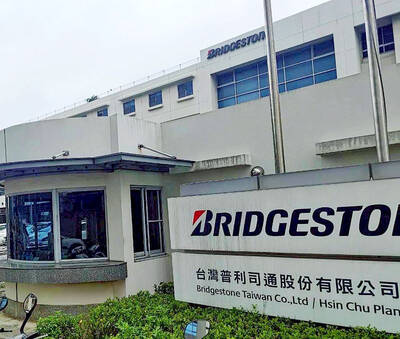
TRANSITION: With the closure, the company would reorganize its Taiwanese unit to a sales and service-focused model, Bridgestone said Bridgestone Corp yesterday announced it would cease manufacturing operations at its tire plant in Hsinchu County’s Hukou Township (湖口), affecting more than 500 workers. Bridgestone Taiwan Co (台灣普利司通) said in a statement that the decision was based on the Tokyo-based tire maker’s adjustments to its global operational strategy and long-term market development considerations. The Taiwanese unit would be reorganized as part of the closure, effective yesterday, and all related production activities would be concluded, the statement said. Under the plan, Bridgestone would continue to deepen its presence in the Taiwanese market, while transitioning to a sales and service-focused business model, it added. The Hsinchu

Taiwan Semiconductor Manufacturing Co (TSMC, 台積電) has approved a capital budget of US$31.28 billion for production expansion to meet long-term development needs during the artificial intelligence (AI) boom. The company’s board meeting yesterday approved the capital appropriation plan for purposes such as the installation of advanced technology capacity and fab construction, the world’s largest contract chipmaker said in a statement. At an earnings conference last month, TSMC forecast that its capital expenditure for this year would be at the higher end of the US$52 billion to US$56 billion range it forecast in January in response to robust demand for 5G, AI and


 RSS
RSS