


Japanese prosecutors re-arrested former Nissan Motor Co chairman Carlos Ghosn on fresh, more serious allegations of financial misconduct, dealing a blow to the automaker’s efforts to end his month-long stay in jail and seek bail.
Prosecutors yesterday said that Ghosn is suspected of inflicting financial damage to Nissan from his own unprofitable investments.
The new arrest gives prosecutors the right to detain Ghosn for at least a further 10 days and possibly longer, while potentially hurting his chances of getting bail after that.
Ghosn’s lawyers declined to comment.
While the charges against Ghosn had thus far been related to a relatively arcane point of accounting — whether retirement payments were properly booked — the new accusations are for a misdeed that has an actual victim: Nissan.
The allegations are now more aligned with those of Nissan, which has accused Ghosn of misusing company assets and ousted him as chairman quickly after his arrest.
“It’s a very serious charge,” said Colin Jones, a professor of law at Doshisha University in Kyoto. “If there was a conviction, I think it would mean that there’s been a judgement that it’s more than just typical self-dealing corporate malfeasance, but something that really harmed the company and was particular malevolent in terms of the amount of planning that went into it.”
Ghosn was originally arrested on Nov. 19 at Tokyo’s Haneda airport. He and Nissan were indicted on Dec. 10 for falsifying securities reports that under-reported his income by tens of millions of US dollars.
Ghosn has denied wrongdoing.
The new arrest warrant states that Ghosn conducted an “aggravated breach of trust” by allegedly transferring obligations on his own investment losses worth about ¥1.85 billion (US$16.6 million) to Nissan, inflicting financial damage on the automaker.
The new allegations would be in violation of Japan’s Companies Act and is seen as a more serious charge than under-reporting income, part of the Japanese Financial Instruments and Exchange Act.
The Companies Act states that such a charge carries a maximum prison sentence of 10 years.
Ghosn has been widely credited with saving Nissan from failure and bringing it together with Renault SA to create a formidable auto union. His arrest came after a months-long investigation by Nissan into his conduct and compensation that was largely kept from its French partner.
Nissan chief executive officer Hiroto Saikawa — a one-time protege of Ghosn — has emerged as a driving force in the automaker’s investigation into the alleged wrongdoing by Ghosn and his aide Greg Kelly, who is also indicted in the case.
The arrests were the result of a coup by executives, including Saikawa, Kelly’s wife, Dee Kelly, said in a video released on Wednesday.
Saikawa was asked by reporters on the day Ghosn and Kelly were arrested whether a coup was under way at Nissan.
He replied: “That is not my understanding. I didn’t make such an explanation and think you should not think of it that way.”
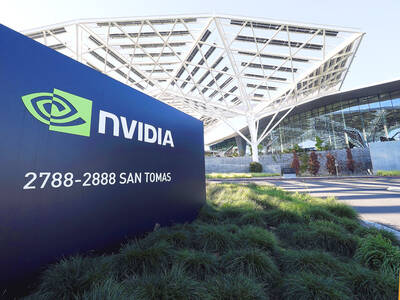
CHIP RACE: Three years of overbroad export controls drove foreign competitors to pursue their own AI chips, and ‘cost US taxpayers billions of dollars,’ Nvidia said China has figured out the US strategy for allowing it to buy Nvidia Corp’s H200s and is rejecting the artificial intelligence (AI) chip in favor of domestically developed semiconductors, White House AI adviser David Sacks said, citing news reports. US President Donald Trump on Monday said that he would allow shipments of Nvidia’s H200 chips to China, part of an administration effort backed by Sacks to challenge Chinese tech champions such as Huawei Technologies Co (華為) by bringing US competition to their home market. On Friday, Sacks signaled that he was uncertain about whether that approach would work. “They’re rejecting our chips,” Sacks
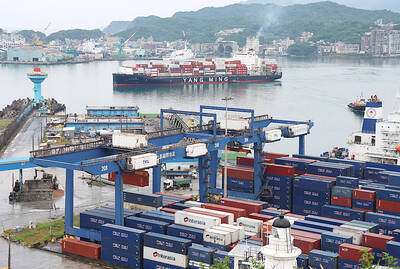
Taiwan’s exports soared 56 percent year-on-year to an all-time high of US$64.05 billion last month, propelled by surging global demand for artificial intelligence (AI), high-performance computing and cloud service infrastructure, the Ministry of Finance said yesterday. Department of Statistics Director-General Beatrice Tsai (蔡美娜) called the figure an unexpected upside surprise, citing a wave of technology orders from overseas customers alongside the usual year-end shopping season for technology products. Growth is likely to remain strong this month, she said, projecting a 40 percent to 45 percent expansion on an annual basis. The outperformance could prompt the Directorate-General of Budget, Accounting and

NATIONAL SECURITY: Intel’s testing of ACM tools despite US government control ‘highlights egregious gaps in US technology protection policies,’ a former official said Chipmaker Intel Corp has tested chipmaking tools this year from a toolmaker with deep roots in China and two overseas units that were targeted by US sanctions, according to two sources with direct knowledge of the matter. Intel, which fended off calls for its CEO’s resignation from US President Donald Trump in August over his alleged ties to China, got the tools from ACM Research Inc, a Fremont, California-based producer of chipmaking equipment. Two of ACM’s units, based in Shanghai and South Korea, were among a number of firms barred last year from receiving US technology over claims they have
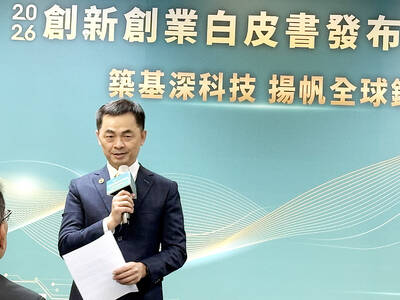
BARRIERS: Gudeng’s chairman said it was unlikely that the US could replicate Taiwan’s science parks in Arizona, given its strict immigration policies and cultural differences Gudeng Precision Industrial Co (家登), which supplies wafer pods to the world’s major semiconductor firms, yesterday said it is in no rush to set up production in the US due to high costs. The company supplies its customers through a warehouse in Arizona jointly operated by TSS Holdings Ltd (德鑫控股), a joint holding of Gudeng and 17 Taiwanese firms in the semiconductor supply chain, including specialty plastic compounds producer Nytex Composites Co (耐特) and automated material handling system supplier Symtek Automation Asia Co (迅得). While the company has long been exploring the feasibility of setting up production in the US to address


 RSS
RSS